RSS

Tag Archives: Australia

I Love You Too

I was one of the privileged hundreds to get free tickets to Limelight Cinemas‘ preview of I Love You Too, with writer Peter Helliar in attendance. After some inane and worthless chatter from morning radio hosts Scotty and Nige, who ‘interviewed’ the rather more intelligent Peter Helliar, this unfortunate train-wreck of a film was underway. Perhaps ‘train-wreck’ is a little harsh; I think this film is more like a series of minor derailments, causing some mayhem on the commute to great Australian cinema.

The plot, although a little cliche, is nonetheless engaging, following the story of Jim, a commitment-phobic man in his early thirties who is threatened with losing his girlfriend. It suffers, however, from that age-old scourge of the comedian-writer; being interspersed with one-liners, which may be hilarious at the time, but seriously interrupt the progression of the plot. It is a problem that may have been resolved, had the writer been an unknown, but perhaps there wasn’t a dramaturge available who could confront Peter Helliar with the awful truth that some of these one-liners should have been ditched to protect the integrity of the narrative arc.

Admirable performances from Brendan Cowell, Yvonne Strahovski, Peter Dinklage and even Peter Helliar himself (who struggled to keep a straight face at times) couldn’t save the compromised script.

Australian film went through a period of producing only one genre of film. It was a cross between comedy and drama that worked very well for the period we were in, but our industry has matured, and our films are now more complex, influenced by a wider range of international cinema, and reflecting a more diverse Australia. I Love You Too does none of this. It harks back to a naive and self-centred Australia from sometime in the 1990s. It has some redeeming qualities, most notably its engaging plot, but it just doesn’t come together as a unified work, and is sorely disappointing.
 

Tags: , , , , , ,

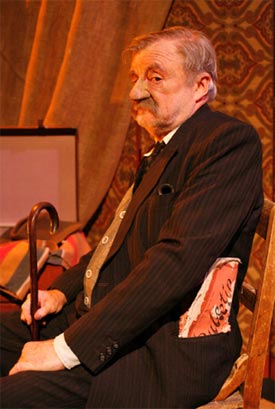
Faces in the Street

Henry Lawson’s legacy is not an easy one to identify. It is wrapped up in the mystery of the Australian identity, which is now, as it was in Lawson’s day, straddled across the divides between urban and rural, between civilised and free, and of course between global and local. Max Cullen’s play, Faces in the Street, somehow manages to explore these weighty notions while remaining firmly grounded in the story of Lawson’s life…

The rest of this post is published on Australian Stage.


Tags: , , , , ,

Lucky Miles

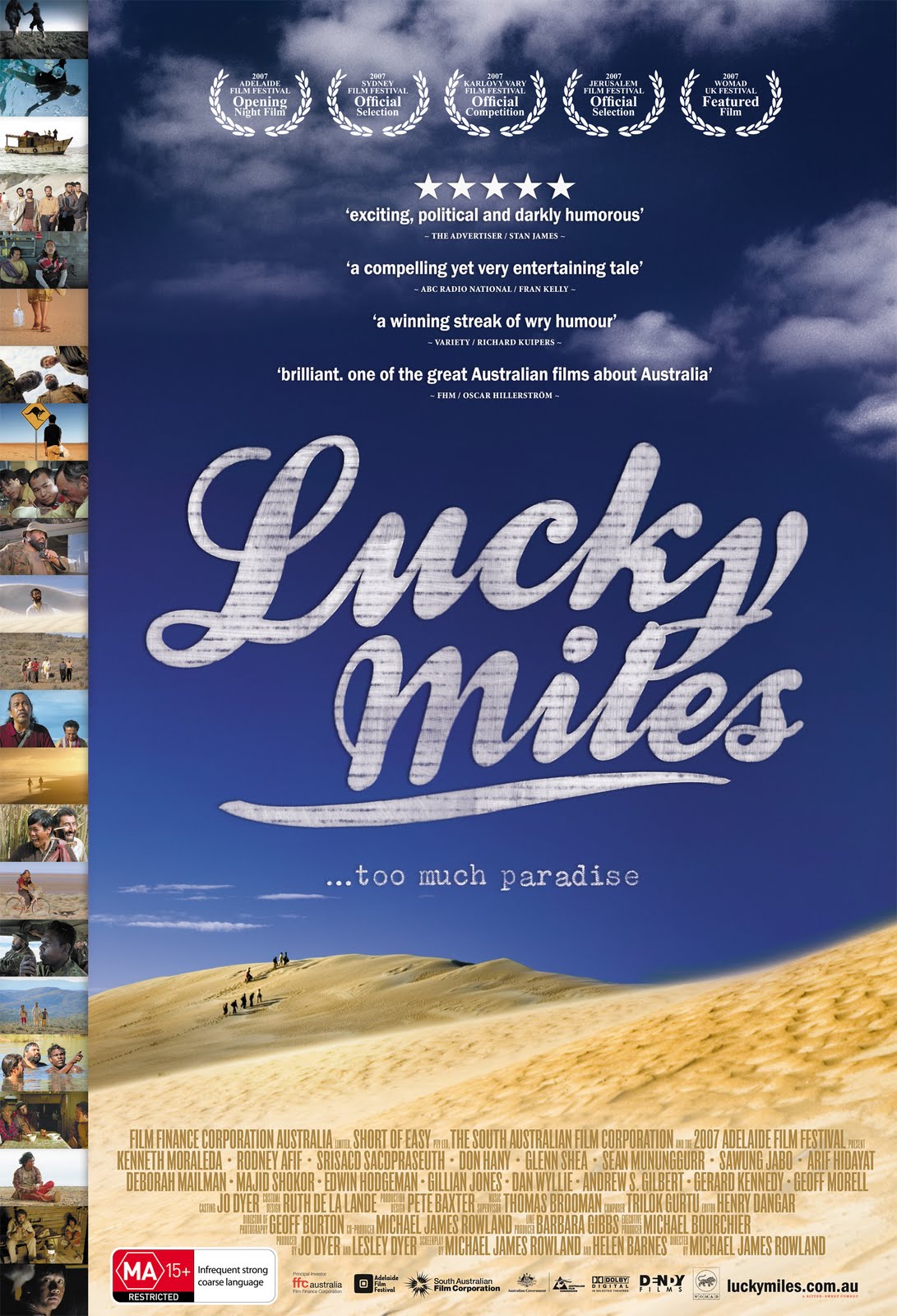
If I told you I had watched a film based on trues stories about boat people entering Australia on the northwest coast, you’d probably yawn. I expected something more like a docudrama when I sat down to watch Lucky Miles, but was pleasantly surprised to encounter a comic drama set in the outback.

There is no sense of that superficial ocker-ness to this film, just a great story, impeccably filmed, and filled with dry, cackle-till-my-throat-hurts humour. Kenneth Moraleda gives an excellent performance as something of a straightman who balances the sardonic humour of the rest of the characters. He provides that balance between comedy and drama that Australian film makers have perfected.

This was a lucky find: I never heard about Lucky Miles when it was in cinema release, but wow! How do the greatest films always seem to miss out on media coverage? It’s a crying shame; find the DVD!


Tags: , , , , , , ,

Mao’s Last Dancer

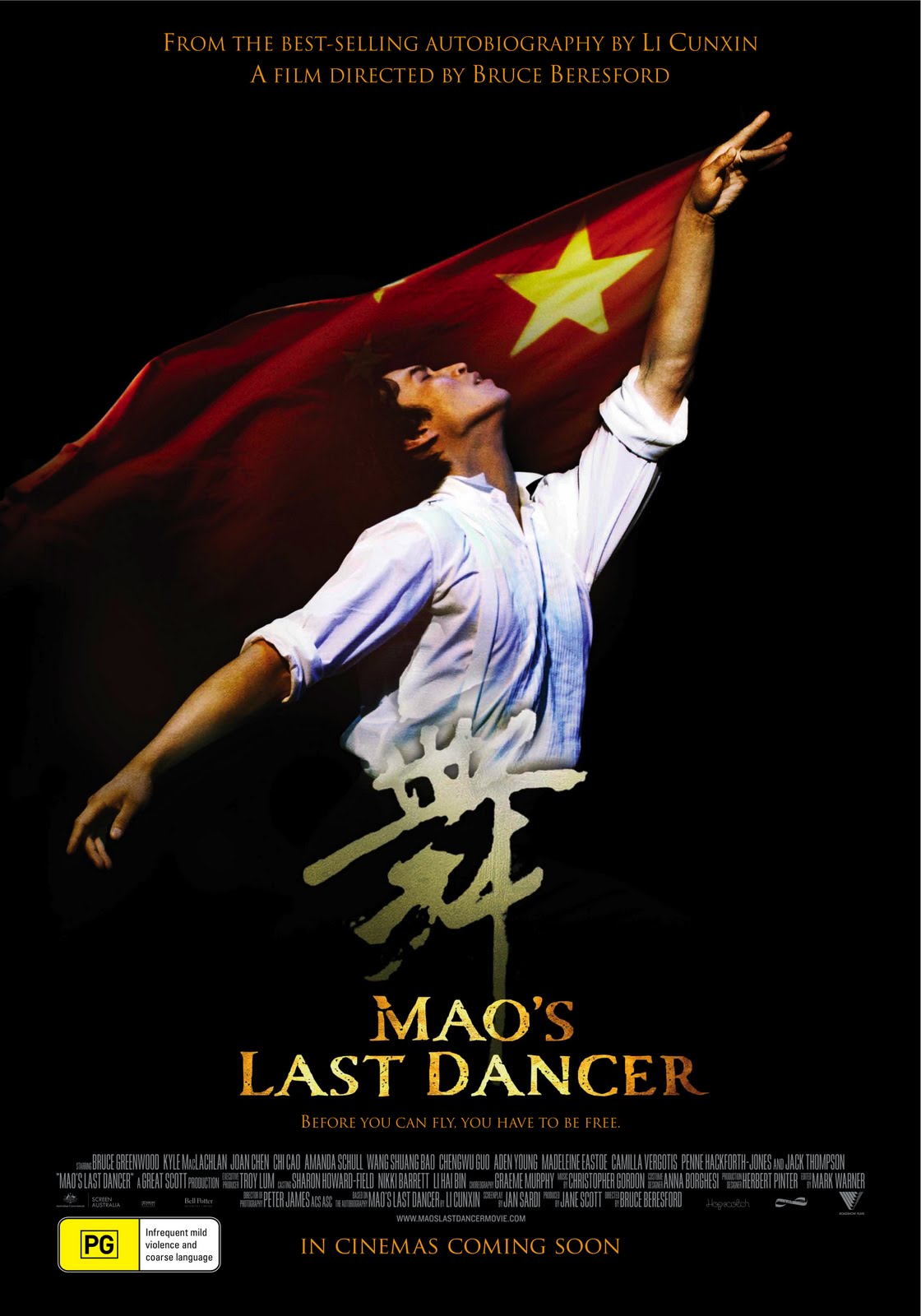
Much is being made of Bruce Beresford’s latest film, Mao’s Last Dancer. It has been released amidst a flurry of discussion about the nature of Australian film, and because it doesn’t deal with a particularly Australian story, it seems to break away from the stereotypical Australian film. Unfortunately, I think this will be the most memorable feature of the film.


Mao’s Last Dancer is the true story, based on the autobiography of the same title, of Li Cunxin, a ballet dancer plucked from obscurity in a small Chinese village to study ballet in Beijing, who went on to defect from the People’s Republic and achieve stardom in the United States. It is an inspiring story, but for my money, not a particularly memorable one.

As we expect from Bruce Beresford, the cinematography is superb, the performances convincing, even from some iconic Australian actors playing Americans. But I think that the only thing particularly noteworthy about the film is its subject matter. This is an Australian film that has next to nothing to do with Australia, and while I would be happy to see more films like this, I fear that the more endearing aspects of Mao’s Last Dancer are overshadowed by this fact.

A good film, with a rather dull plot but spectacular performances, and one that offers excellent insight into a culture we tend to stereotype rather than engage with. Watch it when you’re not at risk of falling asleep.
 

Tags: , , , , , ,

Review of Arts in the ACT

This afternoon I participated in the democratic process. Sounds very noble and boring, doesn’t it? Actually, I joined a whole bunch of other arty types to talk about arts practice in the ACT and government support for it. It was an interesting discussion, although it will be far more interesting to see what our great and mighty leaders do with our input.

The event was a consultation session run by a private firm contracted by ArtsACT to conduct a review of the arts in the ACT. Amongst a little bit of outright whining, there were some interesting discussions about the way in which governments support the arts, and how arts funding could best be utilised to the benefit of the arts community.

There were a few comments about the level of importation of art product, and the proportion of government funding that flows out of Canberra to artists based interstate or overseas. There was also a particularly interesting point made about the lack of support for arts businesses, which are, presumably, one of the most sustainable forms of arts activities.

But I think the most interesting point made, from the perspective of someone who has only been in Canberra for a little over a decade, was that Canberra had a much healthier and more robust arts community in the 80s and 90s. While I was well aware of most of the organisations, what these ‘older’ Canberrans were reminiscing was an atmosphere of creativity that could rival that of Seattle or Paris. At least one person who had lived through it remarked that she hadn’t thought about it for years. It made me sadly jealous of those who have had a longer association with the city.

Still, I can hold out hope that a new era of cultural vibrancy may yet dawn on our little concrete jungle. The group I found myself in this afternoon certainly has more than its fair share of optimism. One of them was so optimistic that she even thought it possible that our elected officials may one day actually take pride in the achievements of creative Canberrans. I’m optimistic, but not that optimistic. As long as the minister for the arts is a lawyer with a strong cultural cringe against his constituents, I hardly see that happening.

What I hold out hope for is a revival of creative energy. I am in one sense thankful that I don’t have an older picture of what a creative Canberra looks like, because a new era of that kind of culture is sure to look very different from the old one. I was surprised to learn that Happy Feet was largely created in Canberra. That is certainly a different image of creativity from what must have gone on in the 80s and 90s, but that kind of creative energy is something to get excited about (as long as they can find better script writers, because Happy Feet was crap in the dialogue and plot departments).

At any rate, if you would like to contribute your $0.02 worth to the debate, it’s not too late. You can get along to the last consultation session on Wednesday 4 November at Belconnen Arts Centre, or you can complete the survey.

 
1 Comment

Posted by on Wednesday, 28 October 2009 in ArtsACT, news


Tags: , , , , , ,

Deathtrap

Canberra Repertory opened Deathtrap tonight. A comedy about an ageing playwright ready to kill to get what he wants.
What I found most interesting about Deathtrap was its style. This is a play by an Australian playwright, written in the late 1970s, and very much set in that time and place; but it has all the hallmarks of an excellent British comedy from the 1960s. The madcap humour, dialogue almost entirely dependent on wit, and a very conventional structure, all mark this play as something other than what it is, and were I not aware that it was an Australian play, I would have assumed it wasn’t, despite the references to Sydney’s northern suburbs.
It is a lot of fun: one of those plays that you could well come away from with a sore belly from all the laughing. I didn’t, though. Maybe the timing was a bit off due to opening night nerves, or maybe I just like a little more meat on characters’ bones than Levin provides, but it was good.
 

Tags: , , , , , , , , , ,