Introducing his film at the Canberra International Film Festival, director Dome Karukoski talked about the Finnish cultural cringe, and my first thought was that this would relate well in Australia, where our national identity is also commonly defined by our deficits. Lapland Odyssey is a hilarious romp through a landscape that’s about as foreign to Australia as it is possible to get, but its characters and humour will be as familiar to audiences of Australian films as sunshine and barbecues.
Karukoski is suitably cynical of the saleability of a comedy that starts with five suicides, but this black opening sets the tone perfectly for the hapless Janne. In his all-night search for the digibox he needs to secure his marriage, Janne leads his two hapless friends into Finnish Lapland wilderness amongst blizzard conditions, Russian tourists, the Aurora Borealis, animatronic deer and not a few boobs.
If I have to watch a formula film, the road movie is always my favourite. The formula, at its best, lends itself to a strong and consistent plot arc, excellent characterisation and endless laughs. Lapland Odyssey has all these features and is a model of the genre.
It puts me in mind especially of what I think is one of Australia’s best comedies: Lucky Miles. Also a road movie, it is set in our most extreme landscape and finds humour in the imperfections of our national character. Lapland Odyssey does much the same in a Finnish context, and is also funny as hell!
You may have missed your chance to see this as part of the 2011 Canberra International Film Festival; for a taste, the trailer is here.
Tags: Canberra International Film Festival, cultural cringe, Dome Karukoski, Humour, Jasper Paakkonen, Jussi Vatanen, Kari Ketonen, Lapland, Lapland Odyssey, Lucky Miles, Pamela Tola, Timo Lavikainen
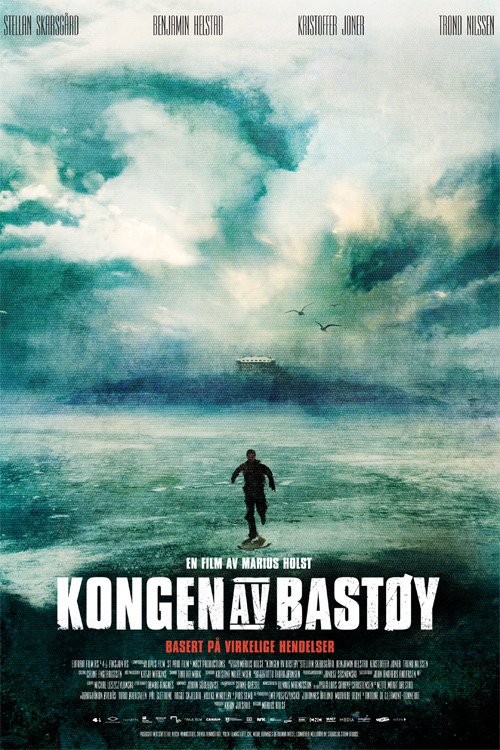
The violence of power and the power of violence are both explored beautifully in King of Devil’s Island. A true story, based on events occurring in 1915 at Bastøy Island in the Fjord of Oslo; a detention centre for ‘maladjusted boys’, as the subtitles tell us.
Maladjusted is somewhat ironic in the context of this story. The boys in the film are remarkably well-adjusted, and have as keen a sense of right and wrong as their ‘protectors’. Each of the film’s protagonists fail at some point to act according to their convictions, as do their protectors, who subtly develop into the story’s antagonists.
What I like most about this film is that although it casts certain historical figures clearly in the role of antagonists, all of them are fully developed, and all but one are depicted with a degree of empathy. Just like the protagonists, they’re pawns in a bloody game of chess being played by rulers as remote and inviolate as kings. Violence, in this context, is the inevitable response.
I can hardly put into words how much I like this film. Beautifully shot in the fjords, with precise timing matching the mood of the film to the development of the winter and remarkable performances from a very talented cast. This film is perfect.
You may have missed your chance to see this as part of the 2011 Canberra International Film Festival; for a taste, the trailer is here.
Tags: 4 1/2 Film, Bastoy, Benjamin Helstad, Canberra International Film Festival, Denis Magnussen, Eric Schmid, Johan Soderqvist, King of Devil's Island, Lars Saabye Christensen, Marius Holst, Mette M. Bolstad, Norway, Oslo, Stellen Skarsgard, Trond Nilssen
Toomelah is a particularly interesting film, if not especially engaging. Writer and Director Ivan Sen went into the New South Welsh township of Toomelah, which began life as an Aboriginal mission, and filmed this story with the local community performing the roles. As characters and performers, they offer a lot. They are, in a sense, playing themselves, and although the story is fictitious, the setting and the circumstances of life in Toomelah is very real.
After the screening at Arc, Sen described the experience of making the film in this community. He went alone, with no film crew, in order to get unhindered access to the community, and to allow the performers more scope to ignore the camera. The effect is remarkable; these characters come to life, despite having just about the thinnest plot I’ve ever seen. There was one point while watching the film when I wondered whether the story was actually just Sen following Daniel Connors around and filming his real life.
The reality, though, is that this is a fictitious story about a real community, played by the people of the community. The slowness of life in this community is, presumably, captured faithfully, but unfortunately I don’t think this verisimilitude does the film any favours. It asks a lot of the audience to keep watching, and while I think this is often acceptable, it is more effective when the story is more engaging.
I think it is particularly important that we tell the story of diverse Aboriginal communities, but I still think these stories need to be told in the dominant storytelling form of our society. While Toomelah is a film worthy of our attention, I doubt it will get much. With a plot arc this slow, it takes pre-established empathy with the characters for an audient to sit through it.
So I find it sad that I don’t think Toomelah will get much attention. It is worthy of every Australian’s attention, but its interest lies in the way it was made and what it offers as a picture of life in this community, rather than being intrinsic to the film.
Tags: Arc Cinema, Australia, Australian Aborigines, Canberra International Film Festival, Christopher Edwards, Curious Films, Daniel Connors, David Jowsey, First Australians, Ivan Sen, Michael Connors, New South Wales, Screen NSW, Toomelah, Visit Films
 Odd that I should pass the small band of faithful in Martin Place for ‘Occupy Sydney’ on my way to see The Hunter. Odd, because this film is an interesting take on the idea of a big faceless corporation hiring a hit-man to take care of some business. Only the victim in this case is not to be just one person but an entire species, and they don’t just want it dead, they want its DNA. Creepy, yes; and a great premise for a film. What a shame the script wasn’t better developed.
The Hunter doesn’t disappoint entirely. A strong storyline and some very interesting relationships develop. Despite some unfortunate stereotypes there is some genuine complexity in the fabric of the film, but The Hunter lacks any real character development. Now, I’m all in favour of plot-driven stories, but the plot in this film doesn’t move fast enough to carry well without stronger characters. The hunter himself, played by Willem Defoe, is two-dimensional and lacks any back story to justify his quiet demeanour. By the time he reaches the climax, we still don’t really know him. The vaguely heroine-like Lucy Armstrong doesn’t quite make it to romantic lead, but despite the lack of script development, Frances O’Connor does a great job of bringing her to life. Apart from the very engaging children, played by Morgana Davies and Finn Woodlock, the rest of the cast are just plot devices.
I still think there’s a lot to love about The Hunter. Tasmania’s wilderness is a landscape that was made to be a film set, much like Utah’s Monument Valley was, except the Tasmanian bush has mood swings. Really, what the characters lack is almost made up for by the bush, which certainly changes its mood more often than Willem Defoe does. I’m not just being flippant; the bush genuinely works for this film, and the cinematography is exceptional, which makes the poor script all that much more disappointing.
This one’s not worthy of a cinema screen, but it’s worth seeing when it comes to TV. And I really did like it.
Tags: Daniel Nettheim, Finn Woodlock, Frances O'Connor, Lucy Armstrong, Monument Valley, Morgana Davies, Occupy, Occupy Sydney, Porchlight Films, Sam Neill, Tasmania, The Hunter, Willem Dafoe
SPOILER ALERT: this post contains references to the ending of the film.
A true story about a chap who literally gets stuck between a rock and a hard place for 127 hours sounds like a pretty boring premise for a film, doesn’t it? But, perhaps because the film was directed by one of the UK’s best directors, and perhaps because the survivor of this ordeal was far more practical and down-to-earth than your average American, this is a brilliant story.
Its protagonist,
Aron Ralston, could well have been turned into a sickly sweet caricature, but Boyle’s deft use of his hallucinations, memory, premonitions, or whatever you want to call them, are handled in a way that firmly grounds him in the reality of his circumstance. The film doesn’t try to pretend that Aron never gave up hope, and it is his constant prevarications between hopelessness and persistence at the only option available to him that makes him both real and truly inspirational.
There have been some ridiculous stories about people finding the blood and gore too much. My suspicion is that these folk must have been completely shielded from any exposure to blood in their entire existence to be so extremely squeamish. There is nothing particularly extreme about the depiction of the removal of Aron’s forearm, you might just need a strong armrest to grab hold of at a few critical moments. Limelight Cinemas’ hardware held up fine!
Tags: "Between a Rock & a Hard Place", 127 Hours, Aron Ralston, Boyle, Danny Boyle, Film, James Franco, Utah
I may again have to eat my words. I’ve often lamented that the advent of remade films in the last decade signifies the death of creativity. Doing something ‘again’ is for the theatre; films can simply be played again, so there’s no point, and you should put your energy into making new ones. Well, now Joel and Ethan Coen have done it, and it is yet another remake of a film that I think is entirely worthy of the treatment. What’s worse is that having enjoyed this film so much, I may now have to watch a few Westerns to find out whether this really is one.
True Grit was first made in 1969. It is the story of a fourteen year old girl who seeks to revenge for her father’s murder and goes looking for a man of ‘true grit’ to undertake the fearsome task. She finds the same in Sheriff ‘Rooster’ Cogburn, a disreputable man with a drinking problem and a dislike for the one other person who cares about seeing the murderer hang. And so begins a journey into the Arkansas wilderness, and the wilderness of human emotions.
Firmly ensconced within the Coens’ aesthetic oeuvre, this film is something really special. Despite being weighed down by overly loquacious and rather pretentious dialogue (which I think may be the norm for Westerns), the story hums along with engaging characters and a beautiful vision of Winter in the old west. Rather than soaking in a puddle of sentimentality, though, it explores the complexity of human emotions in the wake of life-changing events. In this, it diverges from what I had thought Westerns were all about. I understood them to be simplified and over-emotional excuses for a bit of gun-slinging; True Grit is nothing of the sort. I may just have to watch a few to see if I need to rethink my assumptions!
An ageing Matt Damon is an excellent foil for an old Jeff Bridges, but neither hold a candle to Hailee Steinfeld who gives a commanding performance as the ineffable Mattie Ross seeking vengeance for her father’s death. The casting and execution of this role was surely critical to the success of this film, and Steinfeld really carries both the plot and the substance of the story.
Now, I’ve hardly seen any Westerns in my time, and have never been a fan of the genre (not that I’m a fan of any genre per se), so I can’t comment on whether this is a reinvigoration of a tired genre of film-making, but it certainly is a fine piece of cinematography. It is, perhaps, the best film I’ve seen from the Coen Brothers, and that is really something.
Tags: Arkansas, Coen Brothers, Ethan Coen, Hailee Steinfeld, Jeff Bridges, Joel Coen, Matt Damon, True Grit, Westerns
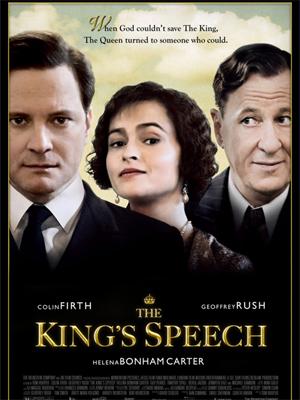
Don’t ask me why, but I’m a sucker for a title with a double meaning! Usually, though, they represent a pretty ordinary film, play or novel. In the case of The King’s Speech, the film is far more clever than its title.
Set in 1930s England, with the world on the brink of war, this is the story of an unfortunate chap with a speech impediment. Not a particularly big deal, perhaps, unless the unfortunate chap happens to be the king of a constitutional monarchy in which the only useful thing a king does is to speak to his subjects. In such circumstances, there is only one thing for it; run through the gamut of speech pathologists until you find one who has a bit of common sense. Such a personage, of course, would have to be an Australian. You just can’t make stuff like this up!
It’s true. The film, I mean; it’s a true story. And it’s not in any way dry or sombre or mundane as biographical films are prone to being; it’s a thoroughly engaging story, made all the more real by its heart-warming depiction of our queen in her childhood, her mother in her prime, and the relationships of this extraordinary family.
If you’ve not seen it, do so. If you don’t like it, you’re probably not human.
Tags: Academy Award, Australia, Bedlam Productions, Colin Firth, David Seidler, England, Geoffrey Rush, George VI of the United Kingdom, Helena Bonham-Carter, King's Speech, Monarchy, See Saw Films, Speech disorder, Tom Hooper
Despite a few moments where truth seems to win out over storytelling, The Social Network tells a genuinely engaging story and does so with some empathy for a diversity of characters. It does this with some rather dry historical material, and it does develop a very human story, although it is a little on the superficial side.
From the opening scene, which shows not only Zuckerberg’s dumping by girlfriend Erica Albright but also the reason for it, this film is distinctively about Mark Zuckerberg. He would be an awfully boring subject, though, without the rest of this impeccable cast. The standout is certainly Andrew Garfield‘s performance as Zuckerberg’s foil Eduardo Saverin, which almost singe-handedly salvages the damage done by the awkwardness of Jesse Eisenberg‘s Zuckerberg.
Eisenberg’s depiction of Mark Zuckerberg is discomforting. Of course, it is not an easy thing to depict a living celebrity, and this particular celebrity, as the king of geekdom, must be a particular challenge, but I was left wondering what kind of human being I was seeing. At times, he seemed to be dealing with a condition on the autism spectrum, rather than merely being socially awkward, and yet even this was not consistent. At times he would suddenly animate, then return to a morose obsessive. Perhaps this impression was what was intended. For all I know, this could be exactly what Mark Zuckerberg is like, but whatever the reason, it was disconcerting.
The major strength of this film is that although it’s a story about the development of Facebook intertwined with the story of a lawsuit, both of which threaten dullness, the human element is palpable and immediate. In fact (and I can’t believe I’m saying this about an American film), I think the story could have benefited from a little more pathos around its central characters. There is a very human story here, and it barely emerges from the more technical process of depicting historical events.
I suspect that this film will date quickly. I would guess that, unless some major legal battle puts an end to Facebook, this story will be told again and again, and the best expressions of it are still to come. Hopefully some of them will be written with more concern for the characters, and will be performed with greater clarity.
Tags: Aaron Sorkin, Andrew Garfield, Autism spectrum, David Fincher, Eduardo Saverin, Facebook, Jesse Eisenberg, Mark Zuckerberg, Social Network, Zuckerberg
Tomorrow When The War Began is an iconic piece of Australian literature renowned not so much for its story, characters or fantastic writing as for annoying the heck out of high school students. John Marsden wrote it specifically for the high school market, aiming it at schools in need of an easy read for young adolescents. This ambit was successful, and as a result it is one of the most read stories in Australia, despite being dull, poorly-written and full of implausible circumstances and pointless guff. Needless to say, I didn’t expect much from the film.
From inauspicious beginnings, apparently, great stories are born. The very act of adapting a story for film has a way of weeding out page-filling nonsense and implausible circumstances. A novel can get away with not mentioning visual elements, but scenarios undergo more thorough analysis in film. In the case of Tomorrow When The War Began, this process has thoroughly redeemed an otherwise unremarkable story.
The cast, who, with one exception, are far too old to be playing characters who need to ask their parents’ permission for anything, are otherwise superb. Led by the magnificent Caitlin Stasey in the role of Ellie, they personify Marsden’s characters better than Marsden did, and without any exception they sustain impeccable performances throughout the film. And yes, I even include a former Home and Away actor in this praise, which is remarkable in itself.
Like the age of the actors, the locations chosen for the film leave something to be desired, but are nonetheless redeemed. The Blue Mountains, instantly recognisable and distinctive, simply doesn’t cut it for a random bush hideaway near the fictional rural town of Wirrawee. The sandstone cliffs of the Megalong Valley are simply too familiar, and the familiarity detracts from the value of setting the story in a fictitious Australian town.
The film nonetheless survives these faults, and is certainly the best saleable film made in this country for many years. The plot, characters and actors combine to produce a film that is far better in all respects than the novel that spawned it, making the tongue-in-cheek line from the film that all books are better than their films deliciously ironic.
This film may not win huge numbers of awards, but thoughts that it may be the beginning of the most profitable film series in Australian history could be right on the money. I certainly hope so.
Tags: Australia, Blue Mountains, Caitlin Stasey, Chris Pang, Deniz Akdeniz, John Marsden, Lincoln Lewis, Marsden, Megalong Valley, Stuart Beatty, Tomorrow When The War Began, Wirrawee
To the extent that Americans love a good conspiracy theory, the Brits are equally keen on questioning the integrity of their Prime Minsters. Roman Polanski caters for both predilections in his magnificent new film, The Ghost Writer.
Ewan McGregor plays the titular character, a writer hired to massage the memoirs of a former British Prime Minister into shape following the mysterious death of another ghost writer. Gradually, and innocently (which is refreshing), he discovers a web of intrigue and finds himself reluctantly wrapped up in it, at his own peril.
However much I like this as a film, it’s the story, penned originally as a novel by Robert Harris, that I find so magnificently intriguing. Remaining almost entirely fictitious, and needing no awkward date stamp, this story draws a shocking parallelism from the circumstances surrounding the era of fear following the 9/11 attacks. And surprisingly, since it parallels so literally the Anglo-American response, it is as relevant here in Australia as in the US and UK.
I can’t say too much about it, lest I spoil it for you, but this is a great film, and you must go see it. That is all.
Tags: Australia, Ewan McGregor, Ghostwriter, Pierce Brosnan, Prime Minister of the United Kingdom, Robert Harris, Roman Polanski, Tom Wilkinson
Some films are a chore to watch, but many of these reward the viewer’s effort with a character that lives on well after the film has finished. Greenberg is such a film. Its central character, who exists in a cloud of mental illness, faces a banal life, overshadowed by his failures and their impact on those around him. Miserable, perhaps, but the character is not merely recognisable; he elicits an empathy that outlasts his film.
This character, Roger Greenberg, superbly portrayed by Ben Stiller (who I had previously thought a mediocre actor) finds himself resident in his brother’s California home while the family is away after a stint in a psych ward in New York. His condition is never identified, and this is critical; he could be any one of us. Likewise the film’s heroine, Florence Marr (played brilliantly by the little-known Greta Gerwig), presents another kind of mental instability, and elicits a similar empathy.
It takes a special kind of writer to come up with an engaging script around the theme of mental illness, but that is precisely what writer Noah Baumbach has managed to achieve in Greenberg. It’s one of those films that survives being slow thanks to strong characters portrayed honestly and without a silly gush of emotion.
Tags: Ben Stiller, Greenberg, Greta Gerwig, Noah Baumbach
Harry Brown begins with one of the most guesome scenes of urban violence imaginable. The purpose of this scene, almost unrelated to the rest of the film, is perhaps to numb us a little for what is to follow. The violence of Harry Brown is, perhaps, of the same calibre as Quentin Tarantino‘s films, but Daniel Barber’s use of violence is otherwise entirely incomparable. It is targeted, purposeful and meaningful to the same extent that Tarantino’s is aimless and vague.
Michael Caine is at his best in this film. In case you were wondering, no, he’s not funny; he strikes with absolute perfection that degree of pathos that could so easily turn into melodrama, without even a hint of going too far. He is supported by an impeccable script and visionary cinematography.
I have long been a devotee of those films that can take the most grotesque aspects of the human condition and appeal, even in that context, to our capacity for hope. Trainspotting was one of the first I encountered, and remains one of the best examples of the transcendental in film. Harry Brown certainly stands well beside it.
And in case you read my previous post about seeing Robin Hoodat Perth’s Picadilly cinema, you may be interested to know that Leederville’s art deco Luna cinema was the perfect venue for a film of this calibre!
Tags: Daniel Barber, Harry Brown, London, Luna Cinema, Michael Caine, Movies, pathos, Quentin Tarantino, Robin Hood, slums, Trainspotting, violence
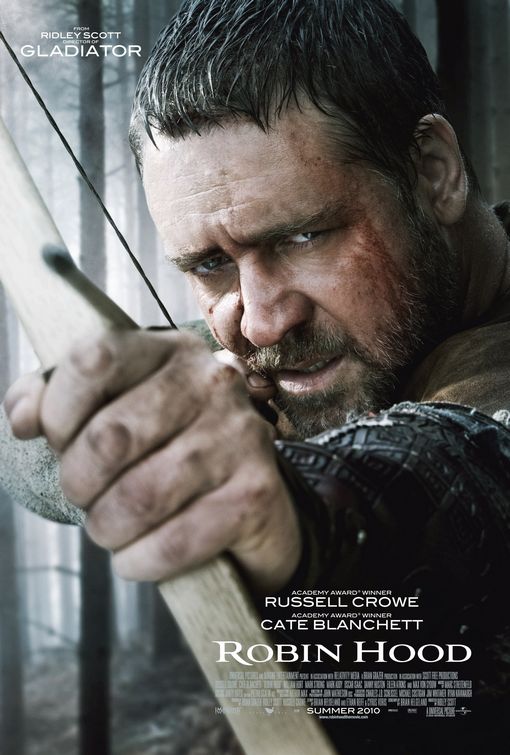
Robin Hood is a bit of a marathon, and if you have a comfortable seat and a few hours to spare, it’s a vaguely worthwhile pastime. Unlike other renditions of the myth, this film draws its impetus from political machinations, and lets go of the story’s usual plebian roots. Surprisingly, this is actually a good decision, as it provides not only a novel context for the story, but also broader relevance.
Russell Crowe plays his typical alpha male with a softer side, only this time with a funny accent. This novelty is complemented by extremely modern dialogue; making the film in many ways a counterpoint to films of Shakespeare’s plays that place sixteenth century dialogue in a modern setting. This is the opposite; playing twenty-first century dialogue in a twelfth century setting, with the added irony of a post-colonial actor playing the Old Country’s chief hero. My strange little mind would like to have heard Crowe’s cultivated Australian accent placed into the context to see what other meanings could be derived, but of course that wouldn’t do so well at the box office, would it?
And the box office is what this film is made for. It is formulaic, rudimentary and appeals to the same values as every other film about underdogs made in the last couple of decades. It does absolutely nothing to distinguish itself from that genre, and sits somewhere in the middle of Ridley Scott‘s very palatable aesthetic.
Of more note than this film is the venue I saw it in. Perth’s Picadilly Cinema is a quaint venue, reminiscent of Canberra’s Electric Shadows. That’s all well and good, but this film needs chairs with a higher back and a clearer view of the screen. I came out with a sore neck and tired knees. Every city, especially Australia’s western mecca deserves a Dendy or a Limelight.
A good film, but a bit meh.
Tags: Australia, Dendy, Electric Shadows, Picadilly Cinema, Ridley Scott, Robin Hood, Russell Crowe, Shakespeare
Animal Kingdom poses that age-old question about how many blood spatters are too many. I suspect that the creators were attempting to use blood spatters as a visual motif, as most of the spatters were of a similar consistency, evenly spread across a contrasting surface, but ultimately they just echoed the naff nature of the film generally.
There was a lot of potential here. After a slow start, the film did engage, and it did manage to take me to that serendipitous point at which you have to know what happens next, and the screening environment just melts away. A magnificent cast with a wealth of experience is admirably lead by newcomer James Frecheville. His treatment of the morose character he landed is remarkably compelling, and I think the cast is this film’s saving grace.
But overall, this is a truly disappointing film; not because it represents nothing of value, but because it really had a lot of potential that it didn’t live up to. An engaging story and some of Australia’s best actors are let down by a slow treatment in the editing suite and mundane cinematography. This one’s definitely worthy of a remake, perhaps even with the same cast, but it needs a more compelling treatment by the creative team.
Tags: Arts, Australia, Ben Mendelsohn, cultural cringe, David Michod, Guy Pearce, Jacki Weaver, James Frecheville, Joel Edgerton, Movies, Robert Pattinson
I was one of the privileged hundreds to get free tickets to Limelight Cinemas‘ preview of I Love You Too, with writer Peter Helliar in attendance. After some inane and worthless chatter from morning radio hosts Scotty and Nige, who ‘interviewed’ the rather more intelligent Peter Helliar, this unfortunate train-wreck of a film was underway. Perhaps ‘train-wreck’ is a little harsh; I think this film is more like a series of minor derailments, causing some mayhem on the commute to great Australian cinema.
The plot, although a little cliche, is nonetheless engaging, following the story of Jim, a commitment-phobic man in his early thirties who is threatened with losing his girlfriend. It suffers, however, from that age-old scourge of the comedian-writer; being interspersed with one-liners, which may be hilarious at the time, but seriously interrupt the progression of the plot. It is a problem that may have been resolved, had the writer been an unknown, but perhaps there wasn’t a dramaturge available who could confront Peter Helliar with the awful truth that some of these one-liners should have been ditched to protect the integrity of the narrative arc.
Admirable performances from Brendan Cowell, Yvonne Strahovski, Peter Dinklage and even Peter Helliar himself (who struggled to keep a straight face at times) couldn’t save the compromised script.
Australian film went through a period of producing only one genre of film. It was a cross between comedy and drama that worked very well for the period we were in, but our industry has matured, and our films are now more complex, influenced by a wider range of international cinema, and reflecting a more diverse Australia. I Love You Too does none of this. It harks back to a naive and self-centred Australia from sometime in the 1990s. It has some redeeming qualities, most notably its engaging plot, but it just doesn’t come together as a unified work, and is sorely disappointing.
Tags: Australia, Brendan Cowell, cultural cringe, I Love You Too, Peter Dinklage, Peter Helliar, Yvonne Strahovski
Bran Nue Dae is a bit of a romp, but I’m not entirely convinced this film has survived some of its more irksome quirks. By and large the story sings, the direction is clear, and the cinematography is inspired, but a few lines of uninspired dialogue, a few missed beats, and the occasional diversion from the film’s primary mode of storytelling let down what is otherwise a light, unassuming comedy that would do the Australian film industry proud.
Ernie Dingo and
Geoffrey Rush could be said to have saved this film. In the lead role is
Rocky McKenzie, who can sing, but comes across rather wooden, even in singing mode. If it were a stage play, I would say it was over-rehearsed, but I’m not sure that’s possible with film. I would assume
Jessica Mauboy was cast for much the same reason: her voice is spectacular, and this is one of the film’s redeeming features, but the moment she must speak it’s like she seizes up and loses all sense of her character.
Missy Higgins is another actor who was surely cast for her musical talent, but whose performances as a character were charming, mesmerising and hilarious.
I don’t want to be too critical, because I actually really liked the film. It has a great story, some hilarious characters and scenarios, and some really great music. I just couldn’t quite relax into it.
Tags: Bran Nue Dae, Cate Shortland, Cinema of Australia, Ernie Dingo, Geoffrey Rush, Jessica Mauboy, Jimmy Chi, Missy Higgins, Rachel Perkins, Reg Cribb, Rocky McKenzie
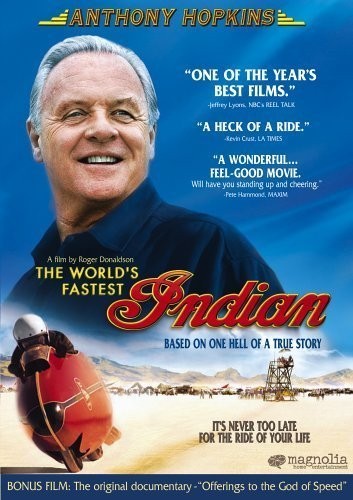
The Kiwis are an amazing bunch of creatives, and are certainly punching above their weight as far as film is concerned. The World’s Fastest Indian is a magnificently-crafted piece of cinema that showcases the country’s talent and attention to detail perfectly.
It’s the true story of Bert Munro from Invercargill, who has spent decades carefully modifying his 1920s Indian motorcycle, and in 1967 travels to Bonneville, Utah to run it on the salt flats in the annual Speed Week competition.
Anthony Hopkins gives a splendid performance with a surprisingly appropriate accent, not only for the character’s New Zealand origin but also his age and personality. And the precision of his performance is simply a footnote to the carefully composed script that really demonstrates the characteristic strengths of the New Zealand mind.
Tags: Anthony Hopkins, Bonneville Speedway, Burt Munro, cultural cringe, Invercargill, New Zealand, Roger Donaldson, Utah, Worlds Fastest Indian
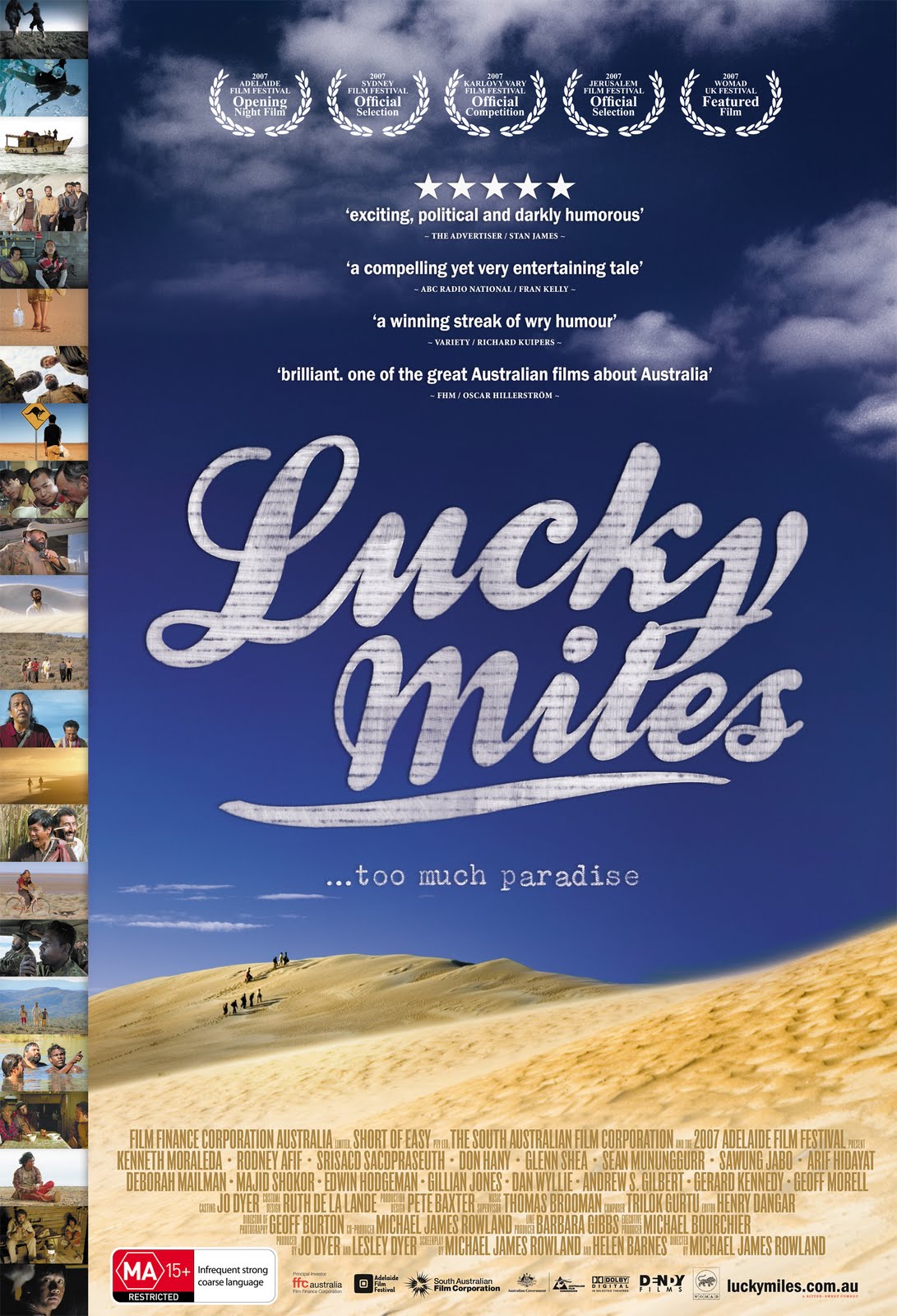
If I told you I had watched a film based on trues stories about boat people entering Australia on the northwest coast, you’d probably yawn. I expected something more like a docudrama when I sat down to watch Lucky Miles, but was pleasantly surprised to encounter a comic drama set in the outback.
There is no sense of that superficial ocker-ness to this film, just a great story, impeccably filmed, and filled with dry, cackle-till-my-throat-hurts humour. Kenneth Moraleda gives an excellent performance as something of a straightman who balances the sardonic humour of the rest of the characters. He provides that balance between comedy and drama that Australian film makers have perfected.
This was a lucky find: I never heard about Lucky Miles when it was in cinema release, but wow! How do the greatest films always seem to miss out on media coverage? It’s a crying shame; find the DVD!
Tags: Adelaide Film Festival, Australia, Boat people, cultural cringe, Helen Barnes, Kenneth Moraleda, Lucky Miles, Michael James Rowland
Film interpretations of literary works are unfortunately subject to comparison with their wordy counterparts and generally make a poor comparison. Sherlock Holmes’ three writers deftly sidestep this risk by taking Arthur Conan Doyle’s characters and situation and giving them a new plot. The result, I think, is a crime story that the master crime writer would have been proud of.
This film departs dramatically from the tradition of depicting Holmes as a Victorian aristocrat and instead shows him as a hero not unlike Spiderman or Mr Incredible, but with substantial flaws that both endear him and make him repugnant to a twenty-first century audience. Robert Downey Junior plays him admirably, but Jude Law’s Watson is the star performance here. Just as in Doyle’s novels, where Watson is the link between the reader and the aloof Holmes, Law’s Watson gives the audience a central character that makes the detached genius accessible.
This film is unmistakably a product of the twenty-first century, but it manages at the same time to illicit that same sense of intrigue from me that reading Doyle’s stories does. The makers of this film have been bold, even brazen, in their interpretation of Doyle’s characters and situations, but the gamble has paid off, and Sherlock Holmes is, as a result, the first film to do Arthur Conan Doyle’s characters justice.
Tags: Anthony Peckham, Arthur Conan Doyle, Guy Ritchie, Holmes, Jude Law, Literature, Mark Strong, Michael Robert Johnson, Rachel McAdams, Robert Downey, Robert Downey Jr, Sherlock Holmes, Simon Kinberg
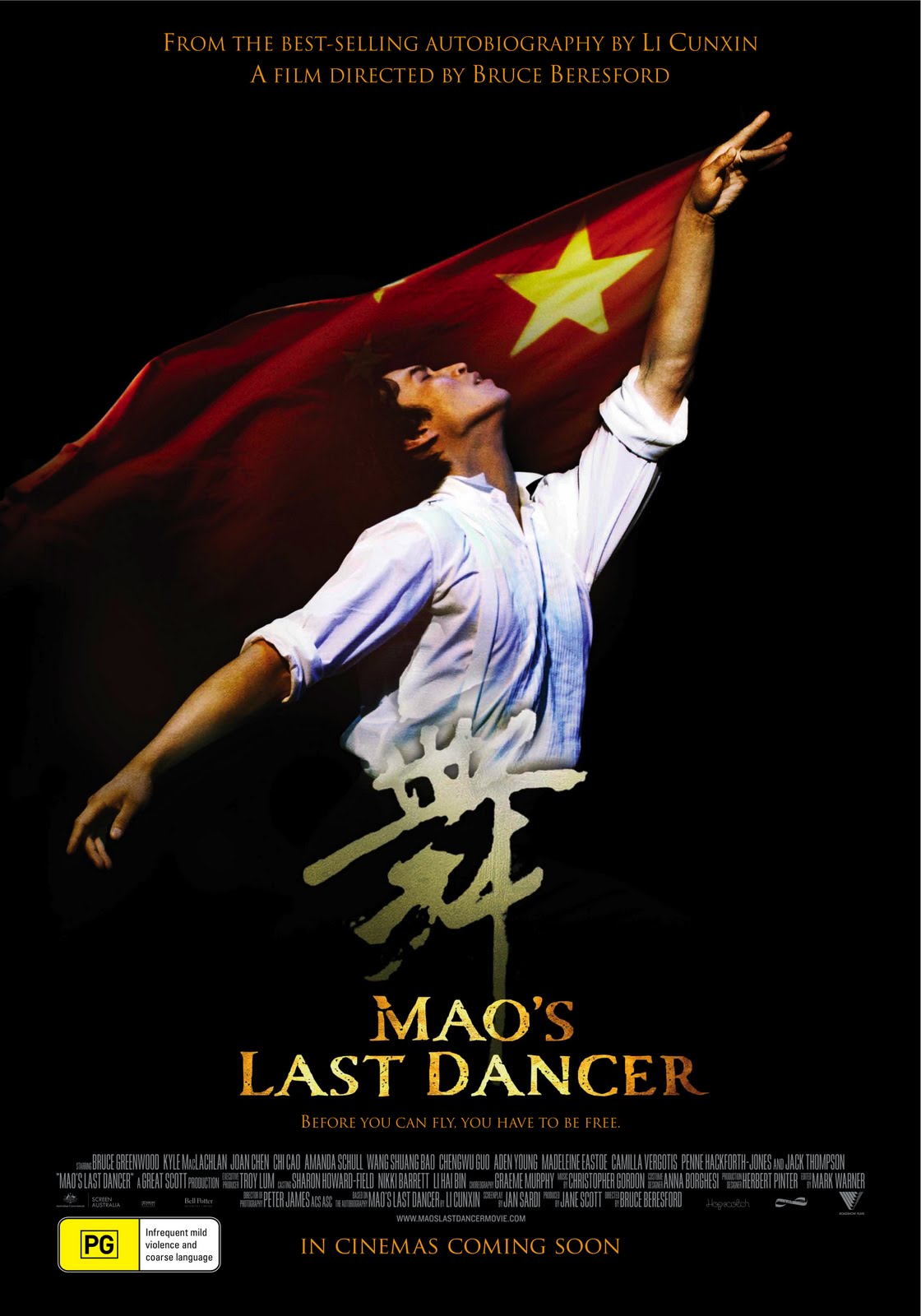
Much is being made of Bruce Beresford’s latest film, Mao’s Last Dancer. It has been released amidst a flurry of discussion about the nature of Australian film, and because it doesn’t deal with a particularly Australian story, it seems to break away from the stereotypical Australian film. Unfortunately, I think this will be the most memorable feature of the film.
Mao’s Last Dancer is the true story, based on the autobiography of the same title, of Li Cunxin, a ballet dancer plucked from obscurity in a small Chinese village to study ballet in Beijing, who went on to defect from the People’s Republic and achieve stardom in the United States. It is an inspiring story, but for my money, not a particularly memorable one.
As we expect from Bruce Beresford, the cinematography is superb, the performances convincing, even from some iconic Australian actors playing Americans. But I think that the only thing particularly noteworthy about the film is its subject matter. This is an Australian film that has next to nothing to do with Australia, and while I would be happy to see more films like this, I fear that the more endearing aspects of Mao’s Last Dancer are overshadowed by this fact.
A good film, with a rather dull plot but spectacular performances, and one that offers excellent insight into a culture we tend to stereotype rather than engage with. Watch it when you’re not at risk of falling asleep.
Tags: Australia, Beijing, Bruce Beresford, Chi Cao, Li Cunxin, Mao's Last Dancer, United States











 Foyer Talk