This afternoon I participated in the democratic process. Sounds very noble and boring, doesn’t it? Actually, I joined a whole bunch of other arty types to talk about arts practice in the ACT and government support for it. It was an interesting discussion, although it will be far more interesting to see what our great and mighty leaders do with our input.
The event was a consultation session run by a private firm contracted by ArtsACT to conduct a review of the arts in the ACT. Amongst a little bit of outright whining, there were some interesting discussions about the way in which governments support the arts, and how arts funding could best be utilised to the benefit of the arts community.
There were a few comments about the level of importation of art product, and the proportion of government funding that flows out of Canberra to artists based interstate or overseas. There was also a particularly interesting point made about the lack of support for arts businesses, which are, presumably, one of the most sustainable forms of arts activities.
But I think the most interesting point made, from the perspective of someone who has only been in Canberra for a little over a decade, was that Canberra had a much healthier and more robust arts community in the 80s and 90s. While I was well aware of most of the organisations, what these ‘older’ Canberrans were reminiscing was an atmosphere of creativity that could rival that of Seattle or Paris. At least one person who had lived through it remarked that she hadn’t thought about it for years. It made me sadly jealous of those who have had a longer association with the city.
Still, I can hold out hope that a new era of cultural vibrancy may yet dawn on our little concrete jungle. The group I found myself in this afternoon certainly has more than its fair share of optimism. One of them was so optimistic that she even thought it possible that our elected officials may one day actually take pride in the achievements of creative Canberrans. I’m optimistic, but not that optimistic. As long as the minister for the arts is a lawyer with a strong cultural cringe against his constituents, I hardly see that happening.
What I hold out hope for is a revival of creative energy. I am in one sense thankful that I don’t have an older picture of what a creative Canberra looks like, because a new era of that kind of culture is sure to look very different from the old one. I was surprised to learn that Happy Feet was largely created in Canberra. That is certainly a different image of creativity from what must have gone on in the 80s and 90s, but that kind of creative energy is something to get excited about (as long as they can find better script writers, because Happy Feet was crap in the dialogue and plot departments).
At any rate, if you would like to contribute your $0.02 worth to the debate, it’s not too late. You can get along to the last consultation session on Wednesday 4 November at Belconnen Arts Centre, or you can complete the survey.
Tags: Arts, Australia, Australian Capital Territory, Canberra, consultation, Government, Jon Stanhope
 I am getting a little bored with the whole “let’s say nasty things about the Catholic church” thing that our culture seems to have going on these last few years. Being an older play, Ron Blair’s The Christian Brothers doesn’t suffer from the same simplistic and one-dimensional depiction of Catholicism as its more modern counterparts. It’s refreshing.
This one-man play is about an ageing Catholic school teacher going through something of a crisis of faith in the strangely public context of his classroom. Perhaps the most interesting part of this play is how the classroom itself, while occupied by however many students the audience imagines to be there, can be at once public and private.
Veteran of the Canberra stage, Bill Boyd brings the flawed teacher to life brilliantly, eliciting empathy and laughter as we recognise those flaws that most of our teachers probably also had. This is a great production, and an hour well spent.
Tags: Bill Boyd, Canberra, Catholic Church, Catholicism, Congregation of Christian Brothers, Geoffrey Borny, Ron Blair, Tuggeranong, Tuggeranong Arts Centre
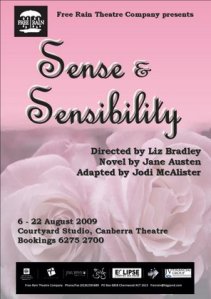 Jane Austen’s novels don’t appeal to me greatly, but the quality of her wit is superb. Although Sense and Sensibilityis not a novel that readily lends itself to a dramatic adaptation, Canberra’s own Jodi McAlister has done a fine job of condensing Austen’s story into two hours of engaging stagework.
One of the most memorable characteristics of Austen’s work is the importance of the subtext, and the many paradoxes that are inherent in such a context. Drama, of course, thrives on paradox and subtext, but the sheer volume of these found in Austen’s work has been the downfall of many dramatisations of her stories. In this production, I think both Jodi McAlister and Liz Bradley are to be commended for their work in focusing the attention and keeping the journey of the characters paramount.
A great performance by the cast was punctuated by three stellar performers in the roles of the three Dashwood sisters. Alex de Totth, Ylaria Rogers and Nicola Grear are most notable in the degree to which they are able to balance the humour of their roles with the truth of their characters’ experiences. This is critical to Austen’s stories, and the success of this production owes much to these three performers.
I have never been a great fan of Austen, but have always enjoyed the quality and intensity of her satire, and am very pleased that this production managed to express it so well.
Tags: Alex de Totth, Canberra, James Scott, Jane Austen, Jodi McAlister, Liz Bradley, Martin Searles, Nicola Grear, Sense & Sensibility, Sense and Sensibility, Ylaria Rogers
I really must come up with a good reason why I don’t like follow spots and smoke. Normally my dislike of them doesn’t matter, but in the case of
Chess, they use them right at the beginning, and they use them well! Why is this a problem? Well, if you don’t like follow spots and you don’t like smoke, but the first thing in the show is a follow spot and smoke, it distracts you from the show. It’s not a problem with a poor show, but unfortunately, The Q’s production of
Chess is not a poor show, so I feel I need to justify my dislike of follow spots and smoke. One day, my prejudice will have a justification, but this is not that day.
Chessis just too good.
Chess is, in many ways, poles apart from Krapp’s Last Tape, which I gushed about the night before, but it shares two important characteristics: it tells a remarkably human story, and allows an audience to engage in some depth with its central characters. That said, I think I missed some elements of that story, due to some distortion of Tim Rice’s lyrics. I am unsure whether this was a problem with enunciation or amplification, but I suspect the latter. Of course, putting such complicated sentence structures into lyrics was probably a bad idea in the first place, but in this instance it was not a fatal one, probably due to the talents of this magnificent cast.
The ensemble gathered for this production must be one of the best I have seen in Canberra, but they were not a patch on the magnificent talents of principals Stephen Pike, Christine Forbes and Lexi Sekuless. Even an old cynic like me felt goosebumps!
Tags: Adrian Flor, Benny Andersson, Bjorn Ulvaeus, Canberra, Chess, Christine Forbes, Derek Walker, Lexi Sekuless, Roy Hukari, Stephen Pike, Tim Rice
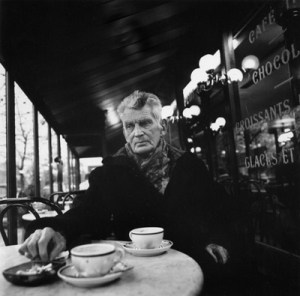 Opening at Tuggeranong Arts Centre, Krapp’s Last Tapeis one of Samuel Beckett’s more well-known plays.
Sitting, as I am, and contemplating what I want to say about Krapp’s Last Tape, I think about commenting on the set, the actor’s performance, the lighting, the direction; but all of that seems to undermine this play. This is a story about a man who made a decision decades ago, and whose existence is not haunted, but shaped by the consequences of that decision. And nothing matters more than that character.
Of course, the design elements have to be properly balanced, or the character won’t be visible. Ian Croker’s set, Jack Lloyd’s lighting, and Len Power’s sound design are as important as Graham Robertson’s performance, but all of these must be properly balanced, and nod gently to the presence of Beckett’s ‘hero’. I think this is the great strength of this production. All of these design elements are indeed balanced perfectly, giving the audience perfect access to the character.
I had read Krapp’s Last Tape many years ago, and enjoyed it at the time. Like any of Beckett’s work, it is difficult to read, but it absolutely sings when a performer embodies it. Graham Robertson is a veteran of the Canberra stage, and as one would expect, he brings Beckett’s miserable Krapp to life. His engrossing performance is punctuated with perfect delivery of Beckett’s dry humour.
I will argue to my dying day that the use of the word ‘absurd’ to describe Beckett’s world view is absurd. He is a logician, and his work epitomises logic. It might baffle a person who tries to read it, but in performance Beckett’s work is simplicity itself. And Krapp is a superb example of Beckett’s magnificent capacity to tell a story. Nothing beats that.
Tags: Beckett, Canberra, Courtney Blanch, Geoffrey Borny, Graham Robertson, Helen Hunter, Ian Croker, Jack Lloyd, Krapp, Krapp's Last Tape, Last Tape, Len Power, Liz Topperwein, Samuel Beckett, Tuggeranong Arts Centre
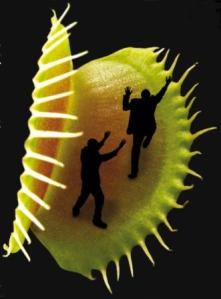
Canberra Repertory opened Deathtrap tonight. A comedy about an ageing playwright ready to kill to get what he wants.
What I found most interesting about Deathtrap was its style. This is a play by an Australian playwright, written in the late 1970s, and very much set in that time and place; but it has all the hallmarks of an excellent British comedy from the 1960s. The madcap humour, dialogue almost entirely dependent on wit, and a very conventional structure, all mark this play as something other than what it is, and were I not aware that it was an Australian play, I would have assumed it wasn’t, despite the references to Sydney’s northern suburbs.
It is a lot of fun: one of those plays that you could well come away from with a sore belly from all the laughing. I didn’t, though. Maybe the timing was a bit off due to opening night nerves, or maybe I just like a little more meat on characters’ bones than Levin provides, but it was good.
Tags: Alison Croggon, Australia, Canberra, Corille Fraser, Deathtrap, Ian Croker, Ira Levin, James O'Connell, Kerrie Roberts, Playwright, Sydney
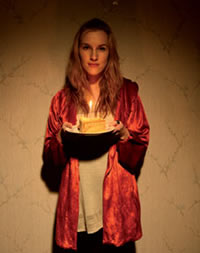
Iain Sinclair says in his director’s note for The Seedthat it is “one of those special pieces that help us see with fresh eyes”. I will assume he is right, but for someone who has had little contact with Vietnam veterans or the IRA, fresh eyes are a given. And in these wars, which are both in a way secreted failures, some of us still need more information.
The thing is that while a little more exposition would have helped, it would also meddle with a well-balanced plot. You can tell a story about one of the World Wars of the twentieth century and assume reasonable knowledge, but these conflicts are a mystery to most Australians, even those who continue to feel their impact on their lives. Of course, that’s why this story is so necessary.
The Seed, ultimately, is not so much about these conflicts as it is about how politics impacts individual lives and families. I find this fascinating, because we in Australia, and, ironically, especially those of us who live in Canberra, are largely unaffected by the goings on in Parliament House, and there are many Australians who never even consider that in some countries a change of government can turn people’s lives upside-down.
While I found it somewhat difficult to relate to the solid and resonant performances of this impeccable cast of three, I felt that this was more to do with my own ignorance of Vietnam and the Irish struggle. I hope in time that we will experience many more stories of the wars that have been fought and lost.
Tags: Canberra, Iain Sinclair, Kate Mulvaney, Pip Miller, Ralph Cotterill, Vietnam, Vietnam War, Wars and Conflicts
We went last night to the opening of Cosi, which was a great affair, as you would expect. Cosi is the story of a young graduate sent to direct a play with a group of patients at a mental asylum. Funny enough as a situation comedy, but Louis Nowra has deftly wound broad humour around a story about the importance of love over politics.
In this production, the comedy outshines the potentially didactic moralising, just as it should, and as a result, the moral stands on its merits, couched in comfortably broad Australian humour.
Bringing classics to the stage is what Canberra Rep does best, and when you stage something that is as well-known as an enjoyable play as Louis Nowra’s Cosi, you get to pick from the best actors Canberra has to offer. That’s what happened here, and it’s one of the main reasons this show is so enjoyable. This is a spectacular cast, and every nuance of Nowra’s characters is instinctively brought to life. They enjoy the show even more than the audience, I’m sure; and even with a few members of the cast needing to work hard to stifle a laugh now and then, they never missed a beat. Who can blame them? After working so hard to deliver the comedy of Nowra’s lines, to finally have an audience roar into laughter is a rewarding experience.
Canberra Rep’s Cosi is simply one of the best nights out you’ll find.
Tags: Canberra, Carly Jacobs, Così, Cosi, Ian Croker, Jim McMullen, Louis Nowra, Soren Jensen, Theatre
Busy as I am, I took the last chance I would have to see Canberra Repertory’s Pygmalion, and I am glad I did. Living up to their excellent reputation, Rep presented a thoughtful and challenging piece of theatre.
Often, a great set and spectacular costumes simply make the performers look dull, as happened with Opera Australia’s My Fair Lady, but not so in this case. A beautifully modern set, clearly a product of 21st century mentality, served as a symbolic gesture to this early 20th century story, complementing the costumes beautifully; and the cast earned every part of it.
As always, accents are a problem with this story. Accents are a difficult thing in theatre, and Shaw does no one any favours by writing a play that is absolutely centred on accent. Jessica Brent’s Lisson Grove dialect was acceptable, and her recieved pronunciation was appropriately awkward. Other characters, however, had no excuse for sounding stilted. The production, nonetheless, survives its slowness, the pathos of Shaw’s characters shining through in the second act just as it should, and the awkwardness of Shaw’s ending was deftly handled.
I really liked this production. Maybe I was just relieved that the cast had taken the time to understand the characters, unlike the cast of My Fair Lady. It was slow, but didn’t drag. It was awkward, but even that was appropriate. In all, a great show.
Tags: Canberra, George Bernard Shaw, Helen Vaughan-Roberts, Ian Croker, Jerry Hearn, Jessica Brent, John Honey, Judi Crane, Liz Bradley, My Fair Lady, Nicholas Tranter, Opera Australia, Pygmalion, Tony Turner
Last Saturday I spent a fortune on a ticket to see Opera Australia’s production of My Fair Lady, and although the ticket price isn’t usually relevant in judging a theatrical production, in this case there is an amusing irony in exhorbitant ticket prices that I’m sure escaped the producers’ attention.
We pay, of course, because we have high expectations of Opera Australia; and the extravagant sets and brilliant costumes combined with the magnificent performance by the Canberra Symphony Orchestra dazzle us into believing that we’ve had the best kind of theatre experience money can buy. And this is precisely the point of George Bernard Shaw’s original story.
A poor flower seller, often impugned as a Mayfair Lady, is taken in by an arrogant academic who wants to prove that he can pass her off as a duchess; and having done so, he finds himself in love with her. Her innate worth, which stood in question, is proven by the fact that she is loved best by the arrogant academic who knows her best.
Reg Livermore’s delivery of Henry Higgins’s one-liners was fine. Well-timed, and responsive to the audience, the performance bore all the hallmarks of a seasoned performer. It did lack, however, a fundamental understanding of the character. It was obvious that this was not Livermore’s ill, as the same could be said for Dolittle, Pickering, and perhaps, even Eliza. It would seem that neither producer nor director had bothered to scrape behind the surface of this deep, dark comedy. Opera Australia’s My Fair Lady was a superficial and entirely inadequate treatment of one of the most profound dramatic works to grace the Western Stage since Shakespeare’s Hamlet.
But who could blame Opera Australia? A high-brow institution without audiences seeking to generate cashflow by staging a popular musical. This was not an artistic endeavour so much as it was an exercise in marketing. And a very successful one. Every performance in Canberra was sold out, despite the exhorbitant ticket prices and the presence of a much more intelligent show literally next door in the Courtyard Studio.
Opera Australia have taken a shabby production, neglecting its more fundamental value, dressed it up in a spectacular fashion, and have charged us a fortune to see it. Just like Henry Higgins, they have taken something they assume to be worthless, they have added a superficial gloss, and have found it to be of value. And just like Higgins, they still misunderstand its innate worth. The irony is delicious. And devastating.
I am hoping for more from Canberra Repertory’s production of Pygmalion later this year. They have a much better chance of making their point, mainly because they’re not using a bastardised version of Shaw’s story.
There is also hope in the upcoming new film of My Fair Lady(scheduled for release in 2010), which is being penned by the very intelligent Emma Thomson and is intended to pay more respect to Shaw’s intentions.
Tags: Canberra, George Bernard Shaw, My Fair Lady, Opera Australia, Pygmalion, Reg Livermore, Stuart Maunder, Taryn Fiebig
Now, I’m not in the habit of commenting on shows that I’ve written myself, but I can paste here a transcript of Bill Stephens’ comments on Mrs Holt, which is one of my own shows, which is currently showing at The Street Theatre…
Canberra Dramatics are a local theatre group which is committed to the development of new plays by playwrights from the city of Canberra and the surrounding region.
Their newest production, which is currently running at The Street Theatre until next Saturday 16th August is Mrs. Holt…written by Canberra playwright Trevar Alan Chilver.
I went along to the opening night of Mrs. Holt last Thursday night and discovered a thoughtful, entertaining and engaging play – not so much about aging – which I might have expected given the setting is in a nursing home ward – but more about changing attitudes and expectations between the generations.
I particularly liked the performance given by Gay Evans as an irascible, old patient called – intrigueingly – Zara Holt …who is the subject of the play.
I have not seen Gay perform before, but she is obviously an experienced actress – who has the ability to wring every ounce of comedy – and pathos – from her role to invest it with depth and interest.
Pete Ricardo, as the male nurse Jack Harris, also impressed with a well judged performance…the other actors in the cast Sarah Daphne, Sarah Ritchie and Cerri Davis.
Staged in a simple – effective and appropriate setting, this is probably the best play I have seen so far from Canberra Dramatics.and although it would benefit from eliminating some of the long black-outs between scenes which allow the pace to drop seriously… if you are at all interested in local playwrighting it is well worth your time to get along and see it.
Mrs. Holt runs at the Street Theatre until next Saturday 16th August. You can find out details of performances and performance times by ringing the Street Theatre or visiting their website.
Tags: Canberra, Cerri Davis, Gay Evans, James Scott, Mrs Holt, Pete Ricardo, Playwright, Sarah Foo, Sarah Ritchie, The Street Theatre, Theatre, Trevar Alan Chilver
Had a great trip to Canberra’s fantastic Dendy again last night, to see Hancock. Cheap Tuesday, and it was busy with hundreds of baby boomers lining up to see Mama Mia! and I ended up in the wrong line, feeling like a complete idiot when I realised that there was no one within cooee of my age in the queue. It was a relief, however, to find that we could walk right into the appropriate cinema and not have to jockey for decent seats.
Hancock is a good piece of cinema, but very light. It’s one of those films with a great premise that kind of falls down when the story should be getting interesting. You could see that spot at the end of the exposition and the conflict where the writers—Vincent Ngo and Vince Gilligan—suddenly realised that they don’t know where they’re going with this story. It’s good, but the best bits are in the trailer. Wait for the DVD.
I’d like to give them ten points for trying, but this is one of those unfortunate films that has fallen victim to the Hollywood movie machine. The idea was fresh and new, which is more than you can say for most American films this century, but the execution just didn’t cut it.
I just wish we had opted for Ten Empty instead. Oh well.
Tags: Canberra, Charlize Theron, Dendy, Film, Hancock, Mama Mia, Vince Gilligan, Vincent Ngo, Will Smith
I have long admired the work of Edward Albee. He’s pretty funny, for an American. And Moonlight’s production of The Goat, or Who is Sylvia was by far the most enjoyable thing I have seen on stage in Canberra since Rep did Noises Off last year. Wall to wall laughs were delivered by a talented cast under the direction of Bridget Balodis, who obviously understands timing and has an excellent command of the dramatic fluctuations of Albee’s work.
The play centres on the infidelity of Martin, and its impact on his small family. Jerry Hearn was assigned a difficult task in the role of Martin; to play a dramatic role in a comedy and do it well is an accomplishment in itself. Christa de Jager also toed the line very carefully between the intense drama of her role, and its comic one-liners. Sam Yeo, playing their son Billy, had a difficult time keeping a straight face as he began his hilarious journey, but his energy and timing, like that of the rest of the cast, was superb.
In all, a great night out. It was nice to be back in my old stomping ground of the ANU Drama Lab, but I was very disappointed with the enormous new seating: in order to avoid DVT I had to sit on an angle with my legs in the aisle, and crane my neck around to see the stage. The designers obviously didn’t consider the fact that many Australians are taller than a metre, or maybe they only expected children to be coming…
Tags: Bridget Balodis, Canberra, Christa de Jager, Edward Albee, Goat, Jerry Hearn, Martin Searles, Sam Yeo, Theatre



 Foyer Talk