About Trevar Alan Skillicorn-Chilver
Trevar Alan Skillicorn-Chilver is an authorised celebrant, a playwright, a teacher and quite a few other things!
While it might be an exaggeration to say that Parkes scooped the 2009 CAT Awards, their achievements were certainly the main highlight of the night. The town of 10,000 may be one of the smaller in the Canberra Area Theatre (CAT) Awards’ broad catchment, but it is certainly punching above its weight in impressing the judges…
For the rest of this article, go to Australian Stage
Tags: 2009 CAT Awards, Arts, CAT Awards, Don Hillam Entertainment, Rhys Holden
Bran Nue Dae is a bit of a romp, but I’m not entirely convinced this film has survived some of its more irksome quirks. By and large the story sings, the direction is clear, and the cinematography is inspired, but a few lines of uninspired dialogue, a few missed beats, and the occasional diversion from the film’s primary mode of storytelling let down what is otherwise a light, unassuming comedy that would do the Australian film industry proud.
Ernie Dingo and
Geoffrey Rush could be said to have saved this film. In the lead role is
Rocky McKenzie, who can sing, but comes across rather wooden, even in singing mode. If it were a stage play, I would say it was over-rehearsed, but I’m not sure that’s possible with film. I would assume
Jessica Mauboy was cast for much the same reason: her voice is spectacular, and this is one of the film’s redeeming features, but the moment she must speak it’s like she seizes up and loses all sense of her character.
Missy Higgins is another actor who was surely cast for her musical talent, but whose performances as a character were charming, mesmerising and hilarious.
I don’t want to be too critical, because I actually really liked the film. It has a great story, some hilarious characters and scenarios, and some really great music. I just couldn’t quite relax into it.
Tags: Bran Nue Dae, Cate Shortland, Cinema of Australia, Ernie Dingo, Geoffrey Rush, Jessica Mauboy, Jimmy Chi, Missy Higgins, Rachel Perkins, Reg Cribb, Rocky McKenzie
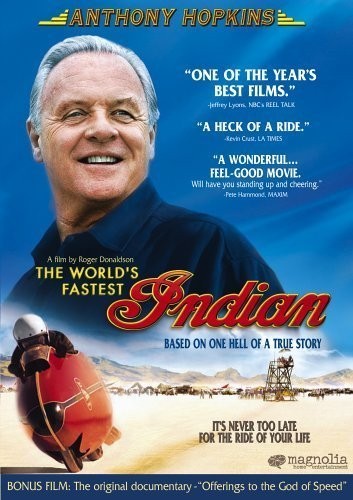
The Kiwis are an amazing bunch of creatives, and are certainly punching above their weight as far as film is concerned. The World’s Fastest Indian is a magnificently-crafted piece of cinema that showcases the country’s talent and attention to detail perfectly.
It’s the true story of Bert Munro from Invercargill, who has spent decades carefully modifying his 1920s Indian motorcycle, and in 1967 travels to Bonneville, Utah to run it on the salt flats in the annual Speed Week competition.
Anthony Hopkins gives a splendid performance with a surprisingly appropriate accent, not only for the character’s New Zealand origin but also his age and personality. And the precision of his performance is simply a footnote to the carefully composed script that really demonstrates the characteristic strengths of the New Zealand mind.
Tags: Anthony Hopkins, Bonneville Speedway, Burt Munro, cultural cringe, Invercargill, New Zealand, Roger Donaldson, Utah, Worlds Fastest Indian
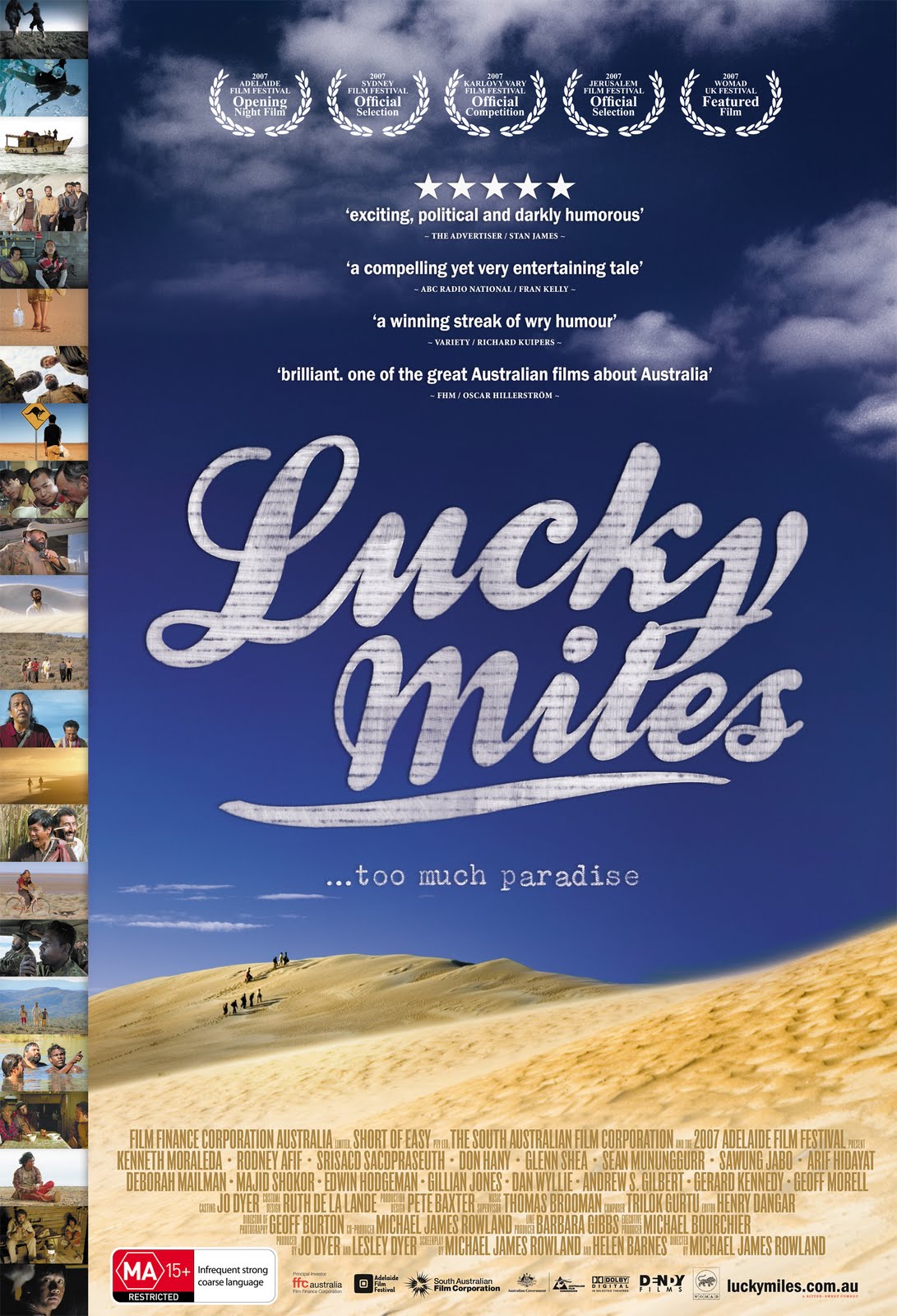
If I told you I had watched a film based on trues stories about boat people entering Australia on the northwest coast, you’d probably yawn. I expected something more like a docudrama when I sat down to watch Lucky Miles, but was pleasantly surprised to encounter a comic drama set in the outback.
There is no sense of that superficial ocker-ness to this film, just a great story, impeccably filmed, and filled with dry, cackle-till-my-throat-hurts humour. Kenneth Moraleda gives an excellent performance as something of a straightman who balances the sardonic humour of the rest of the characters. He provides that balance between comedy and drama that Australian film makers have perfected.
This was a lucky find: I never heard about Lucky Miles when it was in cinema release, but wow! How do the greatest films always seem to miss out on media coverage? It’s a crying shame; find the DVD!
Tags: Adelaide Film Festival, Australia, Boat people, cultural cringe, Helen Barnes, Kenneth Moraleda, Lucky Miles, Michael James Rowland
Film interpretations of literary works are unfortunately subject to comparison with their wordy counterparts and generally make a poor comparison. Sherlock Holmes’ three writers deftly sidestep this risk by taking Arthur Conan Doyle’s characters and situation and giving them a new plot. The result, I think, is a crime story that the master crime writer would have been proud of.
This film departs dramatically from the tradition of depicting Holmes as a Victorian aristocrat and instead shows him as a hero not unlike Spiderman or Mr Incredible, but with substantial flaws that both endear him and make him repugnant to a twenty-first century audience. Robert Downey Junior plays him admirably, but Jude Law’s Watson is the star performance here. Just as in Doyle’s novels, where Watson is the link between the reader and the aloof Holmes, Law’s Watson gives the audience a central character that makes the detached genius accessible.
This film is unmistakably a product of the twenty-first century, but it manages at the same time to illicit that same sense of intrigue from me that reading Doyle’s stories does. The makers of this film have been bold, even brazen, in their interpretation of Doyle’s characters and situations, but the gamble has paid off, and Sherlock Holmes is, as a result, the first film to do Arthur Conan Doyle’s characters justice.
Tags: Anthony Peckham, Arthur Conan Doyle, Guy Ritchie, Holmes, Jude Law, Literature, Mark Strong, Michael Robert Johnson, Rachel McAdams, Robert Downey, Robert Downey Jr, Sherlock Holmes, Simon Kinberg
When the directors’s notes in the program talk about exploring things like anxieties, spirituality and purpose, you worry. Well, I do. I usually expect something that’s more like a ‘performance piece’ than a play, and something that, to quote an esteemed colleague, is ‘as deep as whale poo’. What I don’t generally expect is a play like Death and the Dreamlife of Elephants.
This play, staged at Wellington’s independent Bats Theatre, is the culmination of a collaborative project (I seem to be encountering a few of these this year), that has apparently involved a broad cross-section of the Wellington community. The action is set in Wellington, so I’m glad I didn’t see it on my first night here, because I would have missed half of the references! Nonetheless, I would still have walked out of the theatre a little dazed, a little confused, but nonetheless happy to have witnessed Julian’s story played out, and to have recognised something of myself in it.
Death and the Dreamlife of Elephants could reasonably be slotted into the Deep as Whale Poo genre, but this is probably the first play I’ve ever seen from that genre that has a (discernable) plot, as well as recognisable figures. Of course, the more intellectually challenged of my tribe would have trouble following the plot, but it is there, and it is both engaging and distinct. And as deep as whale poo.
Tags: Bats Theatre, Hannah Banks, Leo Gene Peters, New Zealand, Sara Allen, Vaughan Slinn, Wellington
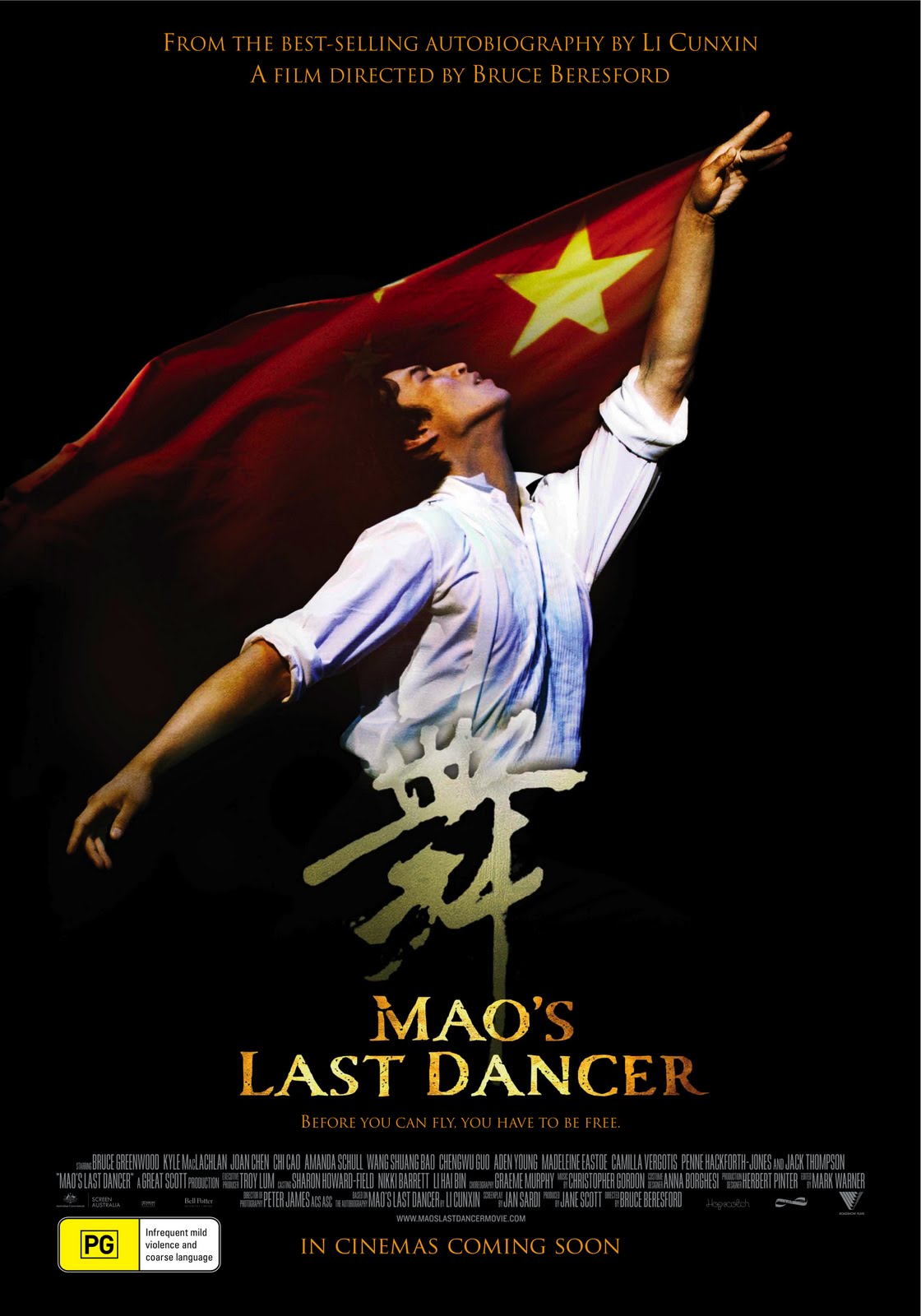
Much is being made of Bruce Beresford’s latest film, Mao’s Last Dancer. It has been released amidst a flurry of discussion about the nature of Australian film, and because it doesn’t deal with a particularly Australian story, it seems to break away from the stereotypical Australian film. Unfortunately, I think this will be the most memorable feature of the film.
Mao’s Last Dancer is the true story, based on the autobiography of the same title, of Li Cunxin, a ballet dancer plucked from obscurity in a small Chinese village to study ballet in Beijing, who went on to defect from the People’s Republic and achieve stardom in the United States. It is an inspiring story, but for my money, not a particularly memorable one.
As we expect from Bruce Beresford, the cinematography is superb, the performances convincing, even from some iconic Australian actors playing Americans. But I think that the only thing particularly noteworthy about the film is its subject matter. This is an Australian film that has next to nothing to do with Australia, and while I would be happy to see more films like this, I fear that the more endearing aspects of Mao’s Last Dancer are overshadowed by this fact.
A good film, with a rather dull plot but spectacular performances, and one that offers excellent insight into a culture we tend to stereotype rather than engage with. Watch it when you’re not at risk of falling asleep.
Tags: Australia, Beijing, Bruce Beresford, Chi Cao, Li Cunxin, Mao's Last Dancer, United States
I have just handed over the reins of my current project, Take Their Life, to the stage manager, Joyce Gore. I thought I was scared of directing anything of Shakespeare’s before, but now I’m even more scared because I no longer have any control over what happens!
I have learned an awful lot from the experience of directing a sacred cow. Having only directed new, or relatively new, works before, I’ve never had to deal with strongly-established and conflicting interpretations of character before. The principles are the same: you look for various interpretations and pick the one that best suits your needs, but when there is such a wide range of varying interpretations, and when some of those interpretations are so firmly entrenched from centuries of analysis, it can be a tough call to pick the one that best suits our purposes.
All directors say it, but it really has been a pleasure to work with such a talented cast. They’ve amazed me at times with their capacity to take an idea I’ve had about how a character should act or respond, and incorporate that into a holistic expression of a character, which essentially is nothing more than a concept. I have found it quite humbling to watch those characters emerge from vague and shadowy ideas in my head into characters who stand and walk about and interact as if they’re real people.
So next stop is opening night, when we turn Shakespeare’s sacred cow into a profane one. I hope people enjoy it, but really, the best part of the experience of profaning a sacred cow is over, and after nine months in development, I am both breathing a sigh of relief, and beginning to fret about letting it go.
Chookas, cast.
Tags: adaptation, Diane Heather, Hannah Dawson, Jon Sharp, Joyce Gore, Melissa Savage, Performing arts, Pete Stiles, Shakespeare, Stage management, take their life, Theatre, William Shakespeare
This afternoon I participated in the democratic process. Sounds very noble and boring, doesn’t it? Actually, I joined a whole bunch of other arty types to talk about arts practice in the ACT and government support for it. It was an interesting discussion, although it will be far more interesting to see what our great and mighty leaders do with our input.
The event was a consultation session run by a private firm contracted by ArtsACT to conduct a review of the arts in the ACT. Amongst a little bit of outright whining, there were some interesting discussions about the way in which governments support the arts, and how arts funding could best be utilised to the benefit of the arts community.
There were a few comments about the level of importation of art product, and the proportion of government funding that flows out of Canberra to artists based interstate or overseas. There was also a particularly interesting point made about the lack of support for arts businesses, which are, presumably, one of the most sustainable forms of arts activities.
But I think the most interesting point made, from the perspective of someone who has only been in Canberra for a little over a decade, was that Canberra had a much healthier and more robust arts community in the 80s and 90s. While I was well aware of most of the organisations, what these ‘older’ Canberrans were reminiscing was an atmosphere of creativity that could rival that of Seattle or Paris. At least one person who had lived through it remarked that she hadn’t thought about it for years. It made me sadly jealous of those who have had a longer association with the city.
Still, I can hold out hope that a new era of cultural vibrancy may yet dawn on our little concrete jungle. The group I found myself in this afternoon certainly has more than its fair share of optimism. One of them was so optimistic that she even thought it possible that our elected officials may one day actually take pride in the achievements of creative Canberrans. I’m optimistic, but not that optimistic. As long as the minister for the arts is a lawyer with a strong cultural cringe against his constituents, I hardly see that happening.
What I hold out hope for is a revival of creative energy. I am in one sense thankful that I don’t have an older picture of what a creative Canberra looks like, because a new era of that kind of culture is sure to look very different from the old one. I was surprised to learn that Happy Feet was largely created in Canberra. That is certainly a different image of creativity from what must have gone on in the 80s and 90s, but that kind of creative energy is something to get excited about (as long as they can find better script writers, because Happy Feet was crap in the dialogue and plot departments).
At any rate, if you would like to contribute your $0.02 worth to the debate, it’s not too late. You can get along to the last consultation session on Wednesday 4 November at Belconnen Arts Centre, or you can complete the survey.
Tags: Arts, Australia, Australian Capital Territory, Canberra, consultation, Government, Jon Stanhope
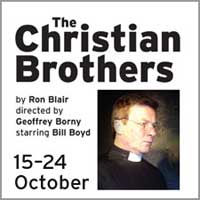
 I am getting a little bored with the whole “let’s say nasty things about the Catholic church” thing that our culture seems to have going on these last few years. Being an older play, Ron Blair’s The Christian Brothers doesn’t suffer from the same simplistic and one-dimensional depiction of Catholicism as its more modern counterparts. It’s refreshing.
This one-man play is about an ageing Catholic school teacher going through something of a crisis of faith in the strangely public context of his classroom. Perhaps the most interesting part of this play is how the classroom itself, while occupied by however many students the audience imagines to be there, can be at once public and private.
Veteran of the Canberra stage, Bill Boyd brings the flawed teacher to life brilliantly, eliciting empathy and laughter as we recognise those flaws that most of our teachers probably also had. This is a great production, and an hour well spent.
Tags: Bill Boyd, Canberra, Catholic Church, Catholicism, Congregation of Christian Brothers, Geoffrey Borny, Ron Blair, Tuggeranong, Tuggeranong Arts Centre
 I think Dionysus was smiling on me when I rocked up at La Mama tonight without a booking. And to be within those hallowed walls was, as always, a humbling experience. The Danger Ensemble‘s The Hamlet Apocalypse illustrates beautifully the human inclination to cling to what we know when facing what we fear.
Director, Steven Mitchell Wright, says that “this work is very simply about a group of actors choosing to perform William Shakespeare’s Hamlet in the face of the apocalypse, the end, death, finality, loss, whichever it is for you”. And while there is an element of simplicity in its performance, there is nothing simple about the way these actors face their apocalypse. Rather, there is an understanding and intense depiction of the very human emotions of fear, anticipation and determination.
Shakespeare’s Hamlet is the perfect partner for this story, and its broad plot arc has been deftly interwoven with these actors’ story. The cast delivers Shakespeare’s dialogue with aplomb, and I may well have wanted to see them simply do Hamlet, were it not for the fascinating development of the actors’ characters. As the cast counts down to the apocalypse, their own fears, insecurities and personalities render some of Shakespeare’s most profound characters dull by comparison with these performers, whose experiences resonate spectacularly in La Mama’s confined space.
Tags: Dionysus, Hamlet, Katrina Cornwell, Kenneth Branagh, La Mama, Laurence Olivier, Lloyd Allison-Young, Mark Hill, Peta Ward, Robbie O'Brien, Shakespeare, The Hamlet Apocalypse, Tora Hylands, William Shakespeare
 When you go to the preview night for a Bell Shakespeare production, it could be for one of two reasons: either you’re too stingy to pay full price, or you’re so damn keen you couldn’t wait… I fall into both categories.
If you’ve read any of the publicity about this production of The Taming of the Shrew, you will probably be aware that it sports an all-female cast. Of course the history of the play’s interpretation, especially in the last century, is all about its gender politics. And rightly so, since it is a theme that cannot be divorced from Shakespeare’s text. But having seen it, I wonder whether the decision to use an all-female cast really entered into the play’s production process. I think it felt more like an academic exercise. A valid and interesting academic exercise, perhaps, but not as exciting as Shakespeare can be when he is lifted above the realm of the rational.
Petruchio is the character that stands to lose the most in being played by a woman, but Jeanette Cronin delivers a slightly insane Petruchio with a singularly spectacular performance. Luisa Hastings Edge likewise delivers a fully engaging and well-rounded Lucentio. Unfortunately, in the case of the remaining male characters, their female performers fail to deliver an entirely engaging performance.
Of course, this may be intentional. Perhaps Director Marion Potts meant for the disjuncture between the performer and character to accentuate our modern discomfort with the shrew’s taming? Perhaps. But if this was the case, it’s unfortunate that it leaves the audience simply uncomfortable and not sure why. Even if the other male characters had been better played by their performers, I still feel that the all-female cast idea would amount to little more than an academic exercise or marketing ploy, offering no enhancement to the production.
I don’t mean to be too heavily critical of Bell’s production, nor of the other performers playing male roles. Despite the unnecessary distraction of the female performers, the production as a whole is excellent, eliciting plenty of laughter and pathos even from a tired old cynic like me.
I especially liked the setting, which immediately put me in mind of Rooty Hill RSL, until I realised that there is no way there’d be five mirror balls at Rooty Hill, and this must therefore certainly be modelled after Parramatta RSL. The use of Karaoke is a nice touch, and I still have Culture Club lyrics swimming around in my head.
So apart from bearing perhaps a little too much concern for its gender politics, I think Marion Potts should be congratulated on a great production of one of Shakespeare’s best comedies.
Tags: Bell Shakespeare Company, Jeanette Cronin, Lucentio, Luisa Hastings Edge, Marion Potts, Petruchio, Shakespeare, Taming of the Shrew, William Shakespeare
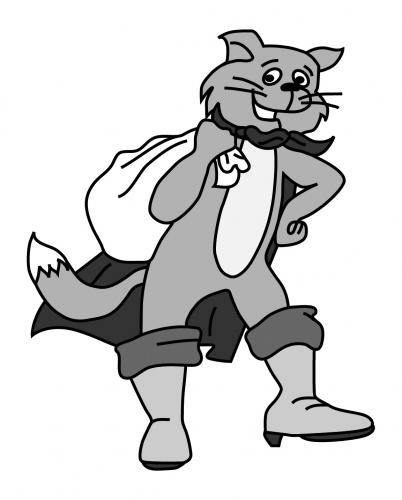
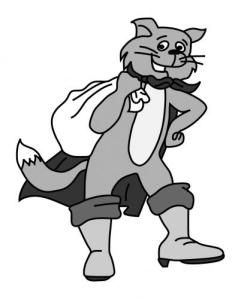 How the magnificent Nina Stevenson manages to harness the enthusiasm of more than 30 youngsters to fill a stage and tell a comprehensible story is beyond me, but with Puss in Boots, she has done this and more, because the show is a delight.
I took my own three youngsters (who have the energy of 30), and they sat enthralled, completely engaged by the show’s larger-than-life characters, especially the evil ones. And who wouldn’t be? There is some fine emerging talent on display, especially in the personages of Rebecca Riggs, who plays the evil sister Rubella, and Adrian Thomas, as her brother Snotty. Even at my age (and with my degree of evilness), I struggle to emit an evil chuckle, but Rubella’s cackle sent shivers down my spine. And their brother TJ, played by the engaging Rory Asquith, was as lovable as his sister was evil.
The principal cast is supported by a young ensemble equally noteworthy for their excellent performances; and the whole show is a magnificent showcase for the talents of these young Canberrans, who I expect will be entertaining us for decades.
Tags: Adrian Thomas, Nina Stevenson, Puss in Boots, Rebecca Riggs, Rory Asquith, Tuggeranong, Tuggeranong Arts Centre
Like most of Canberra’s arts community, I was not anticipating the news that the Fringe Festival would not be funded into 2010, and that the National Folk Festival would be given greater funding to include a fringe event in their program. Jorian Gardner was apparently quite surprised about this, but I can’t say it wasn’t predictable.
Jon Stanhope’s time as Minister for the Arts has seen the loss of many opportunities for emerging artists in the ACT, as well as an ever-increasing flow of ACT Government funding to interstate and international artists. And John Hargreaves, who has responsibility for a number of arts events under the spurious ministerial arrangements of the Labor government, has shown himself to have a very limited capacity for abstract thought. So given that the Minister for the Arts shows very little interest in emerging artists, and the Minister for Multicultural Affairs has no capacity to comprehend the kind of events staged at a Fringe Festival, I doubt there was ever any hope for continued funding of the festival.
Nonetheless, Stanhope has apologised to Gardner for excluding him from the process, and The Canberra Cook is encouraging us to lobby for the continued funding of the Fringe. A protest is also planned for this Thursday (27 August) at 1pm in front of the Legislative Assembly. Personally, I’m completely over this notion of lobbying this government for anything. ACT Labor seem to think they’re exempt from democracy, and would probably like to disband the ACT people and elect another.
Fringe events at the National Folk Festival are unlikely to include a range of art forms, and if the Fringe Festival is unable to find willing supporters to keep it going, it will be a sad loss for artists in the ACT. Fortunately, artists in the ACT are used to dealing with loss, and will no doubt carry on in spite of the ACT Government’s disdain for their work.
For an interesting discussion of this news, see this post on RiotACT.
Tags: Fringe Festival, Fringe theatre, John Hargreaves, Jon Stanhope, Jorian Gardner, National Folk Festival
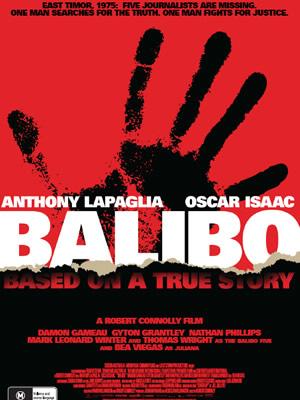
 There is a fine line between a documentary and a movie, but occasionally a film comes along that sits very comfortably on that line. Balibo is one of these. The very true story of Roger East, who Jose Ramos-Horta lured to East Timor in those few days between Portugal’s withdrawal and Indonesia’s invasion in 1975, Balibofollows East’s efforts to find out what happened to the five Australian reporters who had vanished amidst the Indonesian advance.
The film has a unique quality that at once depicts East’s story and allows the audience to engage fully with him as a character, while at the same time telling the story of the Balibo Five with a sense of documentary. The process is not unlike Brecht’s
verfremdungseffekt, in the way that the film shifts from building dramatic intensity to communicating the facts of the story.
This serves the purposes of the film makers very well. Talking about the making of the film (I went to Dendy’s Q&A session), director Robert Conolly talks about the Indonesian government asking whether the film will include the Indonesian point of view, to which he responded that the last thirty years of hearing the Indonesian point of view hasn’t gotten us any closer to the truth. I am not in a position to comment on the accuracy of this film as a historic record, but as a piece of cinema, it has more human honesty than your average documentary, and more depth than your average movie.
East Timor celebrates ten years of independence later this month, so this is a timely release, in a way. It is, however, an Australian film about six Australians. What remains is to hear the stories of the East Timorese who suffered 24 long years of Indonesian rule. The makers of Balibo are aware of this, and provided training to East Timorese working with them on their film, in the hope that they will one day do so.
Tags: Anthony LaPaglia, Balibo, Damon Gameau, David Williamson, Dili, East Timor, Gyton Grantley, Indonesia, Jose Ramos-Horta, Mark Leonard Winter, Nathan Phillips, Oscar Isaac, Robert Connolly, Roger East, Tom Wright
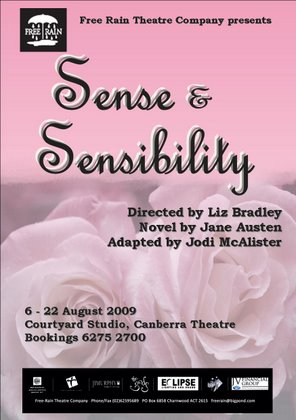
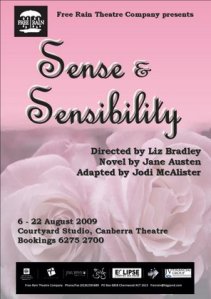 Jane Austen’s novels don’t appeal to me greatly, but the quality of her wit is superb. Although Sense and Sensibilityis not a novel that readily lends itself to a dramatic adaptation, Canberra’s own Jodi McAlister has done a fine job of condensing Austen’s story into two hours of engaging stagework.
One of the most memorable characteristics of Austen’s work is the importance of the subtext, and the many paradoxes that are inherent in such a context. Drama, of course, thrives on paradox and subtext, but the sheer volume of these found in Austen’s work has been the downfall of many dramatisations of her stories. In this production, I think both Jodi McAlister and Liz Bradley are to be commended for their work in focusing the attention and keeping the journey of the characters paramount.
A great performance by the cast was punctuated by three stellar performers in the roles of the three Dashwood sisters. Alex de Totth, Ylaria Rogers and Nicola Grear are most notable in the degree to which they are able to balance the humour of their roles with the truth of their characters’ experiences. This is critical to Austen’s stories, and the success of this production owes much to these three performers.
I have never been a great fan of Austen, but have always enjoyed the quality and intensity of her satire, and am very pleased that this production managed to express it so well.
Tags: Alex de Totth, Canberra, James Scott, Jane Austen, Jodi McAlister, Liz Bradley, Martin Searles, Nicola Grear, Sense & Sensibility, Sense and Sensibility, Ylaria Rogers
I really must come up with a good reason why I don’t like follow spots and smoke. Normally my dislike of them doesn’t matter, but in the case of
Chess, they use them right at the beginning, and they use them well! Why is this a problem? Well, if you don’t like follow spots and you don’t like smoke, but the first thing in the show is a follow spot and smoke, it distracts you from the show. It’s not a problem with a poor show, but unfortunately, The Q’s production of
Chess is not a poor show, so I feel I need to justify my dislike of follow spots and smoke. One day, my prejudice will have a justification, but this is not that day.
Chessis just too good.
Chess is, in many ways, poles apart from Krapp’s Last Tape, which I gushed about the night before, but it shares two important characteristics: it tells a remarkably human story, and allows an audience to engage in some depth with its central characters. That said, I think I missed some elements of that story, due to some distortion of Tim Rice’s lyrics. I am unsure whether this was a problem with enunciation or amplification, but I suspect the latter. Of course, putting such complicated sentence structures into lyrics was probably a bad idea in the first place, but in this instance it was not a fatal one, probably due to the talents of this magnificent cast.
The ensemble gathered for this production must be one of the best I have seen in Canberra, but they were not a patch on the magnificent talents of principals Stephen Pike, Christine Forbes and Lexi Sekuless. Even an old cynic like me felt goosebumps!
Tags: Adrian Flor, Benny Andersson, Bjorn Ulvaeus, Canberra, Chess, Christine Forbes, Derek Walker, Lexi Sekuless, Roy Hukari, Stephen Pike, Tim Rice
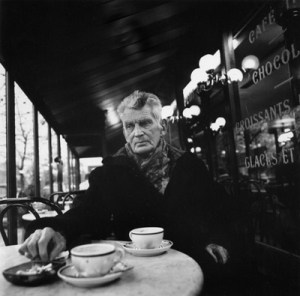 Opening at Tuggeranong Arts Centre, Krapp’s Last Tapeis one of Samuel Beckett’s more well-known plays.
Sitting, as I am, and contemplating what I want to say about Krapp’s Last Tape, I think about commenting on the set, the actor’s performance, the lighting, the direction; but all of that seems to undermine this play. This is a story about a man who made a decision decades ago, and whose existence is not haunted, but shaped by the consequences of that decision. And nothing matters more than that character.
Of course, the design elements have to be properly balanced, or the character won’t be visible. Ian Croker’s set, Jack Lloyd’s lighting, and Len Power’s sound design are as important as Graham Robertson’s performance, but all of these must be properly balanced, and nod gently to the presence of Beckett’s ‘hero’. I think this is the great strength of this production. All of these design elements are indeed balanced perfectly, giving the audience perfect access to the character.
I had read Krapp’s Last Tape many years ago, and enjoyed it at the time. Like any of Beckett’s work, it is difficult to read, but it absolutely sings when a performer embodies it. Graham Robertson is a veteran of the Canberra stage, and as one would expect, he brings Beckett’s miserable Krapp to life. His engrossing performance is punctuated with perfect delivery of Beckett’s dry humour.
I will argue to my dying day that the use of the word ‘absurd’ to describe Beckett’s world view is absurd. He is a logician, and his work epitomises logic. It might baffle a person who tries to read it, but in performance Beckett’s work is simplicity itself. And Krapp is a superb example of Beckett’s magnificent capacity to tell a story. Nothing beats that.
Tags: Beckett, Canberra, Courtney Blanch, Geoffrey Borny, Graham Robertson, Helen Hunter, Ian Croker, Jack Lloyd, Krapp, Krapp's Last Tape, Last Tape, Len Power, Liz Topperwein, Samuel Beckett, Tuggeranong Arts Centre
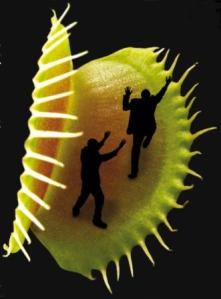
Canberra Repertory opened Deathtrap tonight. A comedy about an ageing playwright ready to kill to get what he wants.
What I found most interesting about Deathtrap was its style. This is a play by an Australian playwright, written in the late 1970s, and very much set in that time and place; but it has all the hallmarks of an excellent British comedy from the 1960s. The madcap humour, dialogue almost entirely dependent on wit, and a very conventional structure, all mark this play as something other than what it is, and were I not aware that it was an Australian play, I would have assumed it wasn’t, despite the references to Sydney’s northern suburbs.
It is a lot of fun: one of those plays that you could well come away from with a sore belly from all the laughing. I didn’t, though. Maybe the timing was a bit off due to opening night nerves, or maybe I just like a little more meat on characters’ bones than Levin provides, but it was good.
Tags: Alison Croggon, Australia, Canberra, Corille Fraser, Deathtrap, Ian Croker, Ira Levin, James O'Connell, Kerrie Roberts, Playwright, Sydney

Opening night of David Williamson’s Let The Sunshine and The Street Theatre was full. Well, you wouldn’t expect any less for one of Williamson’s plays, would you?
I would like to describe this play as an amusing double-autopsy of capitalism and socialism, but that hardly does the play justice. Williamson’s superb play demonstrates the inability of these two-dimensional political ideologies to deliver what they promise their adherents, through characters who, despite being built on one or the other of these ideologies, are forced to grapple with humanity in three dimensions.
I think some of Williamson’s best qualities as a writer are on display in this piece; the intricate crafting of character and plot is astonishing to reflect on. This, like most of his work, is a plot-driven story, but that plot is clearly driven by the characters, and their individuality, their connectedness and their ideologies dominate the plot. Without the cast of distinguished actors assembled by the Ensemble Theatre, the text could be very dense, but it resonates beautifully as a play for today.
Tags: ANdrew McFarlane, David Williamson, Emma Jackson, Ensemble Theatre, generation gap, Justin Stewart Cotta, Kate Raison, Let the Sunshine, Sandra Bates, Theatre, Toni Scanlon, William Zappa










 Foyer Talk