About Trevar Alan Skillicorn-Chilver
Trevar Alan Skillicorn-Chilver is an authorised celebrant, a playwright, a teacher and quite a few other things!
 In a very short season at The Street Theatre is Brecht: Bilbao and Beyond. Not a play, but a series of songs, fables, poems and excerpts of plays, all written by the impeccable German wordsmith, Bertholt Brecht, and performed by two veterans of the stage whose presence is gentle, inviting and absolutely engaging.
Tracing elements of Brecht’s life and work from birth to death (and then back a little), we are treated to just a few gems of his amazingly generous humour and capriciousness…
The rest of this post is published on Australian Stage.
Tags: Bertolt Brecht, Bilbao, Brecht, Caucasian Chalk Circle, Chuck Mallett, Gillian Schwabb, John Muirhead, Kurt Weill, Mother Courage, Paul Dessau, Rohan Haggart, The Threepenny Opera, Theatre
 Life is made up of a few critical moments separated by a lot of thinking about how we should have responded in them. Melita Rowston‘s play, Crushed, now playing at New Theatre, explores the struggle of dealing with regrettable decisions when they coincide with a disaster.
Crushed is the story of three school friends reunited 22 years after the disappearance of their mutual friend, Susie. Susie’s body was never found, but her shirt—that characteristic late 80s ‘Poison’ shirt—has just been discovered and the case is reopened. Kelly returns from Prague and finds a bed at Jason’s house first, then ends up moving to a room in Dazza’s pub. Sexual tensions between the three are never resolved, but that pales into insignificance against the doubt…
The rest of this post is published on Australian Stage.
Tags: Crushed, Eliza McLean, Jennifer Campbell, Jeremy Waters, Lucinda Gleeson, Lucy Miller, Melita Rowston, Poison (band), Prague, Richard Whitehouse, Sean Barker
 It never ceases to amaze me how often producers of musicals in Canberra select the most horrible musical in the canon and then cast highly-experienced and impeccable performers to work with expert crews to try in vain to turn the sow’s ear into a silk purse. I’m sorry, but I’ve already lost more than eight hours of my life to Cats, and if too many of my friends hear that someone’s doing it again this year, I will feel obliged to go along and sacrifice another four to that worthless tray of kitty litter that continues to blight our theatres. Thankfully, Phoenix Players have taken almost the opposite approach with the show I saw tonight.
How to Succeed in Business Without Really Trying is a gem from that time when Broadway and Hollywood were genuinely in sync and both knew how to tell a story. In its script we meet lovable, hilarious characters who drive a generously funny plot forward with all the vim and vigour of Russell Crowe‘s interactions with service industry staff.
Chatting to first-time director, Richard Block, after the show, I was surprised to learn how many of the cast and crew were also first-timers. While there might have been the occasional glimpse of this, for the most part, these theatre virgins gave great performances led by Adrian ‘flawless’ Flor in the role of J. Pierpont Finch.
For me, the highlight of the night was definitely the rendition of Been a Long Day, which was simply charming, and really showed off the calibre of vocalists and actors this show boasts in Adrian Flor, Vanessa De Jager and Hannah Wood. The performance of this number was impeccable, not only for its vocal qualities but also because it was the only moment in the show when I felt genuinely engrossed in the moment and the characters’ experience rather than the writers’ conceit.
Unfortunately, no matter how much I enjoyed the performances of this very successful cast and their hilarious story, the misogyny of the three blokes who wrote it was never far from my mind. I have heard it said that it is a comedy, and should be interpreted as a mockery of sexist attitudes, but if there is any intention of this, it simply isn’t clear enough to allay my repulsion. Even at the time the play was written, the feminist movement was close to a century old, and it seems odd in such an age for chauvinism to be so firmly embraced, and made funny without really being mocked. So as much as I enjoy the show, its beautifully human story and its humour, the values it espouses just undermine my attempts to fully engage with its characters and their experience.
So, I have a bit of a mixed response to How to Succeed in Business Without Really Trying. On the one hand, I think it’s a great musical, carefully constructed, with excellent music (and comparable lyrics) and it’s absolutely hilarious. On the other, I find it difficult to concentrate on the humour in the presence of such misogyny! I guess I may just take things too seriously for my own good. Regardless of my indecision, though, Phoenix Players’ production is a romp, and certainly one of the best choices of musical any musical production company in Canberra has made in the last decade.
Tags: Adam Salter, Adrian Flor, Alex O'Sullivan, Amy Chilver, Broadway theatre, Canberra, Cats, Hannah Wood, Hollywood, How to Succeed in Business Without Really Trying, Michelle Norris, Miriam Miley-Read, Miriam Rizvi, Nick Brightman, Phoenix Players, Richard Block, Russell Crowe, Vanessa De Jager, Wayne Shepherd, Zack Drury
 Taking Offspring Number One off to Manuka to get a bit of the benefit of having the French Film Festival in town was quite an experience! I haven’t been to this cinema in years, and it hasn’t changed at all (even the popcorn tasted like it might have been there since my last visit!). But this film made it all worthwhile.
La Guerre Des Boutons (or The War of the Buttons for those who are too lazy to figure that out!) proved an excellent choice given that we don’t have time to see more than one this year. But really, how could you go wrong with any film in a French film festival?
The premise is simple; gangs of boys from two rival country towns in walking distance of each other elevate a long-standing tradition of conflict to all out war in which the greatest victory comes by the ceremonial removal of the buttons from the opponents’ clothes. It may not sound all that terrifying, but the wrath of a French mother towards a son returning home with no buttons is nothing to be scoffed at!
The film is a romp, but in that inimitable French style, the humour is offset by some brilliantly crafted characters, whose more human side is shown as the impact of the Algerian War is felt in the town. The balance between humour and the film’s more serious themes is impeccable, making La Guerre des Boutonsa film for all ages.
Tags: Algerian War, Alliance Francaise, Cinema of France, Eric Elmosnino, French Film Festival, Greater Union Manuka, Movies, Vincent Bres, Yann Samuel
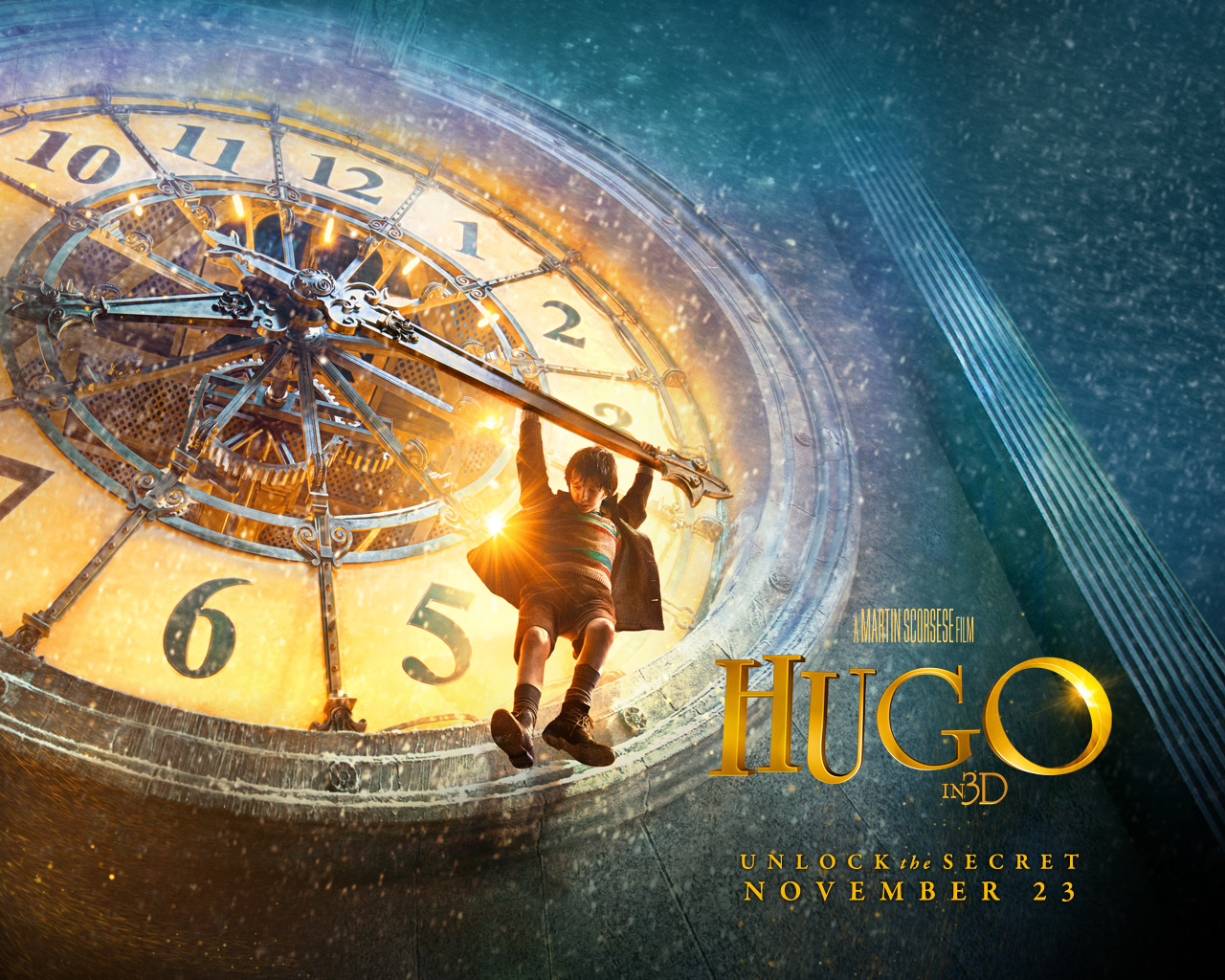
Hugois a great film, although it is about half an hour longer than it needs to be and (coincidentally?) half an hour too sappy.
Set in Paris, it’s the story of an orphan in the care of his drunkard uncle, who undertakes his uncle’s work to remain in his home in
Gare Montparnasse, to avoid ending up in an orphanage. His home puts him in the perfect position to pilfer the bits he needs to continue his dead father’s work restoring an old automaton, but it also puts him at risk from the station’s other denizens.
The story is excellent, and the visual effects stunning. The characters are beautifully composed, and the whole film sings… as long as you’re patient. This film would have been so much better if it had been written by a Frenchman; its American screenwright, however, has seen fit to weigh it down with as much schmaltz as he could muster. It’s a shame, because it would be just about perfect without it.
Tags: Gare Montparnasse, Hugo, John Logan, Martin Scorsese, Movies, Paris, United States
Meryl Streep‘s magnificent Maggie Thatcher well and truly matches Helen Mirren‘s remarkable Queen. It helps, of course, that the script is so well written by Abi Morgan, but to humanise this incredible woman is a great achievement, whoever you give the credit to.
Of course, it is only her most obvious frailty that provides the window of opportunity. Morgan’s script capitalises on the ageing Thatcher’s senility, and I don’t think there is any other way really to bring the woman down to earth enough for an audience to relate to her as a character.
The film lacks some of The Queen‘s zing. It creates magnificent character, but because of its broad sweep, it fails to create such a clear focus and the character is only just enough to cover the rather flat narrative structure.
The Iron Ladyis a very good film, and one well worth watching. But just in case any of you Poms were thinking about it, I’ve now seen enough biographical films about your twentieth century politicians. They’re really not that interesting.
Tags: Abi Morgan, Biographical film, feminism, Helen Mirren, Iron Lady, Margaret Thatcher, Meryl Streep
Late though I might have been, I finally managed to take the kids along to see The Adventures of Tintin. They weren’t that interested at first, and I can understand why, since the marketing is targeted at a higher age group and is certainly intended to attract adults. And by the time we went, it was no longer showing at Limelight, and we had to settle for Hoyts.
I don’t know why I particularly wanted to see this movie, as I never read the comics or had any experience of it before, but the trailer had me enthralled, and I was really keen. Obviously, the usual problem with films that you’re really eager to see is that they fail to live up to expectations. Not the case with Tintin.
The characters are really engaging, especially the bumbling detectives who are simply the most hilarious of characters. Tintin himself is endearing in a very personable way, since he is admired by all the characters for his prowess, but is nonetheless genuinely concerned with other people’s welfare. He is, at the same time, subject to frustrations and these shine through with pristine dialogue and amazing animation.
I’m not normally a fan of animation that looks too realistic, I’d usually prefer cartoons to look like cartoons, but in this context it just works.
The Adventures of Tintin is barely a children’s movie; there is a fairly long-running theme of violence, but it is handled well, and though my daughters (age 10 and 7) tensed up a lot, I never felt uncomfortable with the level of violence they were seeing.
This is a great film, especially for its characters, but also for its excellent animation.
Tags: Adventure of Tintin, animation, comics, Edgar Wright, Film, Herge, Hoyts, Joe Cornish, Limelight, ship, Steven Moffat, Steven Spielberg, Tintin
 |
| Chelsea Preston-Cormack as Tilley Divine |
I missed the earlier installments of the Underbelly series, and after seeing this season, that’s something I regret. What I’ve seen has been impeccable drama. It is rare to encounter a historical series that marries great dialogue and characterisation with historical accuracy, but Underbelly Razor has done just that. Remarkable, too, because it comes from the WIN Network, who usually avoid broadcasting anything of substantial quality at all costs.
The clever use of music from recent decades covered as jazz numbers from the nineteen twenties is a touch of genius. It stamps the series as modern (just in case you’re not watching it in HD), and draws the audience into the period with much-needed humour. The dialogue only occasionally diverted from the vocabulary of Australian English in the period, and the settings for the action of the series are impeccably depicted. Few films manage such superb historical aesthetics, but it is especially remarkable for a television series.
The series’ two protagonists, Kate Leigh and Tilley Devine, are played by Danielle Cormack and Chelsie Preston-Crayford respectively, and their performances have been thoroughly engaging. While Danielle Cormack is a familiar and welcome face on our screens, I’ve never seen Preston-Crayford, and she is equally noteworthy. She also gained my attention because she’s playing the namesake of one of Canberra’s best-known cafes, and this explains a lot for those of us who live in the capital!
 |
| Danielle Cormack as Kate Leigh |
Dealing with Australian history in this manner is refreshing. I have recently been working on a play set in Sydney in the 1880s and was surprised that I could not find a single novel, film or play that takes the city as its setting in this era. Our focus on the bush was not just dominant; it was absolute. The focus of Underbelly Razor on a Sydney story in the era of Dad and Dave, when we generally like to see ourselves as a quaint agrarian outpost of the British Empire, is both novel and redresses an unfortunate imbalance. I hope its a sign of a maturing national image.
Underbelly Razor is, of course, not without its historical faults, though most are negligible. The one notable problem is the way the police are depicted. The senior ranks of the New South Welsh police seem genuinely concerned with law and order, which seems to be at loggerheads with the histories I’ve read covering law and order in Sydney in this period. The police were as actively involved in the underworld as Tilley Devine and Kate Leigh, and to depict them as antagonists is taking a lot of dramatic licence! The inherent and utter corruption of the New South Welsh Police Force is known to have been a key factor in the development of the Sydney underworld from the early nineteenth century until the end of the twentieth, and this series treats police corruption merely as a minor theme.
I will accept this as dramatic licence, as the research required to depict the rest of this world must have been substantial, and I can’t see how the writers could have been entirely ignorant of the key role the police played in the Sydney underworld. And forgiving them this licence leaves possibly the best television series I’ve ever seen; and I love television! Underbelly Razor has the production qualities of our best films, with excellent performances, great dialogue and a great story, well told.
Now I want to see the earlier seasons!
Tags: Chelsea Preston-Crayford, Danielle Cormack, Kate Leigh, Larry Writer, Morgan Christie, Nine Network, Screentime, Sydney Theatre, Underbelly, Underbelly: Razor
Introducing his film at the Canberra International Film Festival, director Dome Karukoski talked about the Finnish cultural cringe, and my first thought was that this would relate well in Australia, where our national identity is also commonly defined by our deficits. Lapland Odyssey is a hilarious romp through a landscape that’s about as foreign to Australia as it is possible to get, but its characters and humour will be as familiar to audiences of Australian films as sunshine and barbecues.
Karukoski is suitably cynical of the saleability of a comedy that starts with five suicides, but this black opening sets the tone perfectly for the hapless Janne. In his all-night search for the digibox he needs to secure his marriage, Janne leads his two hapless friends into Finnish Lapland wilderness amongst blizzard conditions, Russian tourists, the Aurora Borealis, animatronic deer and not a few boobs.
If I have to watch a formula film, the road movie is always my favourite. The formula, at its best, lends itself to a strong and consistent plot arc, excellent characterisation and endless laughs. Lapland Odyssey has all these features and is a model of the genre.
It puts me in mind especially of what I think is one of Australia’s best comedies: Lucky Miles. Also a road movie, it is set in our most extreme landscape and finds humour in the imperfections of our national character. Lapland Odyssey does much the same in a Finnish context, and is also funny as hell!
You may have missed your chance to see this as part of the 2011 Canberra International Film Festival; for a taste, the trailer is here.
Tags: Canberra International Film Festival, cultural cringe, Dome Karukoski, Humour, Jasper Paakkonen, Jussi Vatanen, Kari Ketonen, Lapland, Lapland Odyssey, Lucky Miles, Pamela Tola, Timo Lavikainen
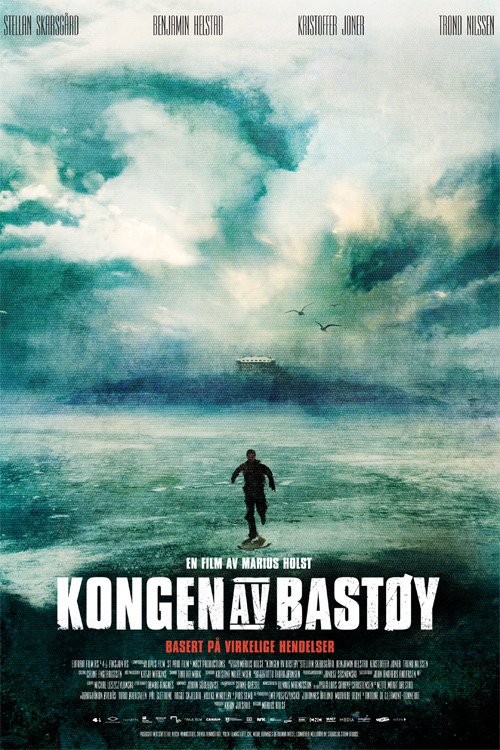
The violence of power and the power of violence are both explored beautifully in King of Devil’s Island. A true story, based on events occurring in 1915 at Bastøy Island in the Fjord of Oslo; a detention centre for ‘maladjusted boys’, as the subtitles tell us.
Maladjusted is somewhat ironic in the context of this story. The boys in the film are remarkably well-adjusted, and have as keen a sense of right and wrong as their ‘protectors’. Each of the film’s protagonists fail at some point to act according to their convictions, as do their protectors, who subtly develop into the story’s antagonists.
What I like most about this film is that although it casts certain historical figures clearly in the role of antagonists, all of them are fully developed, and all but one are depicted with a degree of empathy. Just like the protagonists, they’re pawns in a bloody game of chess being played by rulers as remote and inviolate as kings. Violence, in this context, is the inevitable response.
I can hardly put into words how much I like this film. Beautifully shot in the fjords, with precise timing matching the mood of the film to the development of the winter and remarkable performances from a very talented cast. This film is perfect.
You may have missed your chance to see this as part of the 2011 Canberra International Film Festival; for a taste, the trailer is here.
Tags: 4 1/2 Film, Bastoy, Benjamin Helstad, Canberra International Film Festival, Denis Magnussen, Eric Schmid, Johan Soderqvist, King of Devil's Island, Lars Saabye Christensen, Marius Holst, Mette M. Bolstad, Norway, Oslo, Stellen Skarsgard, Trond Nilssen
Toomelah is a particularly interesting film, if not especially engaging. Writer and Director Ivan Sen went into the New South Welsh township of Toomelah, which began life as an Aboriginal mission, and filmed this story with the local community performing the roles. As characters and performers, they offer a lot. They are, in a sense, playing themselves, and although the story is fictitious, the setting and the circumstances of life in Toomelah is very real.
After the screening at Arc, Sen described the experience of making the film in this community. He went alone, with no film crew, in order to get unhindered access to the community, and to allow the performers more scope to ignore the camera. The effect is remarkable; these characters come to life, despite having just about the thinnest plot I’ve ever seen. There was one point while watching the film when I wondered whether the story was actually just Sen following Daniel Connors around and filming his real life.
The reality, though, is that this is a fictitious story about a real community, played by the people of the community. The slowness of life in this community is, presumably, captured faithfully, but unfortunately I don’t think this verisimilitude does the film any favours. It asks a lot of the audience to keep watching, and while I think this is often acceptable, it is more effective when the story is more engaging.
I think it is particularly important that we tell the story of diverse Aboriginal communities, but I still think these stories need to be told in the dominant storytelling form of our society. While Toomelah is a film worthy of our attention, I doubt it will get much. With a plot arc this slow, it takes pre-established empathy with the characters for an audient to sit through it.
So I find it sad that I don’t think Toomelah will get much attention. It is worthy of every Australian’s attention, but its interest lies in the way it was made and what it offers as a picture of life in this community, rather than being intrinsic to the film.
Tags: Arc Cinema, Australia, Australian Aborigines, Canberra International Film Festival, Christopher Edwards, Curious Films, Daniel Connors, David Jowsey, First Australians, Ivan Sen, Michael Connors, New South Wales, Screen NSW, Toomelah, Visit Films
Political turmoil is an incubator of dramatic writing, and historical plays about moments of political change are relatively common. Less common are plays set in moments of political turmoil that are about the lives of people who lived through these moments, rather than about the political agitators who created them. This is a shame, as Tessa Bremner’s play The Dark Side of Midnight demonstrates with its very heartfelt story about British colonists living through the Partition of India…
The rest of this post is published on Australian Stage.
Tags: Andrea Close, Anne Somes, Brian Kavanagh, British India, Dallas Bland, Dot Russell, Drama, Eliza Bell, Free Rain Theatre, India, Josh Wiseman, Lainie Hart, Partition of India, Politics, Tessa Bremner
I suspect this may be the first time I’ve seen a New Zealand play on an Australian stage. It’s a novel irony to hear actors we know to be Australian making disparaging remarks about Australia in a New Zealand accent!
The rest of this post is published on Australian Stage.
Tags: Adriano Cappelletta, Australia, Canberra, cultural cringe, Ensemble Theatre, Henri Szeps, Joe Orton, Mary Regan, Michael Ross, New Zealand, Noel Coward, Roger Hall, Sandra Bates, Sara Bovolenta, Sharon Flanagan, The Street Theatre
 Odd that I should pass the small band of faithful in Martin Place for ‘Occupy Sydney’ on my way to see The Hunter. Odd, because this film is an interesting take on the idea of a big faceless corporation hiring a hit-man to take care of some business. Only the victim in this case is not to be just one person but an entire species, and they don’t just want it dead, they want its DNA. Creepy, yes; and a great premise for a film. What a shame the script wasn’t better developed.
The Hunter doesn’t disappoint entirely. A strong storyline and some very interesting relationships develop. Despite some unfortunate stereotypes there is some genuine complexity in the fabric of the film, but The Hunter lacks any real character development. Now, I’m all in favour of plot-driven stories, but the plot in this film doesn’t move fast enough to carry well without stronger characters. The hunter himself, played by Willem Defoe, is two-dimensional and lacks any back story to justify his quiet demeanour. By the time he reaches the climax, we still don’t really know him. The vaguely heroine-like Lucy Armstrong doesn’t quite make it to romantic lead, but despite the lack of script development, Frances O’Connor does a great job of bringing her to life. Apart from the very engaging children, played by Morgana Davies and Finn Woodlock, the rest of the cast are just plot devices.
I still think there’s a lot to love about The Hunter. Tasmania’s wilderness is a landscape that was made to be a film set, much like Utah’s Monument Valley was, except the Tasmanian bush has mood swings. Really, what the characters lack is almost made up for by the bush, which certainly changes its mood more often than Willem Defoe does. I’m not just being flippant; the bush genuinely works for this film, and the cinematography is exceptional, which makes the poor script all that much more disappointing.
This one’s not worthy of a cinema screen, but it’s worth seeing when it comes to TV. And I really did like it.
Tags: Daniel Nettheim, Finn Woodlock, Frances O'Connor, Lucy Armstrong, Monument Valley, Morgana Davies, Occupy, Occupy Sydney, Porchlight Films, Sam Neill, Tasmania, The Hunter, Willem Dafoe
The warmth of John Kolvenbach’s play Love Song is brought to the fore in Centrepiece‘s production, which opened at The Q in Queanbeyan tonight. This play brings a vibrancy to themes that can be cold and stark, drawing humour and humanity into some otherwise dark places.
The rest of this post is published on Australian Stage.
Tags: Arts, Australia, Ben Crowley, Darren Cullerne, Emma Sekuless, Erin Pugh, Jenna Roberts, Jim Adamik, John Kolvenbach, Jordan Best, Matt Balmford, Queanbeyan, Sophie Benassi, The Q, Theatre, Tim Sekuless
As a playwright who calls Canberra home, the thought of writing a play about politicians or politics has crossed my mind a few times. I’ve even started once, before giving up in disgust at the depressing result of that folly. I’m glad, though, that Alana Valentine gave it a better shot when she sat down to write MP.
The rest of this post is published on Australian Stage.
Tags: Alana Valentine, Andrea Close, Canberra, Caroline Stacey, Geraldine Turner, Imogen Keen, Leah Baulch, Nick Merrylees, Soren Jensen, Stephen Barker, The Street Theatre
I think it was family loyalty that took me along to Avenue Q. That, and some pretty high recommendations on Facebook and She Who Must Be Obeyed telling me to go see it while I still had the chance. Honestly, the idea of yet another bit of children’s pop culture being appropriated for the adult market just wasn’t appealing.
But in true Canberra musical theatre style, our ‘amateurs’ have redeemed a rather dry book and presented something truly spectacular. Technically, it was almost faultless. Apart from a few occasions when I couldn’t hear the words over the band, I was blown away by how great these guys sounded. And it was a tiny band too; all I could see were two keys, two strings and a hitter who had plenty of space to rattle about in the pit.
The kudos, though, goes to a great cast, most of whom had to learn to control two bodies rather than the usual one. And it was fun just to observe as an audient that at first I had to keep reminding myself to look at the puppet rather than the actor! In time they blended, which just made the whole puppet/puppeteer thing work so well. At least in individual scenes it did.
As a whole show, though, Avenue Q just doesn’t hold together very well. Whose story is this? What is it about? And why couldn’t they just pick a story and stick with it? There are some interesting characters here that really deserve better treatment! But that’s musical writers for you; most couldn’t see a story if it played itself out on a stage in front of them!
I think, really, Avenue Q is a musical trying to be cutting edge and funny at the same time. It only succeeds in the latter, and occasionally fails at that because it’s trying to be cutting edge. Does that make sense? Probably not, but I know what I mean. And whatever it’s failings, Supa‘s cast and crew have outdone themselves. I had a ball.
Tags: Amy Dunham, Avenue Q, Canberra, Christine Forbes, Garrick Smith, Jeff De Zandt, Jeff Marx, Max Gambale, Musical theatre, Pete Ricardo, Robert Lopez, Sarah Golding, Supa, Tim Stiles
Opening with a convivial vibe at The Street Theatre tonight, 22 Short Plays by David Finnigan is a series of shorts carefully drawn together from longer works and staged by Melbourne’s MKA.
It should not be taken as a bad thing that I really don’t want to see the more complete scripts these shorts came from. As they stand in this context, they’re often funny and always clever. While most of the characters tend towards either caricature or the absurd, there is the odd moment when something jumps out as rather more insightful, and the absurdity of the real world dwarfs the absurdity on stage. But it’s not often this kind of concept drama plays out well in long form, and perhaps Finnigan is a master of the short form.
The rest of this post is published on Australian Stage.
Tags: Brad Williams, Conor Gallacher, David Finnigan, Kerith Manderson-Galvin, MKA, short plays, The Street Theatre, Tobias Manderson-Galvin
I have just had one of the most enjoyable experiences of Shakespeare’s work I can remember. Broadway Bard, part of the Sydney Fringe, is a show in which a bunch of random soliloquies or scenes (and even a couple of sonnets) and match it with a Broadway song. Simple enough. But the vivacity with which this concept has been realised is refreshing and very real.
Setting the tone by reminding us that Shakespeare didn’t write for academics, but for the brutal criticism of the paying customer, Julian Kuo, the voice of the show, proceeds at an almost frantic pace through a selection of bits of the plays and sonnets of the Bard. His recitations of Shakespeare’s words are just brilliant, and his performances of the musical numbers are inspired. He holds a great rapport with the audience throughout, and is most engaging as an almost-solo performer.
Kuo is supported by Isaac Hayward on piano, who must find it tiring at such a long sitting. His entrance, however, was awkward, and I’m not sure the director achieved what he was aiming for. Pianists, unless they are also actors, are probably best left at the piano. Especially the really good ones. Kuo could have used some better direction, too. Despite excellent presence, the stage at times felt like a large open paddock, and the plethora of props was really unnecessary. I suspect that it could be successfully staged with none, but at least half of the props really should have gone.
I forgot all that, however, during Kuo’s rendition of Hamlet’s ‘To be or not to be’ speech, which, while a little difficult to relate to at first, given that Kuo had his back to the audience for far too long, really sprang to life when it segued so seamlessly with Somewhere Over the Rainbow. The juxtaposition of these two pieces lent both an air of melancholy such as I have never seen more successfully brought about.
This, like many other moments, left me with goosebumps, and I don’t goosebump very easily. I almost found this journey through the familiar and not-so-familiar highlights of Shakespeare’s work to be more fun than seeing an entire play. Watch for it in Canberra!
Tags: Bard, Isaac Hayward, Julian Kuo, Shakespeare, Sidetrack Theatre, Somewhere Over the Rainbow, Sydney Fringe, William Shakespeare, Wizard of Oz
Although I grew up in that period when Shakespeare was well and truly out of favour in New South Welsh schools, I have loved his work ever since I first gave Hamlet the time of day at the age of 21. This was the year when Kenneth Branagh put the whole damn thing on screen, and even that self-indulgent marathon wasn’t enough to dampen my enthusiasm. Shakespeare’s plays, layered as they are with so many diverse readings, are always ready to yield another insight or provoke another idea. Among my favourite of Shakespeare’s provocations is Tom Stoppard’s magnificent Rosencrantz and Guildenstern are Dead. This play, derived from Hamlet, features I think the best description of theatre ever devised. Offering a performance to a pair of potential customers, the leader of a performance troupe explains their creative oeuvre:
“We’re more of the love, blood, and rhetoric school. Well, we can do you blood and love without the rhetoric, and we can do you blood and rhetoric without the love, and we can do you all three concurrent or consecutive. But we can’t give you love and rhetoric without the blood. Blood is compulsory.”
The importance of blood, or more precisely, violence, can’t be underestimated in Shakespeare’s work…
The rest of this post is published on Australian Stage.
Tags: Adam Salter, Elaine Noon, Gertrude's Hamlet, Guildenstern, Kenneth Branagh, Kerrie Roberts, Noni See, Rhetoric, Rosencrantz & Guildenstern Are Dead, Shakespeare, Tom Stoppard, Tuggeranong Arts Centre, William Shakespeare











 Foyer Talk