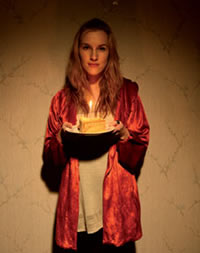
Iain Sinclair says in his director’s note for The Seedthat it is “one of those special pieces that help us see with fresh eyes”. I will assume he is right, but for someone who has had little contact with Vietnam veterans or the IRA, fresh eyes are a given. And in these wars, which are both in a way secreted failures, some of us still need more information.
The thing is that while a little more exposition would have helped, it would also meddle with a well-balanced plot. You can tell a story about one of the World Wars of the twentieth century and assume reasonable knowledge, but these conflicts are a mystery to most Australians, even those who continue to feel their impact on their lives. Of course, that’s why this story is so necessary.
The Seed, ultimately, is not so much about these conflicts as it is about how politics impacts individual lives and families. I find this fascinating, because we in Australia, and, ironically, especially those of us who live in Canberra, are largely unaffected by the goings on in Parliament House, and there are many Australians who never even consider that in some countries a change of government can turn people’s lives upside-down.
While I found it somewhat difficult to relate to the solid and resonant performances of this impeccable cast of three, I felt that this was more to do with my own ignorance of Vietnam and the Irish struggle. I hope in time that we will experience many more stories of the wars that have been fought and lost.
Tags: Canberra, Iain Sinclair, Kate Mulvaney, Pip Miller, Ralph Cotterill, Vietnam, Vietnam War, Wars and Conflicts
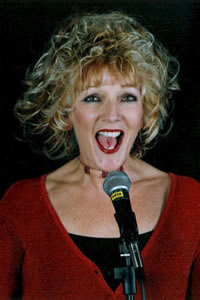
It’s a good sign when all a performer has to do is stand on stage to elicit a hearty laugh from her audience. And although it seemed that much of Shortis and Simpson’s fan club were sharing the auditorium with me, their laughter, tears and raucous applause were well-deserved.
Moya presents an autobiography, in a form I have never experienced before. She shares, mostly through music, and in a broad range of styles, I might add, her life. And as patchy as the story may be, it is told with a unique combination of elegance, wit, and pathos that warmly engages its audience.
Her description of her Surrey grandmother, whose accent made her sound as though she were singing whenever she spoke, was endearing, and I could not help but swell with anger as she related the story of how her year 2 teacher berated her for singing a harmony before the class had been taught it. Her journey back to a love of singing, and her rediscovery of it here in what was described to her as an ‘uncultured’ Australia, is the main theme of this show.
Moya says in the program:
“Whenever people hear that I started singing at age thirty-five, there is always the same astonishment. What I find astonishing is how many people have been stopped from doing something that I truly believe is a natural expression of creativity. It’s mostly a family member or a teacher that has intervened at a critical stage, made a judgement on a voice, and effectively silenced the flow, often for ever.”
While the style of the piece is clearly that of a baby boomer, Moya’s story resonates with a generosity and simplicity that is often lacking in theatre. It even appealed to a relatively cynical Gen-Xer like myself.
Tags: Baby boomer, John Bolton, John Shortis, Moya Simpson, Sandy Evans
 It took a while, I think, for both the cast and the audience to warm up to The Alchemist on Monday night. Maybe it was the day, or maybe it was not quite what the audience was expecting from Bell Shakespeare, or maybe it was simply the language.
There are a lot of people who find Shakespeare’s language difficult to understand. I have always found that the more I am working with the language, the easier it is to understand. It took some warming up, but I found Ben Jonson’s dialogue less dense, and more accessible for my 20th century ears, than I usually find with Shakespeare. Maybe it has something to do with the nature of the humour, which is more pithy than Shakespeare’s, and perhaps, as such, more akin to an Australian’s sense of humour. The interpretation of Lovewit, performed by Russell Keifel, certainly played this up, with his use of a laugh and accent reminiscent of Bob Hawke.
Whatever it was, Bell Shakespeare’s production of The Alchemistmet my expectations. It was thoughtful, intelligent, imaginative, unencumbered by preconceptions, and thoroughly entertaining.
Tags: Alchemist, Andrew Tinghe, Ben Jonson, Bryan Roberts, Georgina Symes, John Bell, Lucas Stibbard, Patrick Dickson, Peter Sutherland, Russell Kiefel, Scott Witt, Shakespeare, William Shakespeare
 How much money do you think you could make with your party tricks? The cast of Stomp have developed a series of party tricks (and they’re great party tricks), and have put them together for our viewing pleasure.
Apparently this happens every year, and the TV ad has been saying that Stomp 09 is fresher, faster and funnier, which is just as well because I got bored halfway through, and if it was any slower or less amusing I may not have sat it out. There are moments throughout that are indeed fast and funny (I’m not sure whether they’re fresh, you’ll have to ask the marketers what that means), and it was a fun night, but it left a lot to be desired.
Most of the audience loved it, three or four of the thousand people there even thought it deserved a standing ovation, and the raucous applause elicited an encore better than the show itself. Some children in the audience elicited some golden responses with their laughter, and the show would be excellent for a family, if you want to blow your entire stimulus payment on it, that is.
I don’t want to be mean; the cast is talented, responsive to the audience, perfectly synchronised, and very entertaining; but I just can’t help thinking that these are just glorified party tricks. They are great party tricks, they really are, but I just can’t help wondering why no one pays $80 to come and see my party tricks. Actually, no: if their party tricks are worth eighty bucks a view, mine would only be worth eighty cents, but it still makes me wonder, where’s my eighty cents?
So, the next time you’re at a party and someone starts banging on a garbage bin, remember to give them their eighty cents. Apparently they’re worth it.
Tags: party tricks, stomp
It could almost be said that In Cold Light deals lightly with an issue of severe gravity. It could be said, if the play did not take itself so seriously.
Jarrad West gives a credible performance of the lead role, Christian Lamori; a Catholic priest summoned for questioning by a seemingly guileless inspector. With this character, writer Duncan Ley has deftly woven elements of a stereotype with the intensity of a tormented soul. This is mostly successful, but I felt that the use of an English accent for these characters lent the production a sense of remoteness that hindered my capacity to empathise.
Nonetheless, the play is a brilliant exploration of an aspect of humanity that we generally either avoid telling stories about or explore with very little depth. And the twist at the end is pure gold.
Tags: Duncan Driver, Duncan Ley, Hannah Ley, Jarrad West
We went last night to the opening of Cosi, which was a great affair, as you would expect. Cosi is the story of a young graduate sent to direct a play with a group of patients at a mental asylum. Funny enough as a situation comedy, but Louis Nowra has deftly wound broad humour around a story about the importance of love over politics.
In this production, the comedy outshines the potentially didactic moralising, just as it should, and as a result, the moral stands on its merits, couched in comfortably broad Australian humour.
Bringing classics to the stage is what Canberra Rep does best, and when you stage something that is as well-known as an enjoyable play as Louis Nowra’s Cosi, you get to pick from the best actors Canberra has to offer. That’s what happened here, and it’s one of the main reasons this show is so enjoyable. This is a spectacular cast, and every nuance of Nowra’s characters is instinctively brought to life. They enjoy the show even more than the audience, I’m sure; and even with a few members of the cast needing to work hard to stifle a laugh now and then, they never missed a beat. Who can blame them? After working so hard to deliver the comedy of Nowra’s lines, to finally have an audience roar into laughter is a rewarding experience.
Canberra Rep’s Cosi is simply one of the best nights out you’ll find.
Tags: Canberra, Carly Jacobs, Così, Cosi, Ian Croker, Jim McMullen, Louis Nowra, Soren Jensen, Theatre
Director Garrick Smith is absolutely right to say that The Wedding Singer is not Shakespeare, but whatever it’s not, it is a lot of fun.
It is possible that opening night nerves got to the cast when I saw it; the first half hour or so was laboured and difficult to relate to, but then one of those great moments in theatre occurred, and the tenor lifted. It is a sign of a strong and talented cast when you see such a strong injection of energy in the middle of the first act. Before long I was tapping away and having a ball.
For those who don’t know, the musical version of The Wedding Singer is substantially different from the film of the same name. In this, it is the musical numbers that drive the emotional essence of the plot, and the most poignant of these are delivered beautifully by the magnificently talented heroine, played by Rebecca Franks, and her equally talented offsider played by Amy Dunham.
The musical is also funnier than the film, as I remember it, and Tim Sekuless’ timing is excellent. In my humble opinion, though, the best moment is when Boy George wannabe, George (played by Jeffrey van de Zandt) bursts into a rendition of an 80s pop song in perfect Hebrew. Gold.
No, it’s definitely not Shakespeare, but it’s a great night out.
Tags: Amy Dunham, Garrick Smith, Jacqueline Richards, Jeffrey van de Zandt, Rebecca Franks, Rose Shorney, The Wedding Singer, Theatre, Tim Sekuless, Wedding Singer, Will Huang
The Learned Ladies is one of Moliere’s ingenious comedies, and his genius lies in his capacity to incorporate incidental humour into circumstantial humour inherent in the plot, and still deliver an insightful and meaningful story. These days I consider myself lucky if a comedy is even funny, but to have humour on so many levels combined with a story of value is an unparalelled joy.
Under the direction of Geoffrey Borny, and I remember his direction well from my uni days, the cast delivered an exquisite performance; well-timed, responsive to the audience, and in every way relevant despite its age.
Diane Heather and Graham Robertson gave stand-out comic performances in their hilarious roles, and Andy Burton’s Clitandre and Eleanor Garran’s Henriette were spectacularly entertaining in their more serious roles. Terry Johnson was no less noteworthy as the simpering Trissotin, proving a worthy foil for Clitandre, and a balanced complement to Naone Carrel’s appropriately ghastly Philaminte.
I couldn’t help thinking that I would like to see a staging of this play set in 21st Century Australia, with the learned ladies of the title cast as chardonnay socialists and their more pragmatic counterparts as wealthy but down-to-earth Australians.
Regardless, this was an excellent production, and while I am disappointed that I couldn’t be directly involved in it, I was pleased to be able to spend an afternoon in hysterics in the auditorium.
Tags: Andy Burton, Diane Heather, Eleanor Garran, Gabrielle Denning-Cotter, Geoffrey Borny, Graham Robertson, Kirsten Sampson, Molière, Naoné Carrel, Pat Tito, Terry Johnson
Busy as I am, I took the last chance I would have to see Canberra Repertory’s Pygmalion, and I am glad I did. Living up to their excellent reputation, Rep presented a thoughtful and challenging piece of theatre.
Often, a great set and spectacular costumes simply make the performers look dull, as happened with Opera Australia’s My Fair Lady, but not so in this case. A beautifully modern set, clearly a product of 21st century mentality, served as a symbolic gesture to this early 20th century story, complementing the costumes beautifully; and the cast earned every part of it.
As always, accents are a problem with this story. Accents are a difficult thing in theatre, and Shaw does no one any favours by writing a play that is absolutely centred on accent. Jessica Brent’s Lisson Grove dialect was acceptable, and her recieved pronunciation was appropriately awkward. Other characters, however, had no excuse for sounding stilted. The production, nonetheless, survives its slowness, the pathos of Shaw’s characters shining through in the second act just as it should, and the awkwardness of Shaw’s ending was deftly handled.
I really liked this production. Maybe I was just relieved that the cast had taken the time to understand the characters, unlike the cast of My Fair Lady. It was slow, but didn’t drag. It was awkward, but even that was appropriate. In all, a great show.
Tags: Canberra, George Bernard Shaw, Helen Vaughan-Roberts, Ian Croker, Jerry Hearn, Jessica Brent, John Honey, Judi Crane, Liz Bradley, My Fair Lady, Nicholas Tranter, Opera Australia, Pygmalion, Tony Turner
Last Saturday I spent a fortune on a ticket to see Opera Australia’s production of My Fair Lady, and although the ticket price isn’t usually relevant in judging a theatrical production, in this case there is an amusing irony in exhorbitant ticket prices that I’m sure escaped the producers’ attention.
We pay, of course, because we have high expectations of Opera Australia; and the extravagant sets and brilliant costumes combined with the magnificent performance by the Canberra Symphony Orchestra dazzle us into believing that we’ve had the best kind of theatre experience money can buy. And this is precisely the point of George Bernard Shaw’s original story.
A poor flower seller, often impugned as a Mayfair Lady, is taken in by an arrogant academic who wants to prove that he can pass her off as a duchess; and having done so, he finds himself in love with her. Her innate worth, which stood in question, is proven by the fact that she is loved best by the arrogant academic who knows her best.
Reg Livermore’s delivery of Henry Higgins’s one-liners was fine. Well-timed, and responsive to the audience, the performance bore all the hallmarks of a seasoned performer. It did lack, however, a fundamental understanding of the character. It was obvious that this was not Livermore’s ill, as the same could be said for Dolittle, Pickering, and perhaps, even Eliza. It would seem that neither producer nor director had bothered to scrape behind the surface of this deep, dark comedy. Opera Australia’s My Fair Lady was a superficial and entirely inadequate treatment of one of the most profound dramatic works to grace the Western Stage since Shakespeare’s Hamlet.
But who could blame Opera Australia? A high-brow institution without audiences seeking to generate cashflow by staging a popular musical. This was not an artistic endeavour so much as it was an exercise in marketing. And a very successful one. Every performance in Canberra was sold out, despite the exhorbitant ticket prices and the presence of a much more intelligent show literally next door in the Courtyard Studio.
Opera Australia have taken a shabby production, neglecting its more fundamental value, dressed it up in a spectacular fashion, and have charged us a fortune to see it. Just like Henry Higgins, they have taken something they assume to be worthless, they have added a superficial gloss, and have found it to be of value. And just like Higgins, they still misunderstand its innate worth. The irony is delicious. And devastating.
I am hoping for more from Canberra Repertory’s production of Pygmalion later this year. They have a much better chance of making their point, mainly because they’re not using a bastardised version of Shaw’s story.
There is also hope in the upcoming new film of My Fair Lady(scheduled for release in 2010), which is being penned by the very intelligent Emma Thomson and is intended to pay more respect to Shaw’s intentions.
Tags: Canberra, George Bernard Shaw, My Fair Lady, Opera Australia, Pygmalion, Reg Livermore, Stuart Maunder, Taryn Fiebig
Chekhov bores me. There, I said it. I have spoken the unspeakable; Chekhov bores me. And yet, this play left me at a bit of a loss. How can you have a play that is thoroughly boring populated by characters that are infinitely intriguing? It should be an impossibility. But apparently it’s not.
To be perfectly honest, I thought Free Rain’s production of The Three Sisters to be the most profoundly astute and engaging interpretation of a thoroughly useless play I have ever encountered (and I have encountered many useless plays). Each character was carefully constructed, and portrayed brilliantly by a cast that has clearly engaged with Chekhov’s text on an intimate level.
Don’t take my description of Chekhov’s play as useless to be a negative thing. The play triggered thought, and because nothing seemed to happen, there was time to drift through thought without missing anything particularly important. Nothing was particularly important. At least, not to the mind of a cynical gen-xer like myself. But it would be nice if there were more opportunities to just sit and think.
This play is worth seeing twice, and I’m going back tomorrow. I’m hoping to be able to drift through those sections of the play that I didn’t drift through last time, and vice-versa.
Not the kind of play I would want to see every time I go to the theatre, but this was an opportunity not to be missed, and Free Rain should be commended on a splendid and invariably worthwhile production of something completely useless.
Tags: Anton Chekhov, Art, Catherine Mann, Chekhov, Drama, Literature, Soren Jensen, Theatre, Three Sisters
Now, I’m not in the habit of commenting on shows that I’ve written myself, but I can paste here a transcript of Bill Stephens’ comments on Mrs Holt, which is one of my own shows, which is currently showing at The Street Theatre…
Canberra Dramatics are a local theatre group which is committed to the development of new plays by playwrights from the city of Canberra and the surrounding region.
Their newest production, which is currently running at The Street Theatre until next Saturday 16th August is Mrs. Holt…written by Canberra playwright Trevar Alan Chilver.
I went along to the opening night of Mrs. Holt last Thursday night and discovered a thoughtful, entertaining and engaging play – not so much about aging – which I might have expected given the setting is in a nursing home ward – but more about changing attitudes and expectations between the generations.
I particularly liked the performance given by Gay Evans as an irascible, old patient called – intrigueingly – Zara Holt …who is the subject of the play.
I have not seen Gay perform before, but she is obviously an experienced actress – who has the ability to wring every ounce of comedy – and pathos – from her role to invest it with depth and interest.
Pete Ricardo, as the male nurse Jack Harris, also impressed with a well judged performance…the other actors in the cast Sarah Daphne, Sarah Ritchie and Cerri Davis.
Staged in a simple – effective and appropriate setting, this is probably the best play I have seen so far from Canberra Dramatics.and although it would benefit from eliminating some of the long black-outs between scenes which allow the pace to drop seriously… if you are at all interested in local playwrighting it is well worth your time to get along and see it.
Mrs. Holt runs at the Street Theatre until next Saturday 16th August. You can find out details of performances and performance times by ringing the Street Theatre or visiting their website.
Tags: Canberra, Cerri Davis, Gay Evans, James Scott, Mrs Holt, Pete Ricardo, Playwright, Sarah Foo, Sarah Ritchie, The Street Theatre, Theatre, Trevar Alan Chilver
I was interested to see The Role Model not only because it was written by a fellow Canberran, but also because of the praise it had received from the great Edward Albee. It is usually a mistake to assume that you will enjoy something as much as you expect to when it gets such accolades. Who can live up to such expectations? The Role Model certainly didn’t.
That’s not to say it’s not a worthy production; it is a great story, deftly performed by a cohesive and talented cast. It’s just that the script didn’t deserve the praise I heard. Much of the dialogue is awkward, and it doesn’t help that the lead actor, Raoul Craemer, attempts to portray an elite Australian athlete without attempting an Australian accent. Don’t get me wrong, there were some fine and genuinely funny moments, but this talented cast were let down by often unconvincing dialogue, and a director who allowed them to pronounce every ‘T’ in the script, which lent the already awkward dialogue a foreign and unfamiliar tone, which is not conducive to comedic impact.
Overall, an entertaining show, but this story had the potential to move me to both laughter and tears, and it didn’t do either.
Tags: Bruce Hoogendoorn, Edward Albee, Ellen Caesar, Ian Hart, Jethro Pitcher, John Honey, Kerrie Roberts, Raoul Craemer, Role Model, Theatre
I have long admired the work of Edward Albee. He’s pretty funny, for an American. And Moonlight’s production of The Goat, or Who is Sylvia was by far the most enjoyable thing I have seen on stage in Canberra since Rep did Noises Off last year. Wall to wall laughs were delivered by a talented cast under the direction of Bridget Balodis, who obviously understands timing and has an excellent command of the dramatic fluctuations of Albee’s work.
The play centres on the infidelity of Martin, and its impact on his small family. Jerry Hearn was assigned a difficult task in the role of Martin; to play a dramatic role in a comedy and do it well is an accomplishment in itself. Christa de Jager also toed the line very carefully between the intense drama of her role, and its comic one-liners. Sam Yeo, playing their son Billy, had a difficult time keeping a straight face as he began his hilarious journey, but his energy and timing, like that of the rest of the cast, was superb.
In all, a great night out. It was nice to be back in my old stomping ground of the ANU Drama Lab, but I was very disappointed with the enormous new seating: in order to avoid DVT I had to sit on an angle with my legs in the aisle, and crane my neck around to see the stage. The designers obviously didn’t consider the fact that many Australians are taller than a metre, or maybe they only expected children to be coming…
Tags: Bridget Balodis, Canberra, Christa de Jager, Edward Albee, Goat, Jerry Hearn, Martin Searles, Sam Yeo, Theatre



 Foyer Talk