About Trevar Alan Skillicorn-Chilver
Trevar Alan Skillicorn-Chilver is an authorised celebrant, a playwright, a teacher and quite a few other things!
 Anyone who’s ever spoken to me about authors knows that the author I loathe most is Tolkein. I hate Tolkein’s work because I can’t understand how someone who fails entirely to grasp the idea of interworking exposition with climax can sell a single book! These people may also realise that I have a double standard insofar as my hatred of Tolkein for this reason has not caused me to dismiss the playwrights of Ancient Greece. The fact is, the Ancients wrote for a different purpose and a different audience, but Tolkein was just a babbling fool. Aeschylus, of course, was a master playwright, who had a justifiable reason to write an enormous quantity of vaguely interesting, but largely confusing, expository matter and interspersing it between some good dialogue and interesting plot. What I like most about Rachel Hogan’s adaptation of Agamemnon is that she has managed to distil the essence of Aeschylus’ tale into a performance that is widely accessible.
In doing this, the focus is drawn carefully onto Agamemnon’s wife Clytemnestra, particularly her interpretation of Agamemnon’s actions, and her primal response to his slaughter of their child. These characters are portrayed exquisitely by the performers in this production, who balance the intensity of their emotions well with the need to edify the audience, as was the tradition of the Ancients.
The interplay between what we can control and what we can’t control is one of the things we humans find most difficult to get a grip on. For the most part, we get the things we can control confused with the things we can’t; and even when we do know which one is which, we still instinctively try to control the things we can’t, ignoring the things we can. In some ways, Agamemnon’s story is that of a king who spent ten years doing something about what was out of his control, while unwittingly losing his grip on what he could have had. But then again, Agamemnon was never really about Agamemnon.
Although I may have retitled it Clytemnestra, I love what Rachel Hogan has done with Aeschylus’ play, perhaps enough to hail her as the anti-Tolkein. Of course, she may take offence at that (I don’t know how she feels about Tolkein) but it is intended to be the compliment of compliments!
Tags: Aeschylus, Agamemnon, Ancient Greece, Arts, Clytemnestra, Clytennestra, Drama, Jenna Arnold, Kerrie Rob, Literature, Oresteia, Rachel Hogan, Tolkein
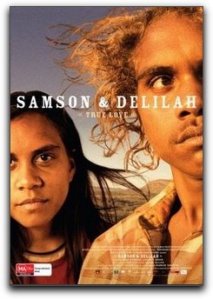 Samson and Delilahis a unique film that most filmgoers will probably find unappealing. It breaks many of the conventions of film, which makes for very unusual viewing, and it makes you uncomfortable in many ways, but it is a great story, and it is told with a great sense of simplicity and honesty.
Set in outback Northern Territory, this is the story of a young couple caught in a clash of cultures, and it explores the impact of broader cultural and political circumstances as they apply in this environment.
What I think is this film’s greatest achievement is the way it touches on broad political issues without being in any way didactic or even judgemental. It tells a story about two young people, and the context in which they find their way through life and love. I think stories like this can play a big part in furthering the process of reconciliation, and more to the point, I think it’s a great story.
Tags: Delilah, Marissa Gibson, Northern Territory, Rowan McNamara, Samson, Warwick Thornton
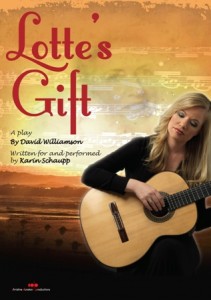 Another uncomfortable trip to the theatre tonight. I am not entirely sure why I didn’t enjoy this play, because on one level, it has all the things I love; a good story, great performances, and a novel approach to storytelling. And yet, it just didn’t engage me.
The play is a one-hander, and it is the true story of the performer’s grandmother, told through a conversation between them where the granddaughter learns her grandmother’s deepest secret. And yes, a single performer with dialogue does mean that old naff idea of the person jumping from one character to another; but no, that’s not why I didn’t like it, because that performer, Karin Schaupp, manages to change character effortlessly, and David Williamson’s ‘dialogue’ moves slowly, allowing the audience to move with her, and engage with the story. At least I think that’s the intention. Having failed to engage, I’m not sure.
This is where Lotte’s Gift left me in two minds. A good story, well told, and expertly written by one of the country’s best playwrights. But it was just too slow.
Tags: David Williamson, Karin Schaupp, Lieselotte Reinke, Trudy von Stein
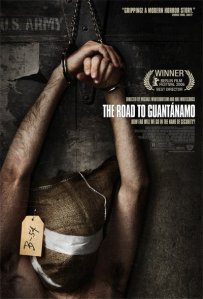 There is a particular atmosphere in films that depict the victims of the Holocaust, and I found it incredibly disturbing to sense that same atmosphere in this excellent documentary recently aired on the SBS.
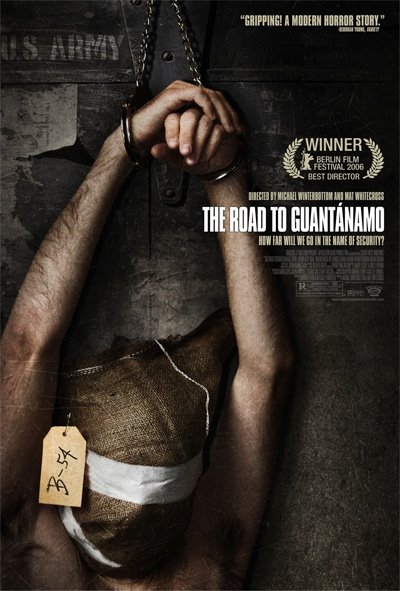
The Road to Guananamo is the story of several Pakistani Britons from Birmingham who found themselves caught up in the war in Afghanistan immediately following the 9/11 attacks, and who are ultimately imprisoned at Guantanamo Bay, accused of being members of Al Qaeda. That this can happen to innocent travellers is hardly surprising, but the stories of their treatment at the hands of mostly American guards is no less shocking and outrageous than the many depictions of Jewish victims of the Nazis during World War II.
Apart from its moral position and emotional impact, which is similar to what I have felt when watching depictions of how the German Jews were treated in the early forties, what I found astonishing was the realisation of how conditioned I am. As these young men were relieved from their Afghani captors and handed over to the Americans, I felt, when I heard the American accent, a sense of relief; I felt their ordeal was finally over. Of course, the worse was yet to come, and the Americans proved themselves incapable of justice.
The film unselfconsciously takes advantage of our conditioning, allowing us to feel some confidence in the American gaolers before showing them to be as evil and conniving as their Nazi predecessors; and putting the story into this context highlights that the problem lies with the fascist element in the perpetrating society. While I cannot vouch for the voracity of the prisoners’ accounts of their gaolers’ actions, I am more inclined to trust their accounts than the rantings of governments beseiged by criticisms. What appalls me more than the behaviour of the American guards is the knowledge that Australians were imprisoned with these Pakistani Britons, and that our government was no more loyal to our people than the British were to theirs.
It is rare to see such a cogent and compelling story about the need to heed the lessons of history. While I know that the American people are every bit as honourable and worthy of respect as the Germans are, this film demonstrates that no people, least of all the Americans, should be complacent in holding their politicians accountable.
Tags: Afghanistan, Afran Usman, Al-Qaeda, Asif Iqbal, Birmingham, Farhad Harun, George W Bush, Guantánamo Bay, Mat Whitecross, Riz Ahmed, Ruhal Ahmed, Shafiq Rasul, Shahid Iqbal, The Road to Guantanamo, Tipton Three, United States, Waqar Siddiqui, World War II

I want to charge Brendan Cowell with writing a masterpiece in Ruben Guthrie, but I fear that would undermine the intense humanity of this work. This is Australian playwriting at its best, exploring Australian society with no sense of cultural cringe, and no sense of being old fashioned or quaint.
The promotional material for Ruben Guthrie repeatedly asks whether it is unAustralian to refuse a drink, but whether it is Australian or not is not really a concern for the central character, who you might have guessed is called Ruben Guthrie. His main concern is staying sober, not only within a nation that loves a drink, but within an industry where alcohol consumption is a selection criterion, and within a family with a strong love of the bottle. Brendan Cowell has dealt with his story’s heady themes with a deft hand, plenty of humour, and stoicly (and wisely) refuses to answer the marketers’ question.
What I found most remarkable about this play was the way in which Cowell has managed to show the fundamental failings of social programs that seek to address addictions or compulsions (such as AA’s famous
twelve steps), while also showing their effectiveness.
I recall reading some time ago Neil Armfield saying something about theatre being “necessary”. The terminology has stuck with me, because many people see the arts as an optional extra, something to make life enjoyable, rather than a crucial building block of a healthy society. Ruben Guthrie eloquently articulates the reason why the arts, and especially the narrative arts, are necessary to a society, and in the process, it also highlights the inadequacies of the social work profession.
But that doesn’t make it any less funny. In fact, it is yet another example of that spectacular Australian creation: the play that is, at once, both drama and comedy.
Tags: Adrienne Pickering, Brendan Cowell, Geoff Morrell, Jacob Nash, Megan Drury, Neil Armfield, Roy Billing, Ruben Guthrie, Steve Francis, Toby Schmitz, Toni Scanlon, Torquil Neilson, Wayne Blair

All Shook Up is a take on Shakespeare’s
Twelfth Night, in case you didn’t know. I knew, and I think I missed half the show trying to figure out which characters corresponded to which
Twelfth Night characters. Why did I do that?
As we have come to expect from
Supa,
All Shook Up is a great show that doesn’t ask a lot of its audience. We joined the blue rinse set for today’s matinee. It’s not normally a good idea to go to a matinee, the audiences are usually a bit flat, and the performers suffer for it. This was probably true today, and yet what struck me was the technical precision displayed by the cast. Under the musical direction of Garrick Smith, the principal cast gave stunning performances of many of Elvis Presley’s most popular songs, supported by an equally impressive ensemble.
It was a great show, although not a patch on Supa’s recent productions of Buddy. It could have something to do with the music, but I think maybe I’m just a little too young to appreciate it the way the rest of the audience, who were mostly twice my age, did. It’s a good show, but for my tastes it needed a little less sugar.
Tags: All Shook Up, Christine Forbes, Emilie Van Os, Garrick Smith, Grant Johnson, Jacqueline Richards, Kat Brand, Pete Ricardo, Ron Dowd, Roy Hukari, Sarah Hull, Will Huang
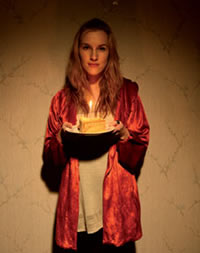
Iain Sinclair says in his director’s note for The Seedthat it is “one of those special pieces that help us see with fresh eyes”. I will assume he is right, but for someone who has had little contact with Vietnam veterans or the IRA, fresh eyes are a given. And in these wars, which are both in a way secreted failures, some of us still need more information.
The thing is that while a little more exposition would have helped, it would also meddle with a well-balanced plot. You can tell a story about one of the World Wars of the twentieth century and assume reasonable knowledge, but these conflicts are a mystery to most Australians, even those who continue to feel their impact on their lives. Of course, that’s why this story is so necessary.
The Seed, ultimately, is not so much about these conflicts as it is about how politics impacts individual lives and families. I find this fascinating, because we in Australia, and, ironically, especially those of us who live in Canberra, are largely unaffected by the goings on in Parliament House, and there are many Australians who never even consider that in some countries a change of government can turn people’s lives upside-down.
While I found it somewhat difficult to relate to the solid and resonant performances of this impeccable cast of three, I felt that this was more to do with my own ignorance of Vietnam and the Irish struggle. I hope in time that we will experience many more stories of the wars that have been fought and lost.
Tags: Canberra, Iain Sinclair, Kate Mulvaney, Pip Miller, Ralph Cotterill, Vietnam, Vietnam War, Wars and Conflicts
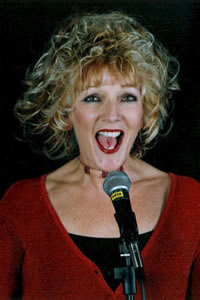
It’s a good sign when all a performer has to do is stand on stage to elicit a hearty laugh from her audience. And although it seemed that much of Shortis and Simpson’s fan club were sharing the auditorium with me, their laughter, tears and raucous applause were well-deserved.
Moya presents an autobiography, in a form I have never experienced before. She shares, mostly through music, and in a broad range of styles, I might add, her life. And as patchy as the story may be, it is told with a unique combination of elegance, wit, and pathos that warmly engages its audience.
Her description of her Surrey grandmother, whose accent made her sound as though she were singing whenever she spoke, was endearing, and I could not help but swell with anger as she related the story of how her year 2 teacher berated her for singing a harmony before the class had been taught it. Her journey back to a love of singing, and her rediscovery of it here in what was described to her as an ‘uncultured’ Australia, is the main theme of this show.
Moya says in the program:
“Whenever people hear that I started singing at age thirty-five, there is always the same astonishment. What I find astonishing is how many people have been stopped from doing something that I truly believe is a natural expression of creativity. It’s mostly a family member or a teacher that has intervened at a critical stage, made a judgement on a voice, and effectively silenced the flow, often for ever.”
While the style of the piece is clearly that of a baby boomer, Moya’s story resonates with a generosity and simplicity that is often lacking in theatre. It even appealed to a relatively cynical Gen-Xer like myself.
Tags: Baby boomer, John Bolton, John Shortis, Moya Simpson, Sandy Evans
 It took a while, I think, for both the cast and the audience to warm up to The Alchemist on Monday night. Maybe it was the day, or maybe it was not quite what the audience was expecting from Bell Shakespeare, or maybe it was simply the language.
There are a lot of people who find Shakespeare’s language difficult to understand. I have always found that the more I am working with the language, the easier it is to understand. It took some warming up, but I found Ben Jonson’s dialogue less dense, and more accessible for my 20th century ears, than I usually find with Shakespeare. Maybe it has something to do with the nature of the humour, which is more pithy than Shakespeare’s, and perhaps, as such, more akin to an Australian’s sense of humour. The interpretation of Lovewit, performed by Russell Keifel, certainly played this up, with his use of a laugh and accent reminiscent of Bob Hawke.
Whatever it was, Bell Shakespeare’s production of The Alchemistmet my expectations. It was thoughtful, intelligent, imaginative, unencumbered by preconceptions, and thoroughly entertaining.
Tags: Alchemist, Andrew Tinghe, Ben Jonson, Bryan Roberts, Georgina Symes, John Bell, Lucas Stibbard, Patrick Dickson, Peter Sutherland, Russell Kiefel, Scott Witt, Shakespeare, William Shakespeare
 I’ve always been moderately fond of Danny Boyle’s films. I wouldn’t call myself a fan, I just notice his name on the end of films that I like quite regularly. Slumdog Millionaireis different. I loved it, and was shocked to see his name flash up at the end!
Although the plot is somewhat convoluted with a bit of ambiguity in its chronology, the story is intriguing, and although I went when I was kind of focused on something else (namely a meal at my favourite Lygon Street cafe), I was engaged quickly, and the film held my attention until the end.
There are some great performances from some child actors, and spectacular performances from the adult cast, but the star of this film is definitely the cinematography. From the slums of Mumbai to the Taj Mahal to the beauty of India’s countryside, even the most dire of circumstances is presented beautifully, composed with a delicacy that is not common in films about this subject matter.
There aren’t many films that successfully depict the horrible realities of our world and retain a sense of possibility and optimism, but Slumdog Millionaire does this beautifully. I suppose I will have to reassess my opinion of Danny Boyle. If he makes another film as good as this one!
Tags: Anil Kapoor, Danny Boyle, Dev Patel, Freida Pinto, Madhur Mittal, Mumbai, Slumdog Millionaire
 How much money do you think you could make with your party tricks? The cast of Stomp have developed a series of party tricks (and they’re great party tricks), and have put them together for our viewing pleasure.
Apparently this happens every year, and the TV ad has been saying that Stomp 09 is fresher, faster and funnier, which is just as well because I got bored halfway through, and if it was any slower or less amusing I may not have sat it out. There are moments throughout that are indeed fast and funny (I’m not sure whether they’re fresh, you’ll have to ask the marketers what that means), and it was a fun night, but it left a lot to be desired.
Most of the audience loved it, three or four of the thousand people there even thought it deserved a standing ovation, and the raucous applause elicited an encore better than the show itself. Some children in the audience elicited some golden responses with their laughter, and the show would be excellent for a family, if you want to blow your entire stimulus payment on it, that is.
I don’t want to be mean; the cast is talented, responsive to the audience, perfectly synchronised, and very entertaining; but I just can’t help thinking that these are just glorified party tricks. They are great party tricks, they really are, but I just can’t help wondering why no one pays $80 to come and see my party tricks. Actually, no: if their party tricks are worth eighty bucks a view, mine would only be worth eighty cents, but it still makes me wonder, where’s my eighty cents?
So, the next time you’re at a party and someone starts banging on a garbage bin, remember to give them their eighty cents. Apparently they’re worth it.
Tags: party tricks, stomp
 The Welsh are a strange people; not strange in an unpleasant sort of a way, just odd. Different. Unusual. And so it makes a kind of cosmic sense that Wales should be the first country to have one of their islands float off on a tour of the North Atlantic.
Tonight’s performance of Floating at the Sydney Opera House has been one of the most profound experiences I have ever undergone. It was theatre in a most pure and hallowed sense; unique, fleeting, and momentary.
Hugh Hughes, the protagonist, foretells this, referring repeatedly to connection, and highlighting our disconnection from the world by running around the auditorium, touching the three walls and pointing out how they disconnect us from the outside world. The interaction with the audience continues as he and Sioned encourage the audience to say hello to someone they haven’t met before and explain the structure of the show to come, handing around some objects relevant to the story. This introduction was said to usually last 20 minutes, but in our case, took 45. During this time, three groups of latecomers entered, the first of which was welcomed gently. When the second group entered, we were encouraged to applaud, but by the time the third couple entered, 25 minutes late, the audience needed no encouragement to give them a standing ovation, and Hugh generousy praised their courage at entering so late.
The humour was light and easy, not at all forced, and by the time Hugh and Sioned were able to begin their story, we were asked if we needed to go to the toilet. As an audience, we had formed a bond. Sioned passed around an inflatable globe, to illustrate how far from Sydney Anglesey was, and upon realising that it was a beach ball, the gentleman in the front row threw it into the auditorium and we tossed it around for some time. There came one point in the story when a woman in the row behind me was laughing uncontrollably, and an infection of laughter took over the entire audience for several minutes. Hugh engaged her in conversation and it became apparent that it was her birthday, so under Hugh and Sioned’s encouragement, we all sang happy birthday to Sue. There also came a time when someone needed to go to the toilet, and Sioned said she needed to go too, so we arranged an impromptu interval and Hugh stayed and chatted to those of us in the front row and a gentleman who had come from somewhere deeper in the auditorium.
The connections made were so natural and simple and honest that you didn’t realise what was happening until Hugh reminded us of the theme of connection that was at the core of this ‘show’. The story, while well-structured and relevant, was almost incidental to the entire nature of the evening, and when the show was over, and the audience offered an unequivocal standing ovation to the performers, who remained on stage, there was a sense in the audience that we wanted to stay. I know I sat back down after the ovation, and felt that I could remain here, as part of this audience, forever.
I don’t know whether it is the same at every performance, but since the Opera House’s documentation for the show says it lasts 75 minutes, and since our performance with its interruptions from late arrivals and an impromptu toilet break lasted no less than 120 minutes, I doubt it. Each performance is completely unique, and I could happily return and see another if the Opera House wasn’t so far from home. The hubbub from the receding crowd was much more enlivened than any theatre audience I’ve ever been part of, and the ease with which members of the audience, who had been strangers at first, chatted and engaged was remarkable.
Floating is theatre at its best. It engages, connects and responds in just the way that film doesn’t. And in doing this, it achieves something remarkable: it highlights the disconnectedness of our societies and worlds without judgement or reproach, but by simply presenting an alternative way to be.
I could not bring my dear wife to see Floating, and ringing her afterwards, I couldn’t explain what was so wonderful about it. I don’t think I’ve done it justice here, but this is a fleeting moment that will stay with me for the rest of my life. Unless, of course, I suffer amnesia.
Tags: Audience, Floating, Guy Myhill, Hoipolloi, Hugh Hughes, Jill Norman, Shon Dale-Jones, Sioned Rowlands, Stefanie Muller, Sydney, Sydney Opera House, Toilet, Wales
 I love going to Theatre 3. There is magic in the place. I don’t care that the decor is old and tired, I only ever notice it for a moment, because before long you feel the atmosphere of genuine theatre lovers mingling and engaging, like Liberals in the Press Club or bikies in a pub. This was what it was like at Theatre 3 last night, especially straight after the curtain went down on the opening performance of I Hate Hamlet.
The plot revolves around Andrew, a successful television soap actor from Los Angeles, who relocates to New York after having agreed to play Hamlet in a non-profit production in Central Park. Problems arise when he reveals that he hates Hamlet, and mainly agreed to play the role because of his girlfriend’s love for the play. Fortuitously, the ghost of the late, great actor Barrymore, who once occupied Andrew’s gothic apartment and played Hamlet, can return to mentor Andrew through the process of preparing for the most important role of his life.
A couple of the people I spoke to afterwards expressed the same surprise I had; why had I not heard of this play? It was written way back in 1991, and is such an astute and passionate exploration of our attitudes towards Shakespeare that it shocks me to think that it isn’t part of the curriculum of every university’s theatre department. It looks quite deeply into the psyche of the greatest play of all time while still retaining a modern view that is unencumbered by social expectations about how we should view the bard. In short, it is respectful without being reverential. It treats the way society hallows Shakespeare with ridicule, while still holding a deep and profound respect for the man’s humanity, wisdom and power.
When I first started my academic career—after dropping out of high school and bumming around dead end jobs for a few years—one of the first pieces of literature from the English Canon that I encountered was Hamlet. I struggled with it, and came to some kind of understanding of it, rudimentary as it was. Over the years my love for the play has deepened. In the twelve years since first reading it I have seen more than ten stage productions and every film I could clap my eyes on, and I have never been disappointed by modern theatre practitioners’ capacity to glean some new kernel of wisdom from the pages. Just like Tom Stoppard’s Rosencrantz and Guildenstern are Dead, I Hate Hamlet further unpacks Shakespeare’s story, treating it as a living, breathing work of art rather than a museum piece.
Canberra Repertory’s production is simply brilliant, with the considerable talents and experience of Ian Croker in the role of Barrymore admirably matched by my old university classmate Glenn Brown as Andrew. Their swordfight was so much fun that I found found it difficult to resist the urge to get up and join in! The entire cast carries off the production brilliantly, with excellent comic timing (perhaps with a couple of hiccups that I am putting down to opening night), brilliant wit, and impeccable characterisation.
Now all I need is a show I can audition for with a sword fight…
Tags: Hamlet, I Hate Hamlet, Ian Croker, Paul Rudnick, Robert de Fries, Rosencrantz & Guildenstern Are Dead, Shakespeare, Theatre, Tom Stoppard, William Shakespeare
It could almost be said that In Cold Light deals lightly with an issue of severe gravity. It could be said, if the play did not take itself so seriously.
Jarrad West gives a credible performance of the lead role, Christian Lamori; a Catholic priest summoned for questioning by a seemingly guileless inspector. With this character, writer Duncan Ley has deftly woven elements of a stereotype with the intensity of a tormented soul. This is mostly successful, but I felt that the use of an English accent for these characters lent the production a sense of remoteness that hindered my capacity to empathise.
Nonetheless, the play is a brilliant exploration of an aspect of humanity that we generally either avoid telling stories about or explore with very little depth. And the twist at the end is pure gold.
Tags: Duncan Driver, Duncan Ley, Hannah Ley, Jarrad West
While I’ve never been such a Philistine as to decline to see a film because it is in an unknown language and I’d have to read the subtitles, there is usually a sense of emotional distance when you have to read the words yourself. In the case of I’ve Loved You So Long, I felt no such distance. Indeed, this is the first time I’ve cried in a movie since… I don’t know when. Sure, I am a callous bastard, but I often find myself moved by a film, only, rarely do I find myself as moved as I was by this one.
I’ve Loved You So Long focuses on the story of Juliette Fontaine coming from prison to live with her sister, who was a young adolescent when she was incarcerated. The tensions of living with an extended family are exacerbated by Juliette’s personality, which it is accepted is altered by her time in gaol. Philippe Claudel’s story is beautifully structured to release just as much information as is necessary to keep you interested, while retaining just enough mystery to keep you on the edge of your seat.
I have never seen a French film that I haven’t liked, but I have also never seen a French film of this calibre. It is an outstanding piece of storytelling, full of pathos and charm.
Tags: Cinema of France, Elsa Zylberstein, French, Kristin Scott Thomas, Philippe Claudel
We went last night to the opening of Cosi, which was a great affair, as you would expect. Cosi is the story of a young graduate sent to direct a play with a group of patients at a mental asylum. Funny enough as a situation comedy, but Louis Nowra has deftly wound broad humour around a story about the importance of love over politics.
In this production, the comedy outshines the potentially didactic moralising, just as it should, and as a result, the moral stands on its merits, couched in comfortably broad Australian humour.
Bringing classics to the stage is what Canberra Rep does best, and when you stage something that is as well-known as an enjoyable play as Louis Nowra’s Cosi, you get to pick from the best actors Canberra has to offer. That’s what happened here, and it’s one of the main reasons this show is so enjoyable. This is a spectacular cast, and every nuance of Nowra’s characters is instinctively brought to life. They enjoy the show even more than the audience, I’m sure; and even with a few members of the cast needing to work hard to stifle a laugh now and then, they never missed a beat. Who can blame them? After working so hard to deliver the comedy of Nowra’s lines, to finally have an audience roar into laughter is a rewarding experience.
Canberra Rep’s Cosi is simply one of the best nights out you’ll find.
Tags: Canberra, Carly Jacobs, Così, Cosi, Ian Croker, Jim McMullen, Louis Nowra, Soren Jensen, Theatre
Winning a place on the guest list to American Teenwas not a high priority for me. When I heard the title, I thought it must be a teen movie, and when I read that it was a documentary, I was even less interested. I could not have been more wrong.
This was the first time I’ve watched a documentary in a cinema, and it was well worth a Monday night. The stories of these five adolescents from Warsaw, Indiana were absolutely compelling, and wonderfully hilarious, as the raucous laughter from a near-empty cinema attested. Nanette Burstein has edited their experiences in their final year of high school with a deft hand, developing a rich, interwoven story well worth telling.
Watching these young Americans over-experience every emotion imaginable was fascinating not only because of the universal comedy of youth, but also because it reminds you just how good our education system is. Which is quite an accomplishment when your audience is a cynical old ex-teacher like myself.
American Teen is not ground-breaking or unique, but it is one of those rare pieces of film-making that exemplifies the best of the art form: simple storytelling, with characters that are easy to relate to, an awesome soundtrack, and an image of ourselves. Well worth a Monday night. Or even a Friday. Go see it.
Tags: American Teen, Colin Clemens, Geoff Haase, Hannah Bailey, Megan Kirzmanich, Mitch Reinholt, Nanette Burstein, United States, Warsaw Indiana
Director Garrick Smith is absolutely right to say that The Wedding Singer is not Shakespeare, but whatever it’s not, it is a lot of fun.
It is possible that opening night nerves got to the cast when I saw it; the first half hour or so was laboured and difficult to relate to, but then one of those great moments in theatre occurred, and the tenor lifted. It is a sign of a strong and talented cast when you see such a strong injection of energy in the middle of the first act. Before long I was tapping away and having a ball.
For those who don’t know, the musical version of The Wedding Singer is substantially different from the film of the same name. In this, it is the musical numbers that drive the emotional essence of the plot, and the most poignant of these are delivered beautifully by the magnificently talented heroine, played by Rebecca Franks, and her equally talented offsider played by Amy Dunham.
The musical is also funnier than the film, as I remember it, and Tim Sekuless’ timing is excellent. In my humble opinion, though, the best moment is when Boy George wannabe, George (played by Jeffrey van de Zandt) bursts into a rendition of an 80s pop song in perfect Hebrew. Gold.
No, it’s definitely not Shakespeare, but it’s a great night out.
Tags: Amy Dunham, Garrick Smith, Jacqueline Richards, Jeffrey van de Zandt, Rebecca Franks, Rose Shorney, The Wedding Singer, Theatre, Tim Sekuless, Wedding Singer, Will Huang
The Learned Ladies is one of Moliere’s ingenious comedies, and his genius lies in his capacity to incorporate incidental humour into circumstantial humour inherent in the plot, and still deliver an insightful and meaningful story. These days I consider myself lucky if a comedy is even funny, but to have humour on so many levels combined with a story of value is an unparalelled joy.
Under the direction of Geoffrey Borny, and I remember his direction well from my uni days, the cast delivered an exquisite performance; well-timed, responsive to the audience, and in every way relevant despite its age.
Diane Heather and Graham Robertson gave stand-out comic performances in their hilarious roles, and Andy Burton’s Clitandre and Eleanor Garran’s Henriette were spectacularly entertaining in their more serious roles. Terry Johnson was no less noteworthy as the simpering Trissotin, proving a worthy foil for Clitandre, and a balanced complement to Naone Carrel’s appropriately ghastly Philaminte.
I couldn’t help thinking that I would like to see a staging of this play set in 21st Century Australia, with the learned ladies of the title cast as chardonnay socialists and their more pragmatic counterparts as wealthy but down-to-earth Australians.
Regardless, this was an excellent production, and while I am disappointed that I couldn’t be directly involved in it, I was pleased to be able to spend an afternoon in hysterics in the auditorium.
Tags: Andy Burton, Diane Heather, Eleanor Garran, Gabrielle Denning-Cotter, Geoffrey Borny, Graham Robertson, Kirsten Sampson, Molière, Naoné Carrel, Pat Tito, Terry Johnson
Busy as I am, I took the last chance I would have to see Canberra Repertory’s Pygmalion, and I am glad I did. Living up to their excellent reputation, Rep presented a thoughtful and challenging piece of theatre.
Often, a great set and spectacular costumes simply make the performers look dull, as happened with Opera Australia’s My Fair Lady, but not so in this case. A beautifully modern set, clearly a product of 21st century mentality, served as a symbolic gesture to this early 20th century story, complementing the costumes beautifully; and the cast earned every part of it.
As always, accents are a problem with this story. Accents are a difficult thing in theatre, and Shaw does no one any favours by writing a play that is absolutely centred on accent. Jessica Brent’s Lisson Grove dialect was acceptable, and her recieved pronunciation was appropriately awkward. Other characters, however, had no excuse for sounding stilted. The production, nonetheless, survives its slowness, the pathos of Shaw’s characters shining through in the second act just as it should, and the awkwardness of Shaw’s ending was deftly handled.
I really liked this production. Maybe I was just relieved that the cast had taken the time to understand the characters, unlike the cast of My Fair Lady. It was slow, but didn’t drag. It was awkward, but even that was appropriate. In all, a great show.
Tags: Canberra, George Bernard Shaw, Helen Vaughan-Roberts, Ian Croker, Jerry Hearn, Jessica Brent, John Honey, Judi Crane, Liz Bradley, My Fair Lady, Nicholas Tranter, Opera Australia, Pygmalion, Tony Turner

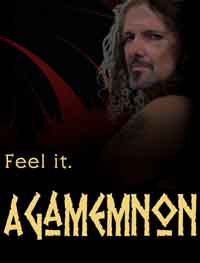 Anyone who’s ever spoken to me about authors knows that the author I loathe most is Tolkein. I hate Tolkein’s work because I can’t understand how someone who fails entirely to grasp the idea of interworking exposition with climax can sell a single book! These people may also realise that I have a double standard insofar as my hatred of Tolkein for this reason has not caused me to dismiss the playwrights of Ancient Greece. The fact is, the Ancients wrote for a different purpose and a different audience, but Tolkein was just a babbling fool. Aeschylus, of course, was a master playwright, who had a justifiable reason to write an enormous quantity of vaguely interesting, but largely confusing, expository matter and interspersing it between some good dialogue and interesting plot. What I like most about Rachel Hogan’s adaptation of Agamemnon is that she has managed to distil the essence of Aeschylus’ tale into a performance that is widely accessible.



 Foyer Talk