About Trevar Alan Skillicorn-Chilver
Trevar Alan Skillicorn-Chilver is an authorised celebrant, a playwright, a teacher and quite a few other things!
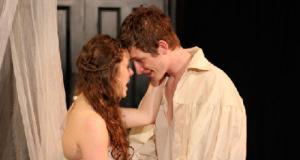 In less than a week I will be taking the stage in London for the first time at The Space on the Isle of Dogs. The Space is a quaint repurposed venue full of character and the first thing I noticed on my arrival was that Romeo and Juliet is currently in production, so of course I had to pop along.
I love Romeo and Juliet principally, I think, because though its plot plays hard and fast with the willing suspension of disbelief, its characters are drawn with impeccable honesty.
Tonight, I was treated to one of those brilliant experiences where the familiar becomes new again. The performers delivered deliciously light renditions of Shakespeare’s characters, while also delving richly into the great stock of pathos Shakespeare provided.
I was particularly taken with Lucy Bailey, who took us on the Nurse’s amusing and moving journey of joys and sorrows. Juliet was also given an unusually engaging lightness by Rebecca Burnett that provided the space for joining her on her highs and lows.
There was some novel (and very clever) casting in the form of turning Benvolio into a Benvolia, and Gregory also underwent a sex change. Both characters benefited from finding their feminine side, I thought, though it didn’t seem to serve much of a purpose other than utilising the eternal glut of female actors and relieving the difficulty of fielding a male cast.
And herein lies my one reservation about this production. Despite a couple of interesting choices such as this, and despite some commendable performances, there’s no spark of brilliance to make it truly noteworthy.
These qualities don’t quite compensate for a rather staid envisioning of a text with such broad possibilities. It just seemed far too constrained to its conventional setting, and despite the freshness of the performances, I just wanted something more to sink my teeth into.
Tags: Adam Milford, Amber Elliott, Angus Howard, Benvolio, Dilaila Colasuono, Ethan Chapples, Henry Heathcote, Isle of Dogs, Jennifer Shakesby, Juliet, London, Lucy Bailey, Rebecca Burnett, Romeo, Romeo Juliet, Sally Preston, Shakespeare, Stephen Harakis, The Space, Tim Fordyce, Tom Blyth

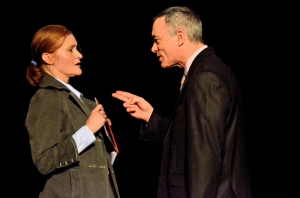
Naoné Carrel and Elaine Noon in Calendar Girls, along with that amazing smile
My Facebook feed is awash this morning with tributes to the very deserving Naoné Carrel. I didn’t have the pleasure of knowing her as well as most of these friends did, but hers has been one of the faces that I have associated most closely with great nights in foyers and great moments in auditoria.
I met Naoné when she was President of Canberra Rep, and I had turned up early to a meeting of the Network of Amateur Theatre Organisations feeling rather like a very small fish in a very big pond. Her face beamed as she welcomed me and suddenly I felt like the pond was much smaller.
I had seen her on stage, of course, much earlier than that. I first saw her last century in The Dresser. And also while I was an undergrad I recall being enthralled with her performance in Death of a Salesman at the ANU Arts Centre.
The theatre community here is the richer for having had not only a performer of her calibre, but also an individual whose smile would light up the room. She will be missed.
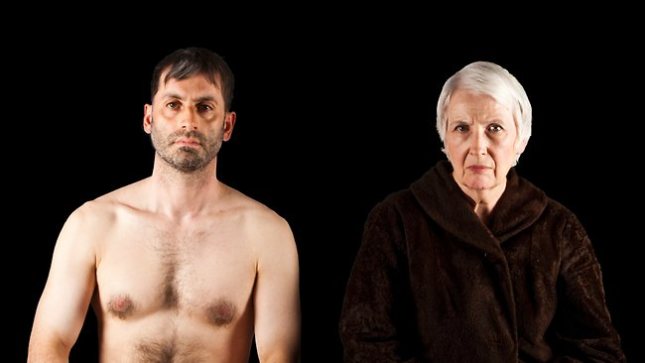
Naoné Carrel and Raoul Craemer in a promo shot from To Silence
For the big picture, here’s a sampling of reviews of Naoné’s shows:
Tags: Calendar Girls, Canberra Rep, Death of a Salesman, Doubt, Elaine Noon, Naoné Carrel, NATO, Raoul Craemer, vale
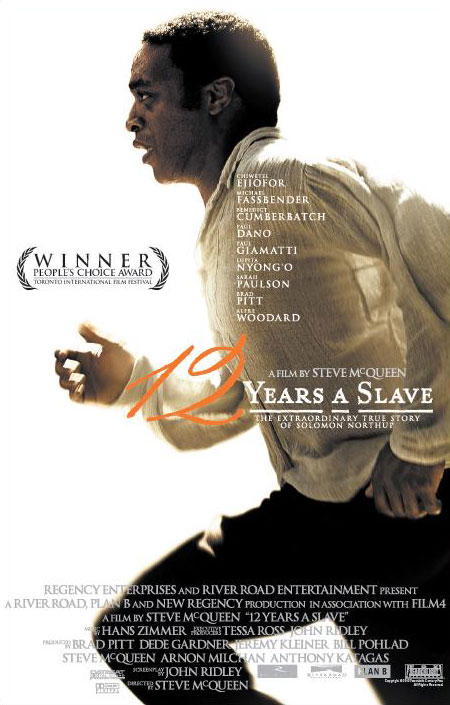
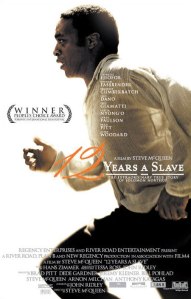 12 Years a Slave is one of the more interesting examples of films to take slavery as its theme in the last couple of decades. There is a preponderance of films about the American Civil War, but the era that went before it and the circumstances leading to the war are not so well documented.
12 Years a Slave certainly redresses this. As the story of a free black man from New York set in the antebellum of the American Civil War who is enslaved in the south for twelve years (ta-da!), it clearly demonstrates a cause for the United States to grapple with the question of slavery in the 1860s, and in so doing fills a void in the dramatic canon on the subject.
The film is beautifully shot, and though it oversentimentalises in the way most American films do, and occasionally glosses over the plot in favour of a clever turn of phrase, I can almost excuse these ills given the nature of the subject matter and the skill of the screenwright and director.
The performances of the many well-known white actors in this film are likewise worthy of praise. Benedict Cumberbatch, Brad Pitt, Michael Fassbender and Paul Giamatti in particular provide a splendid bed for Chiwetel Ejiofor’s chilling performance as Solomon Northrup, and the equally empathic Patsey played by Lupita Nyong’o.
But what I am most fascinated by is the persistence of the recent obsession of Hollywood with slavery. The theme is certainly relevant, with slavery continuing in many parts of the world today, and slavery bears some comparison with other social justice issues, but that doesn’t seem to be the motivation and I don’t quite know what to make of it.
What seems most interesting about this modern slew of films about the American slave trade is that it stands alone, seemingly as a purely historical fascination, these films being almost entirely backward-looking. No allegories seem to be being made to more modern struggles like feminism or marriage equality, though they’d be easy references to make. The filmmakers seem to be ignoring the more recent practice of slavery, which continued well into the twentieth century even where it was ostensibly banned (for instance, Queensland and the British outposts in southern Africa), and more oddly in those places where slavery has continued into the twenty-first century.
These films don’t seem to be making much of a stand against modern slavery or against any modern societal ill in the way that stories such as The Crucible clearly denounced the persecution of Communists in the 1950s. They seem to sit merely as a historical account, and although they reinforce the anti-slavery position of the United Nations, they seem to be have little point beyond this, so I am surprised at the continuation of the theme.
Regardless of the reasons for these films, their quality is stunning. I just hope they find a purpose if they’re going to keep making them.
Tags: antebellum, Benedict Cumberbatch, Brad Pitt, Chiwetel Ejiofor, Civil Rights Movement, Civil War, John Ridley, Lupita Nyong'o, Michael Fassbender, Paul Giamatti, Plan B Entertainment, Regency Enterprises, River Road Entertainment, Solomon Northrup, Steve McQueen
 Okay, I might have a reason to like Ram-Leela that gives me a bit of a bias, but I simply haven’t enjoyed a film this much in ages. Colourful, engaging, and full of life, this film captures the attention and the heart.
Bollywood has not been high on my list of priorities, but this film could well change that. Their energy and obsession with colour has always fascinated me, but the plots can be pretty ordinary. Since Ram-Leela borrows the bulk of its plot from England’s foremost dramatist, it can hardly be said to suffer from this illness.
Based roughly on Romeo and Juliet, Ram-Leela begins with the familiar style of Bollywood. It is not long, however before it delves deeper into the characters and their backstory than is customary, and the challenge becomes to recognise Shakespeare’s characters in those in front of us.
This is not, however, a straightforward transliteration. In transplanting the story to India, the plot required some major reconstructive surgery. It takes some interesting turns that are not quite what I was expecting, and in the second act I was beginning to think the plot had diverted completely from Shakespeare’s when it finally resolved back into the familiar run.
This is where I really found myself fascinated. Some of my readers may be aware that some years ago I was involved in writing and directing a re-imagining of Romeo and Juliet in which the lovers live and rather than finding a happily ever after they find they don’t really like each other quite as much as they thought they did. Ram-Leela looked for a while like it might head down a similar path, but it didn’t, and I breathed a sigh of relief in a way.
I can’t think of a more interesting experience than seeing this film in the heady mix of cultures I am experiencing here in Timor-Leste. It just sits beautifully in this eclectic place and should not be missed.
Tags: Bollywood, Deepika Padukone, England, India, Ram-Leela, Ranveer Singh, Romeo Juliet, Sanjay Leela Bhansali, Shakespeare, William Shakespeare
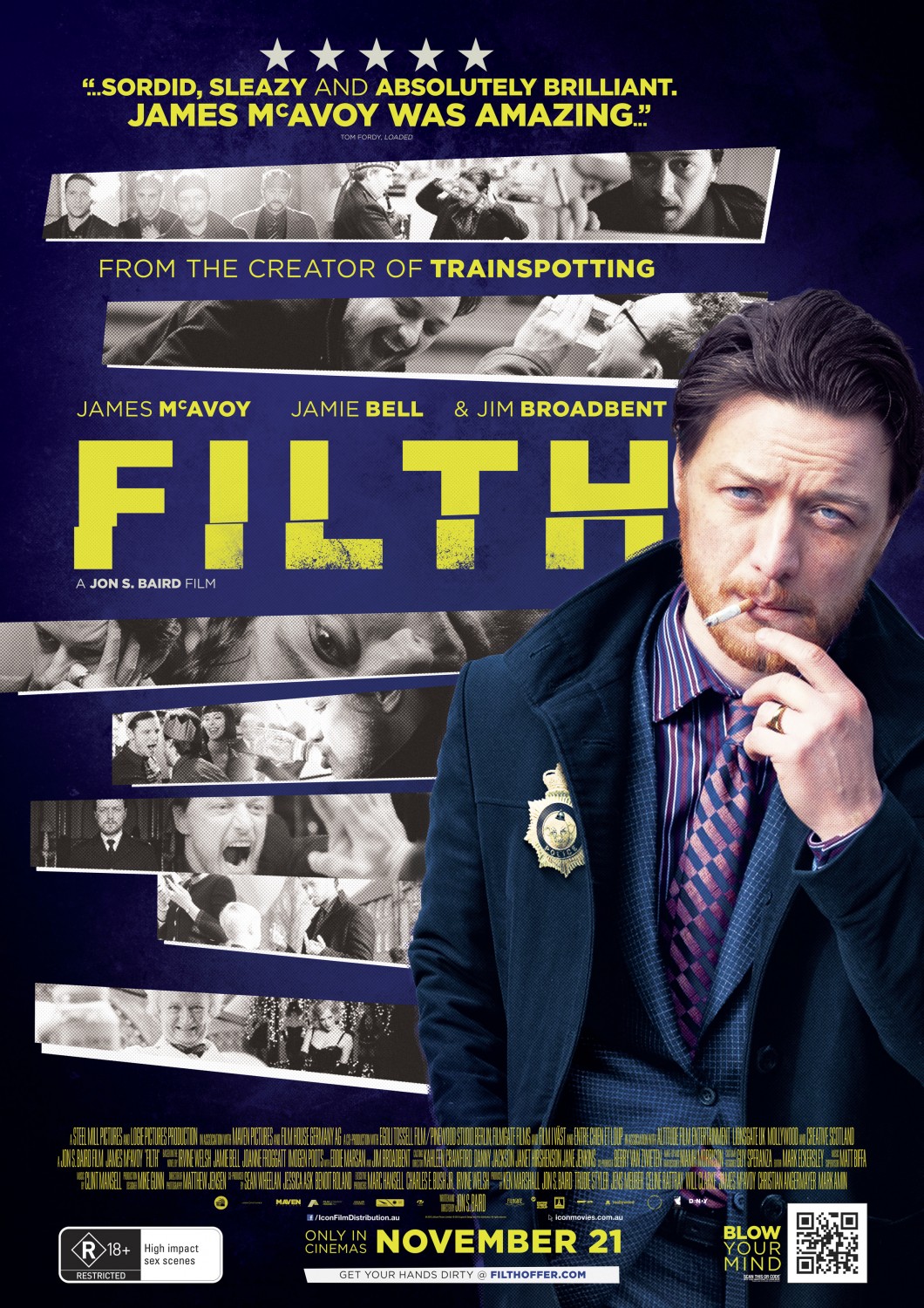
 I’ve been a big fan of films that play hard and fast with psychosis over the years, and Filth is, I think, one of the best. It keeps you on your toes trying to figure put the difference between reality and the subject’s experiences, but it doesn’t do this at the expense of character and plot.
The protagonist here, Bruce (James McAvoy), is brilliantly portrayed with incredible pathos and drive. Apart from an unfortunate lull in the third quarter, which many films suffer from, he drives the plot forward brilliantly.
The super-plot is both straightforward and innovative. Frank is in line for promotion, but so are several other detectives in his Edinburgh unit. By setting them up, he manages to move himself up the ladder, building the likelihood of promotion by a steady process of elimination. His plan goes well until his own psychosis gets the better of him.
McAvoy is supported, though, by a cast of well-developed characters, all of whom are brilliantly relatable and portrayed by great actors.
The spectre of Trainspotting is heavy in the air with this film. There are familiar sequences and phrasing, but the whole is a unique and engaging story that warrants a second look.
Tags: Edinburgh, Filth, Imogen Poots, Irvine Welsh, James McAvoy, Trainspotting
 La Mama’s Explorations series is a season of new and often experimental works that challenge theatrical boundaries and process and explore new ideas.
Virginia and Some of Her Friends is one of this year’s offerings, and while it is not especially innovative in style, it does combine theatrical techniques that are not often seen in harmony.
This piece sits somewhere between the musical and the play with music. Like a musical, the songs deliver a substantial component of the character and some plot. But like the play with music, the songs jar, altering the flow of action and realigning the audience’s attention not unlike Brecht’s verfremdungseffekt.
As for plot, there is little…
The rest of this post is published on Australian Stage.
Tags: Amelia Carroll, Andi Snelling, Bertolt Brecht, Brecht, Chloe Reid, Claire Nicholls, Dindy Vaughan, Distancing effect, Faye Bendrups, Guillermo Anad, La Mama, La MaMa Experimental Theatre Club, Marysia Green, Mia Landgren, Peter Green, Ponch Hawkes, Rebecca Etchell, Theatre, verfremdungseffekt

The latest instalment from Made In Canberra, The Fridge is an amusing piece of work that manages to avoid the worst of predictability but doesn’t quite distinguish itself with dialogue that encourages the suspension of disbelief. With characters that all seem to say exactly what they mean all the time, there is not a lot of room for the cast to perform. The words take over, and even the best one liners fall flat.
The program and advertising makes reference to Monty Python repeatedly, and attempts to position the play as a continuation of this tradition. This may go some way to explaining the lack of subtext. Python was certainly capable of developing great characters with little or no subtext, but here it…
Tags: Alister Emerson, Andrew Eddey, Canberra, Casey Elder, Chris Brain, Comedy, Daniel Minns, Elaine Noon, Fridge, Hagen Marsh-Brown, Hannah Baker, Jill Emerson, Karla Conway, Linley Jenkins, Loren Emerson, Mel Edwards, Michael Foley, Miriam Miley-Read, Monty Python, Morgan Little, Nick Stannard, Peter Matheson, Remy Graham-Throssell, Samantha Pickering, Thomas Papathanassiou
 Let me just say this up front: there is nothing funny about domestic violence. However, if you don’t laugh all the way through this play, there’s something wrong with you! I would guess the only people not laughing would be abusers themselves, so maybe we should keep one eye on the auditorium during performances!
Canberra Repertory’s whimsical production of The Book of Everything is a magical piece of theatre that could transport someone of any age back to their childhood. The simple, very human joy of simply telling a story is not lost in the dark themes that emerge…
The rest of this post is published on Australian Stage.
- That Guy Who Watches Canberra Theatre agrees (though rather more eloquently).
- And so does Simone Penkethman at City News.
- Michelle Potter was less impressed over at the Crimes.
- Len Power over at the Critics Circle seems as impressed as the rest of us though.
Tags: Amelia Witheredge, Andrew Kay, Book of Everything, Chris Ellyard, Domestic violence, Helen Vaughan-Roberts, Jerry Hearn, Jonathan McFeat, Lachlan Ruffy, Lanie Hart, Liz de Totth, Maddy Kennedy, magic, Michelle Adamson, Miles Thompson, Neil McRitchie, Steve Walsh, story, storytelling, Sue Gore-Phillips, Tamina Kohene-Drube, Violence and Abuse, Women
 The plot summaries about for this film leave a lot to be desired. There is something distinctly airy-fairy about a line like “a boy who is believed to bring bad luck leads his family on a journey through Laos to find his family a new home”. Had I read that, I probably wouldn’t have bothered with The Rocket. Luckily I didn’t read one as soppy as that, and I took off on a whim to our cushy Palace Electric Cinema and saw it.
Now, I’m not saying there’s nothing soppy about this film, and that sentence is not an entirely inaccurate description of the plot. But this is a gritty, mucky and sometimes confronting story that just oozes the best and worst of humanity.
Set in the northern mountains of Laos, the story begins with the birth of that boy, Ahlo, who is saved from the tribe’s gruesome tradition of slaughtering the first-born of twins by his mother’s pleas against his grandmother’s judgement. The story cuts to him in early adolescence as his village is about to be flooded by the construction of a hydro-electric dam, and his mother is killed in a tragic accident. In the midst of his grief and confusion, he incurs the wrath of the village and the family finds themselves fleeing and beginning the search for a new home.
There is the risk with a story such as this that the inner turmoil of the boy could be overworked, bogging the story down in melodrama. But there is a great balance of pathos with movement, and the story almost plunges forward. There are moments of intense fear, beautifully crafted, and moments of sheer pleasure. This truly is the stuff of life.
The ever-present danger of unexploded weaponry, legacies from the Americans’ secret sojourn through the territory in the 1960s, is intermixed with idyllic settings and distinct twenty-first century technology like LED lighting, painting a picture of a society not entirely backward, but nonetheless held back by its history.
The success of this story really stands on the back of a brilliant performance by Sitthaphon Disamoe, whose energy is magnificent and never falters. The ten year old certainly earned the Best Actor Award he picked up at the Tribeca Film Festival.
This is genuinely one of the best Australian films I have ever seen, and if this is any indication of the direction our film industry is going, I think there is a bright future ahead.
Tags: Bunsri Yindi, Kim Mordaunt, Laos, Loungnam Kaosainam, Red Lamp Films, Sitthiphon Disamoe, Sumrit Warin, The Rocket, Thep Phongam, TriBeCa Film Festival
 Okay, so it’s been a while since it ended, but I’m finally writing about Short+Sweet Week 2. Partly, this was because since the end of the festival I have been rather overwhelmed with family duties, but I also needed some time to lick my wounds.
So though neither of my plays got much attention, they were in some great company. Nothing really stood a chance of outstripping Last Drinks; Greg Gould’s catchy and trim script coupled with Margaret Allen’s taut direction and the impeccable timing of Caroline O’Brien and Jett Black were a force to be reckoned with.
Another very amusing piece was Good Cop Mad Cop, which I also enjoyed thoroughly. Paulene Turner’s clever script was performed energetically by Helen Way, Jonathan Garland, Paul Hutchison and Elizabeth Lamb.
Ruth Pieloor wrote and performed Vanity Insanity, with the support of Catherine Hagarty as director. Though very funny, this piece dealt beautifully with notions of self esteem and ageing, and I enjoyed it every time.
I never tired of seeing Paul Hutchison’s Bendigo Banjo Sails the Day, either. This piece could not be entered into the competition since a director had been unavailable and Kate Gaul, the Festival Director, salvaged it to ensure it was performed. We were all glad she did, as it was a great way to begin a great night of performances.
But the piece that truly moved me most was Written in Stone, written and directed by Evan Croker. This was one of the Wildcards that got through to the final, so not really a Week 2 play, but I found myself intrigued by it. The performances were great, the script is brilliant, and the play really deserved more recognition in the final than it got.
So that’s it for another year… though the Merimbula festival is less than a month away, and Melbourne follows soon after that and before you know it Sydney will be happening! And while all of that goes on, Crash Test Drama will surely keep us entertained! Many thanks to everyone for a great festival, and well done to all the winners!
Tags: Canberra, Caroline O'Brien, Catherine Hagarty, Elizabeth Lamb, Evan Croker, Festival, Greg Gould, Helen Way, Ian Croker, Jett Black, Jonathan Garland, Kate Gaul, Margaret Allen, Merimbula, Paul Hutchison, Paulene Turner, Ruth Peiloor, short plays, Short+Sweet
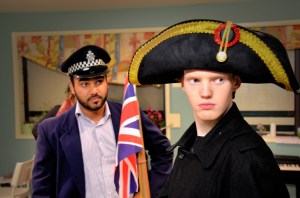 Right before heading along to the Week 1 performance of Short+Sweet tonight, I squeezed in a short rehearsal with my cast for next week and snapped this great image. I had just picked up the bicorn from the post office, which had arrived from the UK just in time, and I was feeling great about how the play started coming together once the props started to give us some clarity of movement and intent.
Brendan Kelly (foreground of this image) had a curtain call, and I followed him to the Courtyard where I was lucky enough to snaffle a last minute ticket to the first week (I will be better prepared next week!).
I am always impressed by the format of Short+Sweet. The ten minute play is a great form, and the variety in any show is incredible. There was a broad range of styles in this year’s week 1, so I wasn’t disappointed, but there are always standouts.
Finnius Teppett from New Zealand was in attendance for this performance of his play, Reading Lamouche, and it was a novel little experience to see the irony between Brendan Kelly’s roles in Reading Lamouche and Abel C. Mann, Processed Offshore played out, but I was most impressed by the quality of humour in Tepputt’s buzzy little script, which was directed very nicely by Ryan Pemberton.
The ten minute form lends itself to comedy in a particularly natural way, probably because we’re largely used to seeing short stand up routines and sketch shows. I tend to lean towards comedy in my shorter plays (oh heck, I lean towards comedy anyway), but there is something courageous about attempting a fully-rounded character in a drama in such a short space of time. I was impressed by Margaret Allen’s script and performance in House of Cats, which was based on the blog and life experience of Nicole Lobry de Bruyn. The exposition in this piece exhibited a great balance between delivering basic necessary information and engaging the audience in the character’s existence.
And the night ended with one of those ‘plays we had to have’, in Here to Serve You. An unattended shoe in an airport sparks a security scare, and some unconventional sod decides to use common sense, upsetting the status quo, as it were. Yes, it was as predictable as you might guess, but snappy dialogue and nicely balanced performances made it one of the most enjoyable pieces of the night.
As usual though, the judges and the people disagreed with my assessment! Only Reading Lamouche got into the final next Saturday, with these other two noteworthy plays finishing here. And now the pressure is on. I have two plays in next week’s line up, and I’m nervous about both of them, but of course, looking forward to the energy and buzz leading up to Tuesday’s opening. Go to the Canberra Theatre Centre to book your tickets.
Correction: I have been put right by no fewer than three more observant individuals than myself! Here to Serve You did indeed make it through to the final, so the only one of the three that made a big impact on me that didn’t make it through was House of Cats. Hopefully House of Cats will get another run at later festivals in the Short+Sweet family!
Tags: Abel C. Mann, Arne Sjostedt, Barbara Lindsay, bicorn, Brendan Kelly, Bryan Pike, Canberra, Colin Giles, Finnius Teppett, Georgia Pike, Jade Chan, Jessica Waterhouse, Margaret Allen, Neil Parikh, New Zealand, Nicole Lobry de Bruuyn, Performing arts, Processed Offshore, Ryan Pemberton, Shane Stark, Short+Sweet, Simon Whitford, Stand-up comedy, Stevan Stavic, union flag, Union Jack
It surprised me to learn that I’ve now been blogging for five years. What started as a little spark from a conversation about the tendency of Canberra critics to make every effort to discourage artists has become a nice little part of my life.
Since I started Foyer Talk, The Canberra Critic has come and (it seems) gone, and the anonymous Guy Who Watches Canberra Theatre has started writing very encouragingly about his experiences. The venerable clique, Canberra Critics Circle, have started their own blog, which is a vastly more comprehensive dossier of theatre productions in Canberra than my own. And both the Crimes and WIN News have curtailed their involvement with theatre criticism.
And for me, Foyer Talk has become a most enjoyable journey. I have explored what really makes me respond in theatre and cinema auditoria, and I think this has improved my writing. I’ve done this well beyond our energetic little theatre community here in Canberra as well. People often respond positively, occasionally negatively, and in the last twelve months in particular I’ve engaged in some great discussions following my posts.
And the highlights of the last five years? There have been many, but the best definitely include:
Floating, with its amazing, engaging playfulness and remarkable story.
Ngapartji Ngapartji, which really draws us towards a truly national theatre
Another contribution to our national story, Faces in the Street, which really grounded some of the less palatable aspects of the Australian identity.
An exploration of my own identity and the influences upon my cultural adherences, in the brilliant The Perks of Being a Wallflower
One I have not stopped raving about, Animal Farm
A Korean version of Hamlet
Rep’s wonderful production of I Hate Hamlet (a statement I could never make!)
And of course The Goat, or Who is Sylvia?, the one that kicked off this little blog five years ago today.
So I hope there are a few of you out there who enjoy reading my abuses rants posts as much as I enjoy being at the theatre and writing about it. I certainly intend to do it for another five years. I just hope blogging stays as popular as it is now!
Tags: Big Hart, blog, Canberra Critics Circle, Canberra Rep, Canberra Times, criticism, critics, Film, Ngapartji Ngapartji, repertory, That Guy Who Watches Canberra Theatre, Theatre, WIN News
 An enthusiastic audience welcomed Bruce Hoogendoorn’s latest play to the Courtyard Theatre tonight. A simple but effective comedy, The Reluctant Shopper kept its audience engaged and the laughs rolling freely.
Faced with the grim news that consumers aren’t spending, the local business council engages the services of Barry to blackmail one of the city’s more wealthy citizens, Sam, to spend his ill-gotten but sizable nest egg in their members’ businesses. In the course of this task, Barry manages to set Sam up with shopaholic Lisa, and the two find they have complementary interests: Lisa likes spending money, and Sam has a lot of money…
The rest of this post is published on Australian Stage.
Tags: Brendan Kelly, Bruce Hoogendoorn, Elaine Noon, Kimberley Balaga, Rob de Fries
 So now I’ve seen two films in a row that have mucked around with conventional plot structures and I’m starting to wonder if it’s something to do with me! Am I a little too conventional? Or should I just pull my head in and remember that a sequence of two maketh not a pattern.
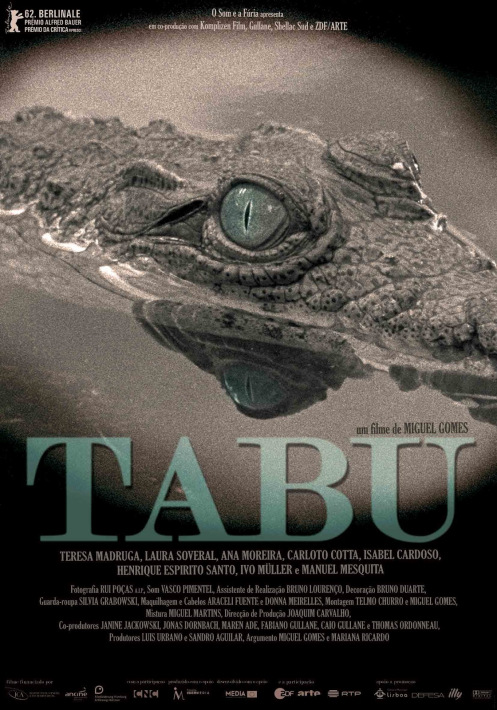
Tabu is the heart-warming story of a woman born in Portuguese Africa before a struggle for independence, but it begins by introducing her in her declining years. As the film began, in its rather confusing state, and focused on this poor woman’s dementia, I wondered if it would meander as pointlessly as The Place Beyond the Pines. It didn’t. In fact, the story completely snuck up on me, and though the tension was built slowly, I found myself completely drawn into it. I had to know how this story would play out.
The characters were beautifully drawn, pawns in a political game over which they had neither any control nor any desire to exert control. It is set in modern Portugal and in the foothills of a fictitious Mount Tabu in an unidentified African colony. I could try to draw some significance by suggesting the location as Guinea-Bissau, since it is the only tropical candidate for a Portuguese African colony, but clearly the creators did not intend to make a direct correlation. The story concerns the lives of individuals in a colonial context, and though it centres on themes of colonialism, it is refreshing to engage from the perspective of the powerless colonists, rather than the powerless colonised.
Ana Moreira is particularly noteworthy, and she is supported by a strong cast. Henrique Espírito Santo gives the narration for a long part, and although it was not necessary to have narration and it felt occasionally forced, it did mark the film throughout and prevent us from getting too bogged down in the emotion. This is, after all, a film for provoking thought.
Themes of impotence are becoming somewhat de rigeur, perhaps, but there is something quite unique in the perspective of this film and it should be considered one of the better of them.
Tags: Africa, Ana Moreira, colonialism, Guinea-Bissau, Henrique Espírito Santo, Portugal
SPOILER WARNING: my apologies, but what I want to say about this film requires a spoiler, so if you’re going to see it, do so before reading, though I really wouldn’t bother.
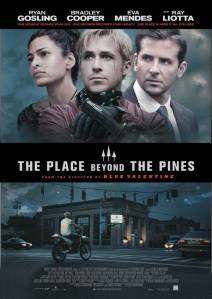
I’m not quite sure what to make of
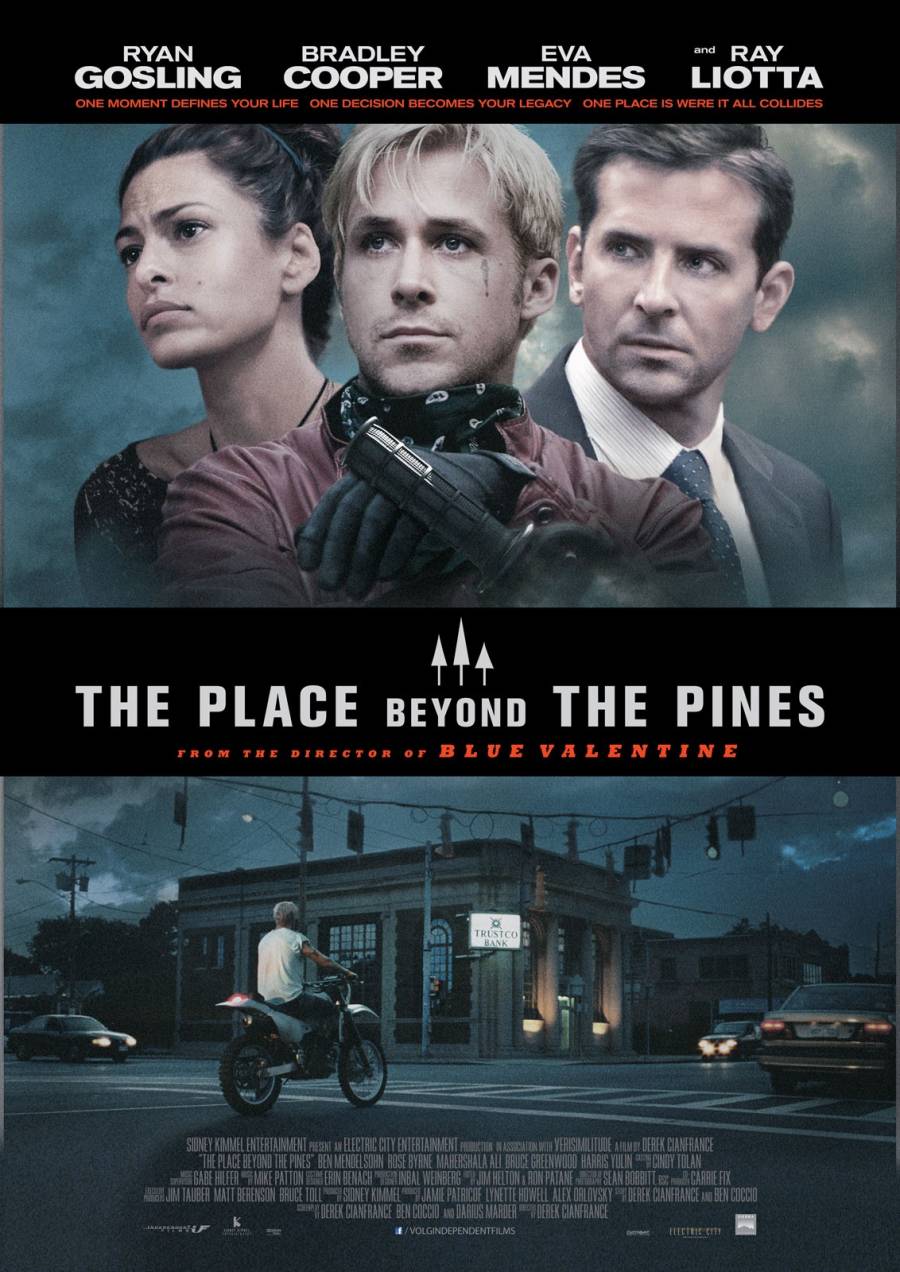
The Place Beyond the Pines. It’s not a bad film, really, but I did come to the end and wonder what it was I’d just watched, and why. I don’t insist that every story needs to have a point, a story can certainly be just a story, but I can’t help thinking that all the writer really wanted was that elusive excuse to kill a protagonist immediately after the exposition (the psychosis of writers’ innate desire to kill protagonists, though, is a subject for another post).
Said protagonist is, in this instance, Luke Glanton, a circus stunt motorbike rider played rather passively by Ryan Gosling, who discovers that the woman he had a fling with on his previous visit to an upstate New York backwater has given birth to his son. Quitting his job, he turns to robbing banks, which ultimately leads to his demise, and the rather flaccid cop who shoots him in the line of duty becomes the new protagonist. I couldn’t help but chuckle aloud when an inter title announced we were moving forward fifteen years and a pair of protagonists (the sons of the first two) emerged as a duo.
I’m not sure what I think, partly because this film does well what I think all stories need. It is driven by its plot, which is a tick, though the convolutions in that plot are are not really justified by what they return to the viewer who carefully follows them. It boasts some well developed and nicely performed characters, which is a tick, though none of the characters are very likeable, nor do they elicit enough empathy for me to care what becomes of them. The cinematography is beautiful and moody, which is a tick, but these lovely images don’t quite pull the disparate elements of the plot and characters together the way they should. And it has a subtle soundtrack that supports the mood, but doesn’t really take it anywhere new (not really a tick at all).
Really, this is a trilogy of short films with a contiguous plot. They might not be separable, as they share a single exposition, but they are three very distinct stories. I can’t be too harsh on the film because all three are interesting, but I’m not sure that they’re quite interesting enough for two and a half hours of slow-moving American angst.
And so what I’m left with is a film that I think I like, but I’m not quite ready to give it a tick. I guess what I fear most, though, is that I may write a little like this. My characters can be held aloof from their viewers and my plots aren’t always worthy of the effort required to follow them. I hope, therefore, that a decent number of people like The Place Beyond the Pines more than I do.
- Pierce Nahigyan has a very different response from mine, but makes a few good points (and also gives you a rationale for the title) in his The Place Beyond the Pines (2013) Review.
- Amanda Caldwell was able to see a point in the story, as she explains on Life with a Blackdog.
- The Lord of the Cinema doesn’t seem to quite pass an opinion in his review on At the Movies.
- The Place Beyond the Pines: A Review (pixcelation.com)
- The Place Beyond the Pines Review (chrismackinmusic.wordpress.com)
Tags: Ben Coccio, Ben Mendelsohn, Bradley Cooper, Darius Marder, Derek Cianfrance, Eva Mendes, Luke Glanton, Place Beyond the Pines, Protagonist, Rose Byrne, Ryan Gosling, Short film
 Mary Shelley’s Frankenstein is not conventionally what we might refer to as a timeless work of literature. It is clearly a product of its time, fashioned from the particular obsessions of its age and demonstrating the changing view of science that characterised the early nineteenth century. It is true that the themes of Frankenstein have made it relevant through the generations, but Nick Dear’s script is a sublime theatrical blueprint that draws the focus to those themes that truly resonate in our age.
Lee Jones tackles the role of Frankenstein’s creation with an amazing energy. He approaches a long exposition with no dialogue beautifully and shows the growth and development of a man born as an adult reasonably well. There are perhaps some timing issues with this as the ebb and flow of his development seems somewhat curtailed…
The rest of this post is published on Australian Stage.
- That Guy Who Watches Canberra Theatre was mildly impressed
- Frank McKone was keen to tell us how old he is while praising Dear
- and Ron Cerabona explores the context
Tags: Andrew Henry, Arts, Brian Meegan, Frankenstein, gothic, Heather Stratfold, Katie Fitchett, Lee Jones, Literature, Mark Kilmurray, Mary Shelley, Mary Shelley Frankenstein, Michael Rebetzke, Michael Ross, Nicholas Higgins, Nick Dear, Olivia Stambouliah, Simone Romaniuk
 Those who enjoy a good lecture will be decidedly disappointed by this seminar on classic Shakespearean plots. Those who detest a good lecture, however, should be tickled pink by the Professor’s quirky wit and humour, and his delightful playfulness with improvised puppets.
The Professor introduces himself as he enters the auditorium. One audient at a time. That is, until he realises just how many audients there are…
The rest of this post is published on Australian Stage.
Tags: Black Hole Theatre, Compagnie Chemins de Terre, pork roast, puppets, Stéphane Georis, The Australian, William Shakespeare
 The Street Theatre has brought to Canberra two of the cleverest interpreters of Shakespeare’s work who ever trotted the globe. Two Gents Productions hails from London, and are being hailed the world over for their intense physical rendering of The Two Gentlemen of Verona and Hamlet, which play in repertory this week at The Street Theatre.
For The Two Gentlemen of Verona the two performers, Denton Chikura and Tonderai Munyebvu, change between characters using the convention of a single costume piece to indicate each character. In the early stages they also call the name of the character as they take on this piece, and the custom is charming, and breaks down some of the nervousness about being able to follow such a pared down rendering…
The rest of this post is published on Australian Stage.
- Frank McCone interviewed the artists on Canberra Critics Circle.
- Helen Musa praises the Two Gents at City News.
Tags: Africa, Arne Pohlmeier, Canberra, Corambis, Denton Chikura, Hamlet, Julia, Kupenga Kwa Hamlet, Laertes, London, Ophelia, Polonius, Proteus, Shakespeare, Silvia, Theatre, Tunderai Munyebvu, Two Gentlemen of Verona, Two Gents Productions, Valentine, William Shakespeare, Zimbabwe
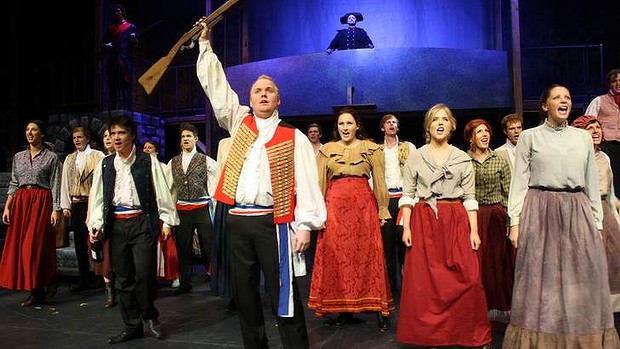
 Just quietly, I think Canberra Philharmonic have outdone themselves with their latest rendering of a classic musical. I mean, it’s nothing terribly innovative, the staging is much what you’d expect for any other rendition of Les Misérables, and the set, while pleasant, goes through a few clunky moments. But the performances drawn out of these ‘amateur’ performers is nothing short of spectacular.
Dave Smith’s Valjean is a perfect match for Adrian Flor’s Javert, and the two milk Schönberg and Boulbil’s book for every hyper-sentimental note it’s worth. Their energy and focus, while admirable, is upstaged by other principals, particularly Kelly Roberts’ Fantine, Mat Chardon O’Dea’s Marius, Laura Dawson’s Cosette and Vanessa de Jager’s Eponine. Their energy filled Erindale’s cavernous auditorium, and they must be finding the run absolutely gruelling. The rest of the cast are pretty impressive too, on the whole.
I found the performance on the whole moving, and the staging, while predicable, was solid. The orchestra, though it needed to be hidden under a fully extended stage, was in fine form.
The whole evening hangs together beautifully, as evidenced by the full standing ovation with which this late-run audience honoured the splendid cast and crew. This is a great night out, and you’ve got one more week in which to get along and see it.
- Bill Stephens’ review on Canberra Critics Circle
- Alanna Maclean’s review from the Crimes
Tags: Adrian Flor, Amos Walker, Andrew Spence, Éponine, Boulbil, Casey Tucker, Casey White, Clare Pinkerton, Cosette, Dave Smith, Evan Kirby, Fantine, Grant Pegg, Greg Hood, Greg Sollis, Ian Croker, James Court, Javert, Jim McMullen, Kaitlyn Nihill, Kate Gordon, Kate Tricks, Kelly Roberts, Lachlan Ruffy, Laura Dawson, Les Misérables, Mathew Chardon O'Dea, Matthew Tallarida, Miranda Cookman, Peter Karmel, Peter Rodda, Richard Block, Schönberg, Valjean, Vanessa De Jager, Will Collett, Will Huang, Zach Dowse
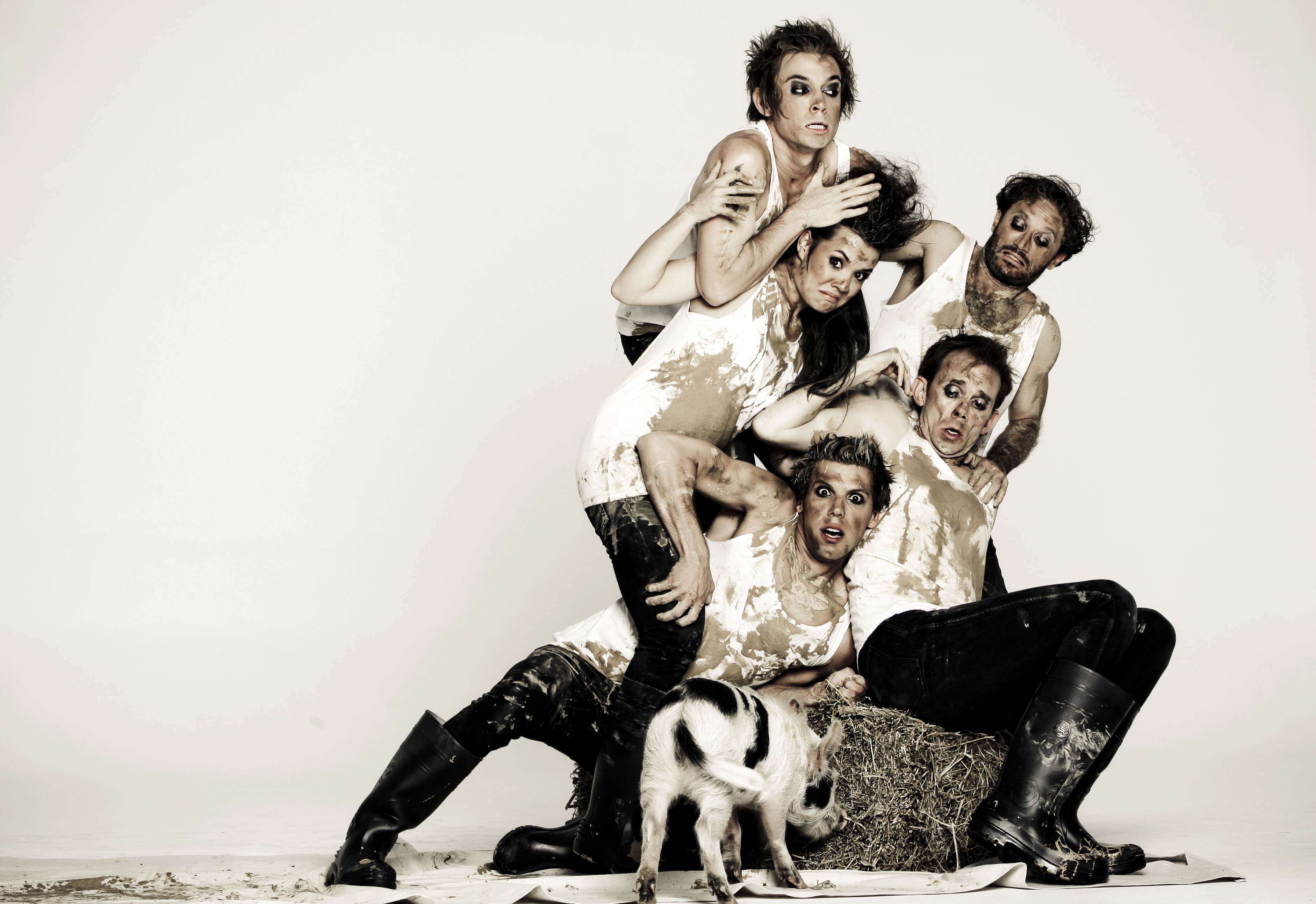
 Playing far too short a season at the Queanbeyan Performing Arts Centre, Shake & Stir’s Animal Farm is a remarkable piece of theatre. Adapting George Orwell’s Animal Farm is something that would intimidate most playwrights, but the three cast members who pulled this amazing work together have handled the challenge with amazing dexterity, delivering a performance that is intensely theatrical, deeply engaging and absolutely essential.
For those who, like me, deftly avoided reading Animal Farm in high school, the basic premise is that the animals on an English farm stage an uprising, overthrow the farmer, and establish a system of governance to allow the farm to continue to produce food for the benefit of the animals, rather than their former master. In this new order, the leaders slowly increase in greed and the other animals find themselves no better off.
Originally written in the context of twentieth century fears…
The rest of this post is published on Australian Stage.
Tags: Animal Farm, Bryan Roberts, George Orwell, Guy Webster, Jason Glenwright, Josh McIntosh, Michael Futcher, Nelle Lee, Nick Skubij, Performing arts, Ross Balbuziente, Shake & Stir, The Q, Tim Dashwood









 Foyer Talk